Prisoners of Majdanek

Exhibition Biographies

Prisoners of Majdanek

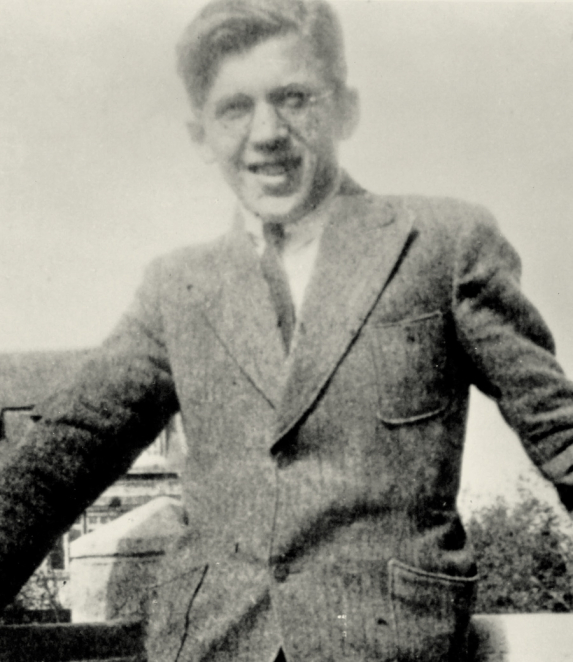
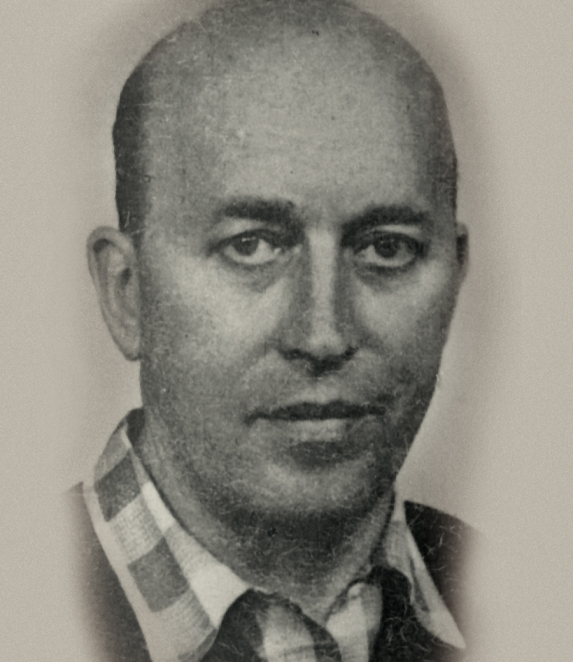
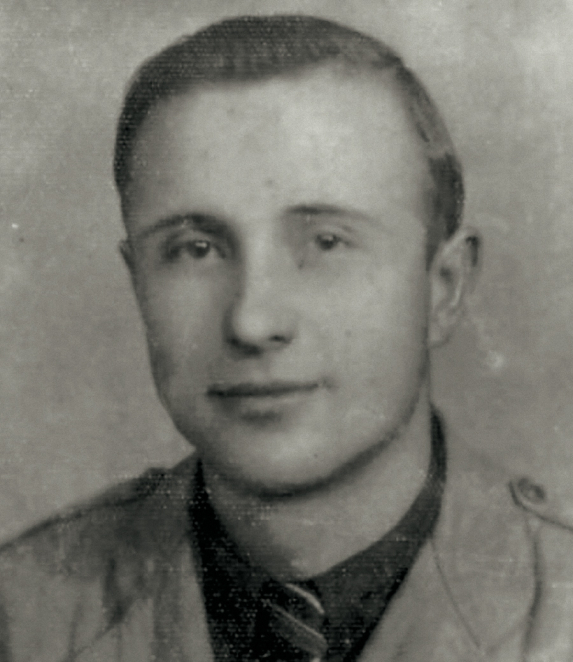
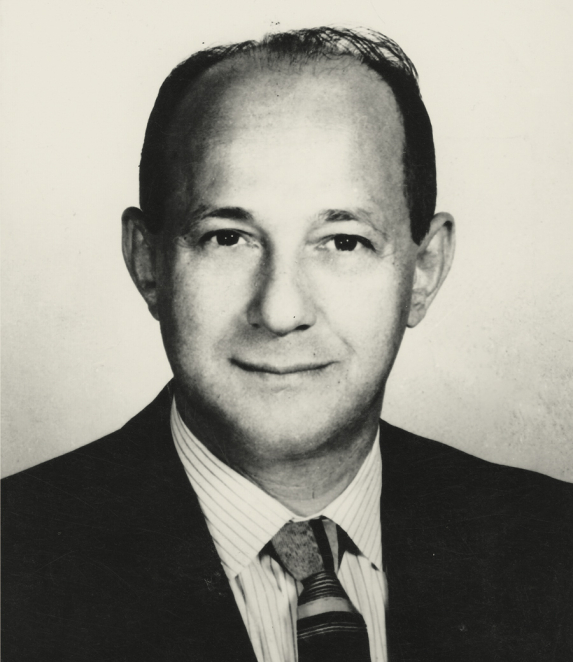
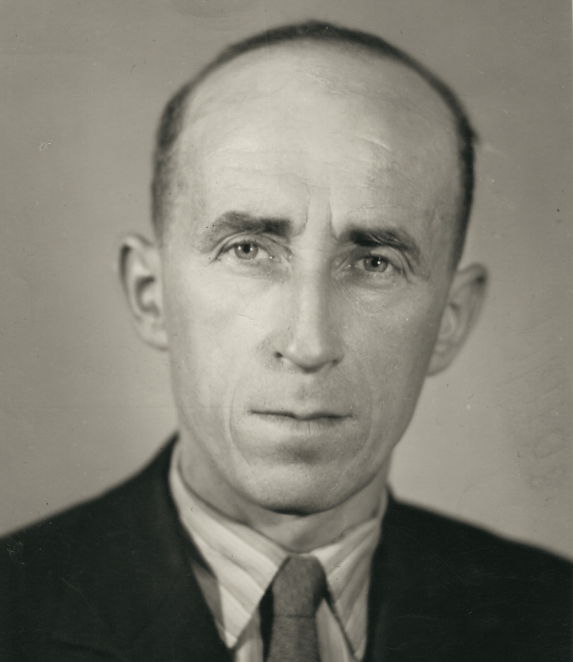
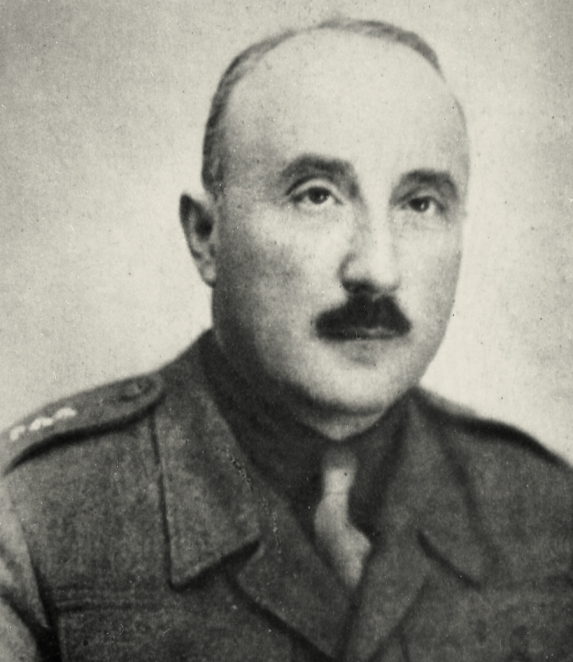
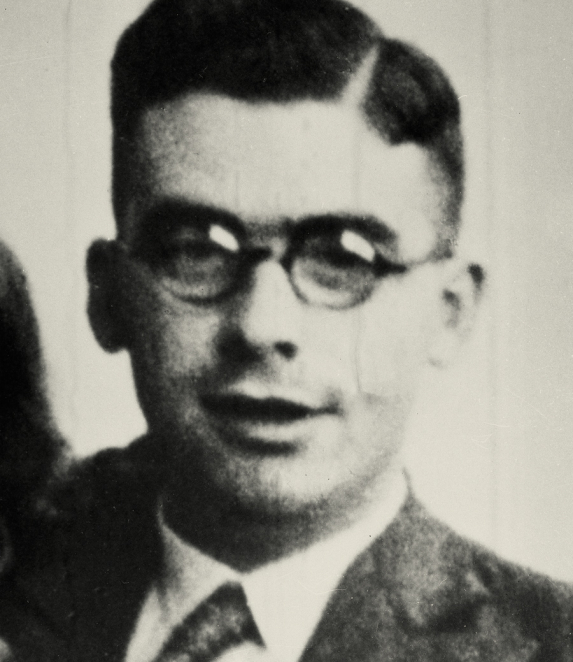
Daniel Trocmé
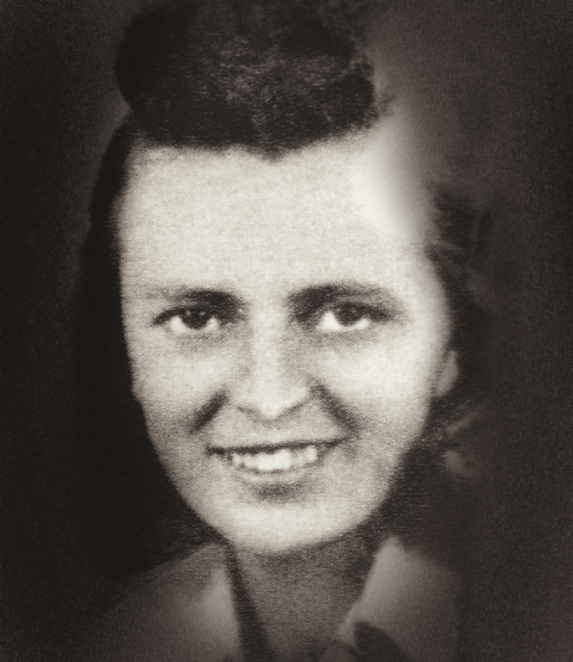
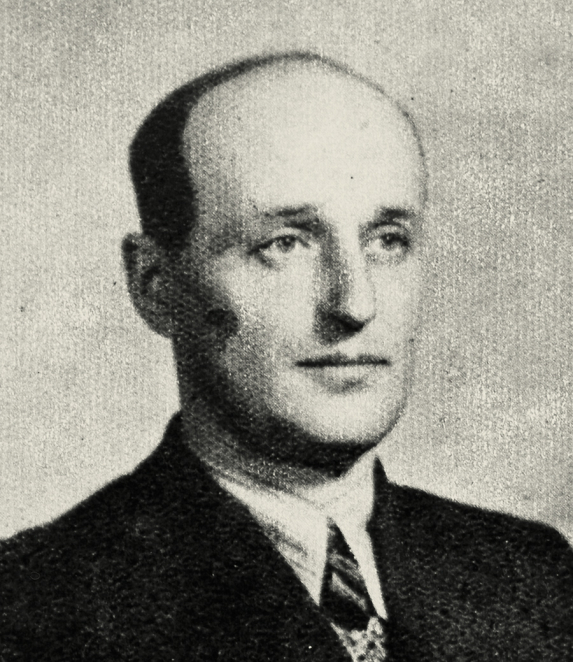
Born in 1912, he was a teacher of physics, chemistry, and natural sciences in Les Roches in France. Then, he was appointed the principal of the La Maison des Roches school in 1941. When his Jewish students were arrested, Daniel voluntarily went to the Gestapo. Initially, he was imprisoned at the Compiègne internment camp, and then was deported to KL Buchenwald and it Mittelbau-Dora sub-camp. In early 1944 he was transferred to Majdanek in one of the so-called transports of the sick. He perished in the camp in April 1944. The Yad Vashem Institute proclaimed him a Righteous Among the Nations in 1976.

A black-and-white portrait photograph of a middle-aged man, taken from the chest upwards. His face is facing the camera; he has short, dark hair and is wearing a light-coloured shirt and a dark jacket. The background is plain and light in colour.

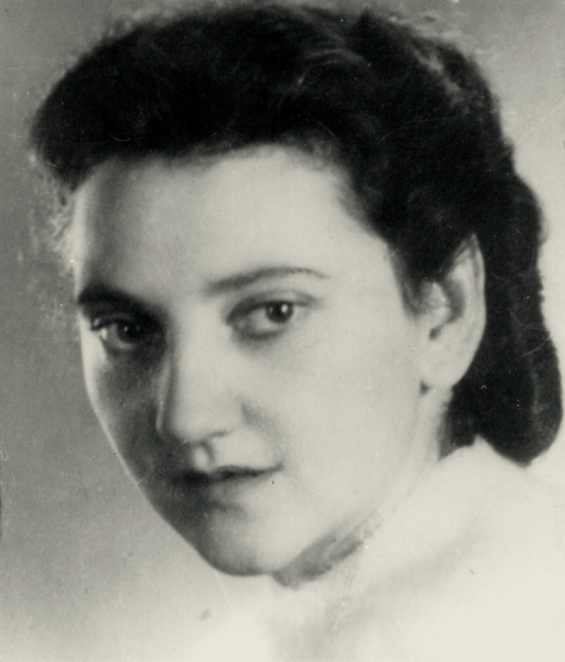
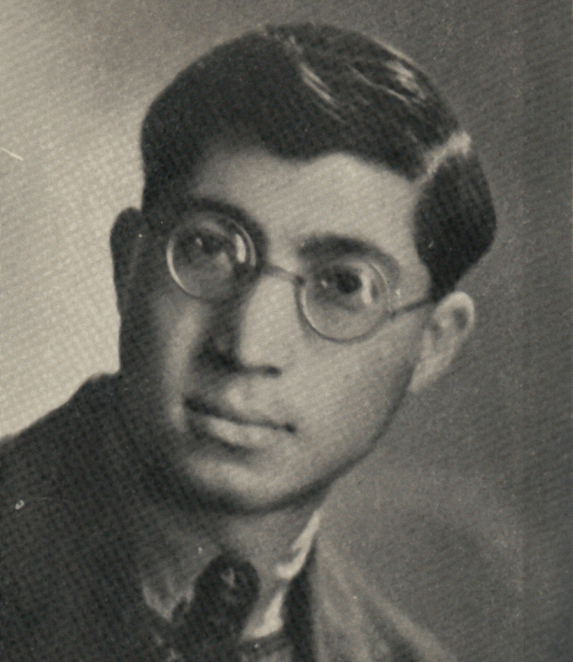
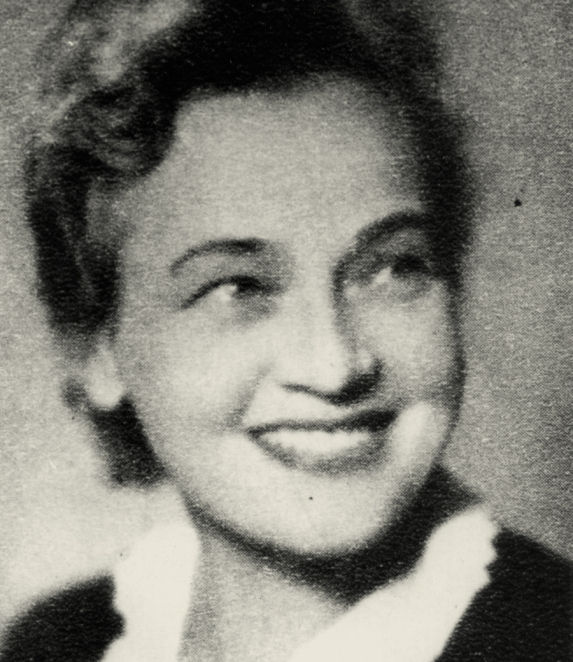
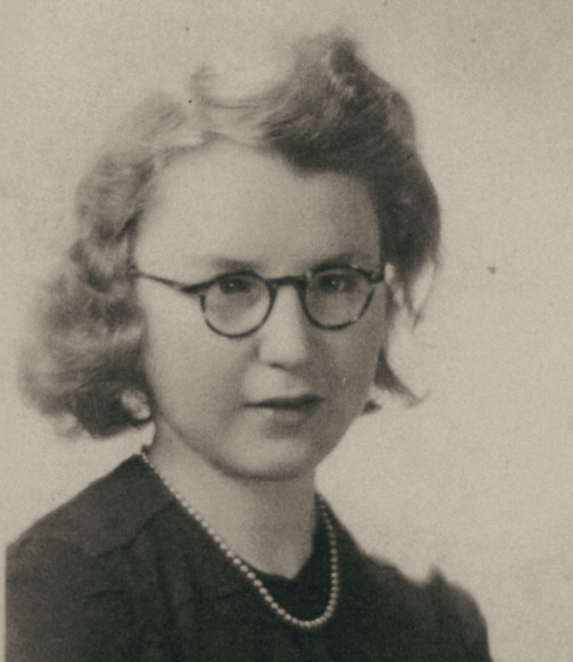
Stefania Perzanowska

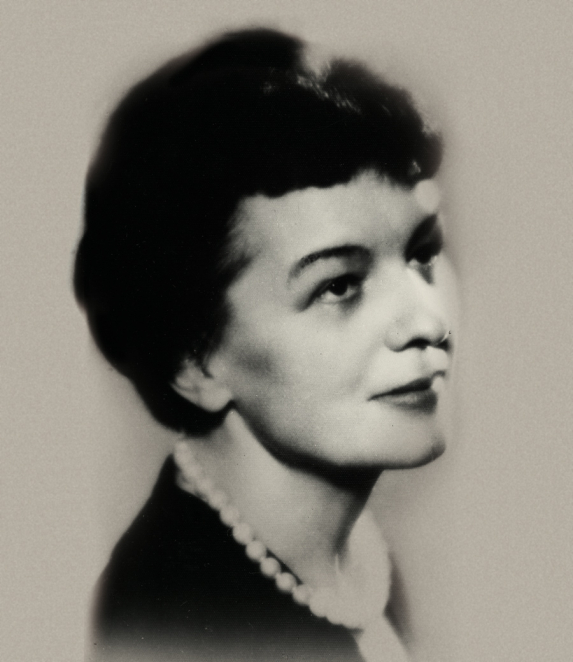
Born in Warsaw, in 1896 she was a graduate of the Faculty of Medicine at the University of Warsaw. She participated in the Polish-Bolshevik war in 1919–1920 as a field medic and served in the Voluntary Legion of Women (Ochotnicza Legia Kobiet). Then she worked as a physician in the hospitals of Warsaw and Radom. Following the outbreak of World War II, she became involved in the resistance. The Germans arrested her as a resistance member and placed her in the local Gestapo prison in November 1942. In January 1943, she was deported to Majdanek and registered as prisoner no. 235. She created and ran an infirmary at the women’s field. Together with its entire personnel she was transferred in an evacuation transport to KL Auschwitz. Later she was also imprisoned in KL Ravensbrück and KL Neustadt-Glewe. She returned to Radom in May 1945, and was entrusted the position of the chief physician at the Internal Medicine War at the Municipal Hospital. She received numerous decorations and medals. Stefania wrote a memoir of her wartime experiences entitled When My Thoughts Drift Back to Majdanek. She passed away in 1974.

A black-and-white portrait photograph of a woman, taken from close up. Her face is turned slightly to one side; her hair is cropped short or tied back, and she is wearing dark clothing. The background is plain, with no visible details.

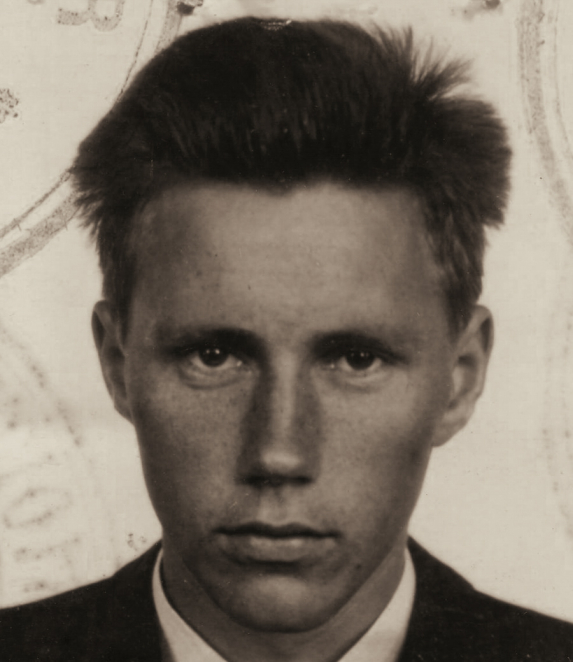
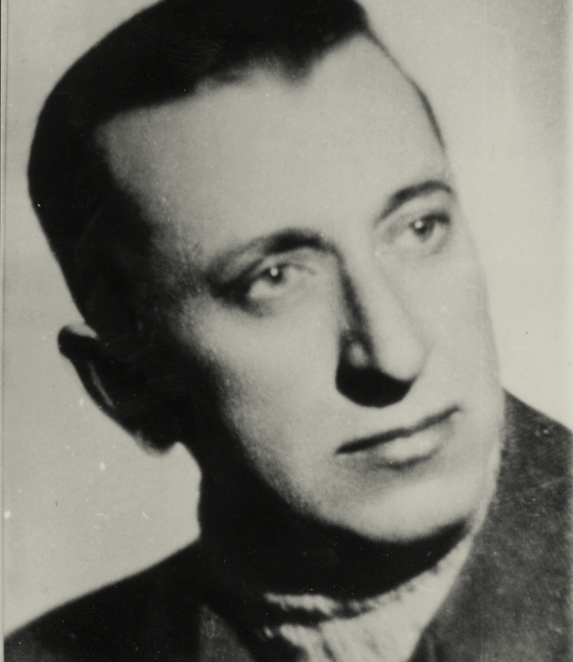
Alf Knudsen

He was born in Telemark, Norway in 1923. The German arrested him in September 1942, while he was trying to cross the border with Sweden. In February 1943, he was sent to the KL Sachsenhausen concentration camp, where he spent several months in the infirmary. A year later he was transferred to KL Lublin. After several days of imprisonment at Majdanek, he was moved to the Lipowa labour camp where he worked as a carpenter. In July 1944, he was evacuated to KL Auschwitz, and the further to Buchenwald and Neuengamme. Alf received the King’s Medal of Merit in 2014. He passed away in 2016.

A black-and-white portrait photograph of a young man, showing his head and shoulders. He has short hair, is facing forward, and is wearing a light-coloured shirt. The background is plain.

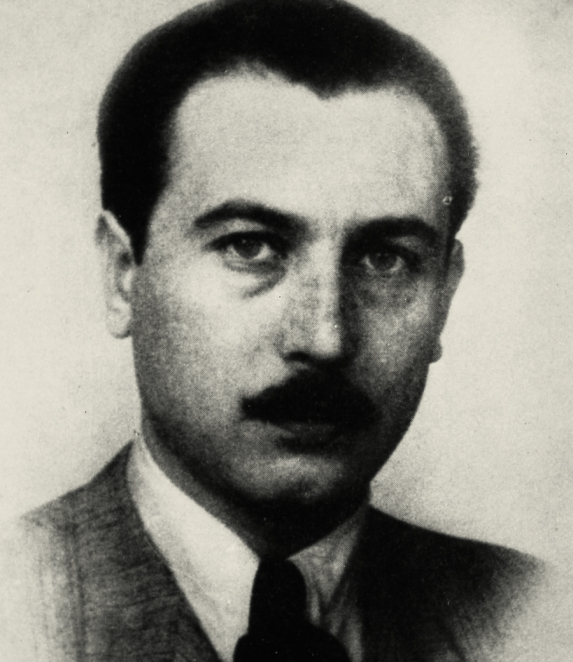
Samuel Antmann

He was born in Nitra, Slovakia, and worked as a watchmaker and goldsmith. Together with his parents – Adolf and Berta – and his brothers – Alexander and Eugen – they were “resettled” to the Lublin district in 1942. Bertha was deported to one of the labour camps near Lublin while all the male members of the family were sent to Majdanek. Samuel’s father and both brothers perished in the camp. Samuel himself was transferred to KL Sachsenhausen in September 1943. He survived and returned to Nitra in 1945. He then spent six years in various internment camps for his involvement in the anti-communist resistance. He settled in Switzerland in 1968. Samuel testified against SS-men from Majdanek in the Düsseldorf trial. He passed away in 1984.

A black-and-white portrait photograph of a man, taken from close up. He is facing the camera, with short hair. He is wearing dark clothing. The background is light and lacks detail.

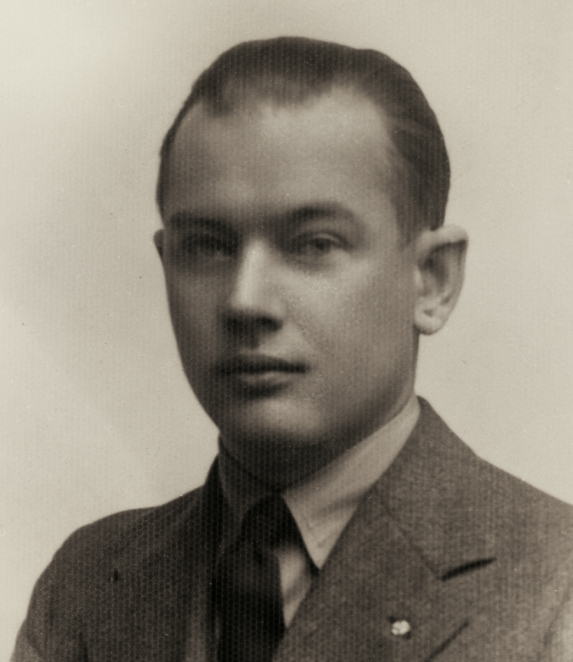
Kazimierz Kobus

He was born in Węgrów in 1907. He fought defending Poland in September 1939 and then in the underground. The Germans arrested him in Warsaw during a secret assembly of thirteen resistance fighters in March 1942 and detained at the Gestapo Pawiak prison. In January 1943, he was deported to Majdanek and registered as prisoner no. 3633. Kazimierz was placed at field III. He was initially sent to the groundworks kommando and from April 1943 worked in the team of car mechanics (Fahrbereitschaft). In April 1944, he was sent in the evacuation transport to KL Gross-Rosen. Following the quarantine period in that camp, he was again transferred further to the Leitmeritz sub-camp of KL Flossenbürg. Kazimierz was liberated in the settlement of Lovosice in Czechia. He passed away in 1987.

A black-and-white portrait photograph of a man, taken from the chest upwards. He has short hair and is facing the camera. He is wearing a jacket. The background is plain.

Czesław Skoraczyński

He was born in 1911 in Lwów. The Germans arrested him as a resistance member and placed him at the Gestapo Łącki prison in Lviv in September 1942. On 2 February 1943, he was deported to Majdanek and registered as prisoner no. 324. Czesław was detained at field III. He worked in the construction works kommando and later at the clothing disinfection at the kommando called Bad und Gaskammer. He was sent in the evacuation transport to KL Gross-Rosen in April 1944, then to the settlement of Hersbruck in January 1945, and finally to KL Dachau where he was liberated. Czesław wrote a memoir entitled Żywe numery [Living Numbers]. He passed away in 1982.

A black-and-white portrait photograph of a man, showing his head and shoulders. He has short hair and his face is turned slightly to one side. He is dressed in dark clothing. The background is plain.

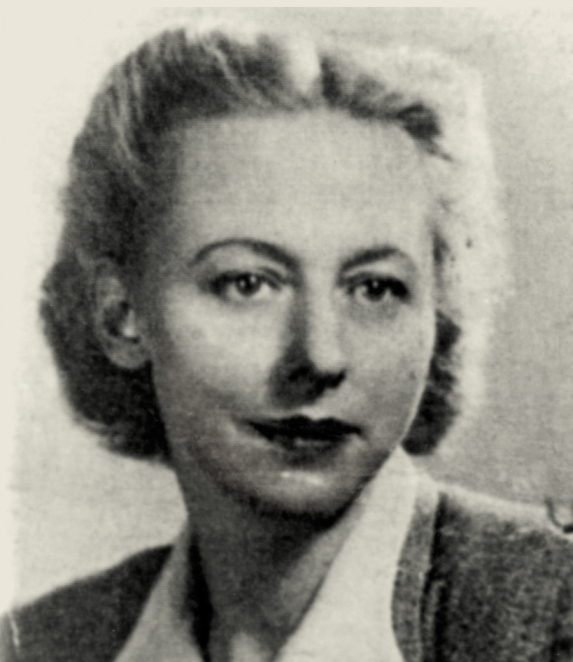
Wanda Ossowska

She was born in Kunice in 1912. Wanda was a professional nurse and medical orderly. During World War II, she was engaged in the resistance. The Germans arrested her as a resistance member in Warsaw in August 1942. She was detained at the Pawiak prison and brutally interrogated at the Gestapo headquarters in Aleja Szucha St. In January 1943, Wanda was deported to Majdanek with a death sentence to be executed after two years of incarceration in the camp. She was registered as prisoner no. 4446 and worked as a nurse in the infirmary. In April 1944, she was transferred to KL Auschwitz, and then to KL Ravensbrück and KL Neustadt-Glewe. Wanda wrote a memoir entitled Przeżyłam… [I Survived…]. She passed away in 2001.

A black-and-white portrait photograph of a woman, taken from close up. Her hair is combed back or tied up, and she is facing the camera. She is wearing dark clothing. The background is light.

Leon Sobol

He was born in Warsaw in 1908 (some documents indicate the birth date of 1898). He was married and had two children, but he lost his entire family in the Warsaw ghetto. In May 1943 he was deported to the Treblinka extermination camp. There, he was selected for labour and immediately transferred to Majdanek. From KL Lublin he was taken further to the labour camp in Skarżysko-Kamienna, and later to KL Buchenwald and Theresienstadt. He lived in Łódź after World War II.

Eugenia Piwińska

She was born Kaunas (present day Lithuania, then Kowno) in 1907. She studied Polish philology. During World War II, she was also a liaison of the People’s Guard, the head of the Central Technical Operations and Distribution of Military Publications in Warsaw, where she was running an underground printing house. She was arrested in late September 1942 and detained at the Gestapo Pawiak prison. In January 1943, she was deported to Majdanek and registered as prisoner no. 4659. In July 1943, she was transferred to KL Ravensbrück. After World War II, she worked at the Polish embassies in Paris and Rome. In the years 1949–1953, she was imprisoned and brutally tortured by the Polish communist regime. The Yad Vashem Institute proclaimed her a Righteous Among the Nations in 1987. She passed away in 1999.

A black-and-white portrait photograph of a woman, shot from the shoulders up. Her hair is short or tied back, and her face is turned slightly away. She is wearing dark clothing. The background is plain.

Danuta Brzosko-Mędryk

She was born in Pułtusk in 1921. The Germans arrested her and placed her in the Gestapo Pawiak prison twice: first in July 1940, while she was having her underground matura exam (final school exam in Polish secondary schools), and again in August 1942 for her involvement in the resistance. She was deported to Majdanek in January 1943 and registered as prisoner no. 4550. In April 1944, she was transferred to KL Ravensbrück, and the to the so-called Kommando Leipzig, which was a sub-camp of KL Buchenwald. She testified during the Majdanek garrison members’ trial in Düsseldorf. She received numerous decorations. She was granted the Aachener Friedenspreise peace award in Aachen in 1989. Danuta authored several books with her wartime memoirs: Niebo bez ptaków, Czy świadek szuka zemsty?, Matylda, Mury w Ravensbrück, Powiedz mojej córce, Spirale życia, and Warszawskie dziewczęta [Sky with no Birds; Does the Witness Seek Revenge?; Matylda; The Walls of Ravensbrück; Tell My Daughter; The Spirals of Live; Warsaw Girls]. She passed away in 2015.

A black-and-white portrait photograph of a young woman, taken from close up. She has dark, neatly combed hair and is looking directly at the camera. The background is light and devoid of detail.

Helena Kurcyusz

She was born in Sandomierz in 1911. She graduated from the Faculty of Architecture at the Warsaw Technical University. During the German occupation she was an active resistance member within the Home Army structures. Together with her father, the pre-war president of Warsaw – Zygmunt Słomiński, they were arrested and sent to the Gestapo Pawiak prison. She was detained in KL Lublin as prisoner no. 4609 between January 1943 and April 1944. In the camp she gathered many Belarusian children and organised them into a labour group, which saved them from harder work assignments and granted additional food portions. From Majdanek Helena was transferred to KL Ravensbrück and then to the Neubrandenburg camp. After World War II, she lived in Szczecin and worked as an urban planner. She testified during the trial of Majdanek garrison members in Düsseldorf. She passed away in 1999.

A black-and-white portrait photograph of a woman, taken from the chest upwards. Her hair is neatly styled, and her face is turned slightly to one side. She is dressed in dark clothing. The background is neutral.

Ewa Kozłowska née Walecka

She was born in Piotrków Trybunalski in 1923. During the German occupation she secretly continued her junior-high school underground education while Ewa’s family home served as a meeting point for the Home Army resistance members. In January 1943, she was arrested by the Gestapo and placed at the prison in Radom, then moved to another prison in Piotrków Trybunalski, and eventually to Majdanek. She was registered as prisoner no. 920 and remained in the camp until her evacuation to Ravensbrück in April 1944. A year later, Ewa found herself in a large group of females that were released thanks to the efforts of the Red Cross and evacuated for treatment to Sweden. She passed away in 2011.

A black-and-white portrait photograph of a young woman, showing her head and shoulders. She has dark hair, combed back. She is looking straight ahead. The background is plain.

Suren Konstantynowicz Barutczew

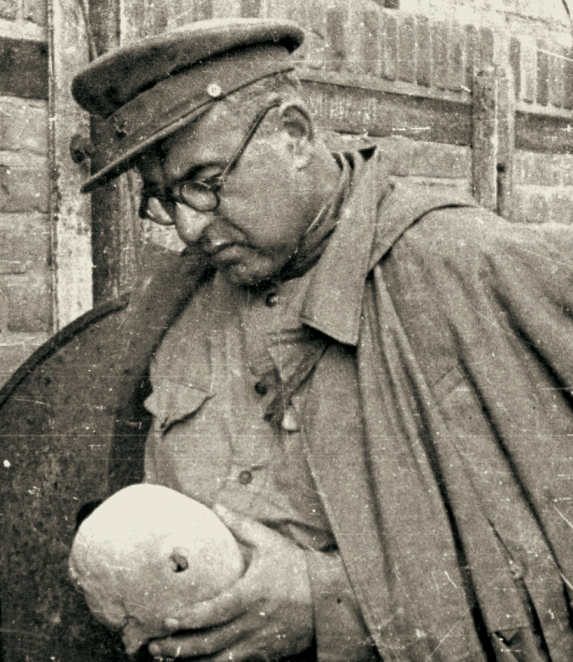
He was born in the Belarusian village of Susza in the Soviet Union (present-day Belarus). He was a major of the Red Army serving in the sanitary service, and a frontline surgeon. He was taken into German captivity near Vitebsk and Orsha in the spring of 1943. Suren was deported to Majdanek in a transport of Soviet POW invalids in October 1943. He was placed at field II where he worked as a physician in the lazaret. He remained in the camp until its final liquidation, and the participated in the works of the Polish-Soviet commission investigating the German crimes committed at Majdanek. From March 1945 he worked in the field hospitals around Poland. He passed away in 1980.

A black-and-white photograph of a middle-aged man wearing a military uniform. He is wearing a peaked cap and glasses. He is holding a human skull in his hands.

Michał Gancarz

He was born in 1904. He worked as the head of the post office in Opole Lubelskie. The Germans arrested him as a resistance member in March 1943. Michał was first detained at the Gestapo prison in Kazimierz Dolny and then in the Lublin castle. From August 1943, he was at Majdanek, registered as prisoner no. 5291 and labelled with the so-called Fluchpunkt that marked the inmates suspected of a potential escape attempt. He became involved in the in-camp resistance and headed the Home Army cell at field IV. In April 1944 Michał was transferred to KL Auschwitz, and later also to KL Buchenwald and Mittelbau-Dora.

A black-and-white portrait photograph of a man, shot from the shoulders up. He has short hair and is facing the camera. He is wearing dark clothing. The background is plain.

Mieczysław Bieńko

He was born in the village of Skomorochy Małe in 1919. He was arrested as a resistance member in June 1943 and detained at the prison in Hrubieszów. Mieczysław was deported to Majdanek in July 1943 and registered as prisoner no. 2808. He worked at the construction works kommando and later in the camp carpenters’ workshop. He remained in KL Lublin until its final liquidation. Mieczysław lived in Hrubieszów after World War II. He passed away in 1985.

A black-and-white portrait photograph of a young man, taken in close-up. He has short hair and is looking straight ahead. He is wearing a light-coloured shirt. The background is plain.

Mordechaj Sztrygler

He was born in Zamość in 1921. He was a poet, writer, and essayist, who created writings in Yiddish. He was imprisoned at the Luftwaffe camp in Zamość until the end of May 1943. Then, he was included in the transport of around 400 men and women deported to Majdanek. Mordechaj was placed at field III. In June 1943, he was transferred to the labour camp in Skarżysko-Kamienna. In the years 1945–1952 he lived and Paris, and in 1953 he settled in New York. Mordechaj worked as a renowned journalist and editor of the “Forverts” magazine. He passed away in 1998.

A black-and-white portrait photograph of a young man, taken from close up. He has short hair, a slim face and is looking slightly to one side. He is wearing a jacket. The background is plain.

Alexander Donat (Michał Berg)

He was born in Warsaw in 1905. He was married, had a son, and worked as a press publisher before World War II. During the German occupation he was locked in the Warsaw ghetto. Together with his wife, Lena, they were deported to Majdanek in May 1943. A month later he was transferred to the labour camp in Radom, and then remained imprisoned in KL Dachau until his liberation. After World War II, he returned to Warsaw and reunited with his family. Then, they all moved to the USA, where Michał engaged himself in the commemoration of the Holocaust victims. In 1977m he co-founded The Holocaust Library – the organisation gathering the testimonies of Jews from World War II. He authored the following books: Jewish Resistance, Holocaust Kingdom, and The Death Camp Treblinka. He passed away in 1983.

Jerzy Bargielski

He was born in 1898. He worked as a lawyer, and was an active resistance member operating under the codename “Średni”. The Germans arrested him in April 1940. Jerzy was detained at the Soldau transit camp, then KL Dachau and from May 1940 in KL Mauthausen. In December 1942, he was deported to KL Lublin and registered as prisoner no. 40. At Majdanek Jerzy acted in the secret resistance as an informant for the Government Delegation for Poland. He remained in the camp until its final liquidation. On 23 July 1944, he escaped from the death march to KL Auschwitz. After World War II he lived in Maków Mazowiecki. He passed away in 1963.

A black-and-white portrait photograph of a man, taken in close-up. He has short hair and is looking directly at the camera. He is wearing a jacket. The background is plain.

Jerzy Pfefer

He was born in Warsaw in 1908. A graduate of accounting and economics at the Warsaw School of Economics. Together with his father, Jerzy was running a leather goods trading company. During the German occupation he was a forced labourer in the Warsaw ghetto. Following the downfall of the Warsaw Ghetto Rising Jerzy and his family were deported to Majdanek. He was the sole survivor. While working in the lumber mill on the outskirts of Lublin in June 1943, he made a successful escape attempt, walked back to Warsaw and remained in hiding. Later he fought in the Warsaw Uprising, and took the name of Józef Zieliński after its downfall. Jerzy lived in Łódź after World War II, and emigrated to the USA in the following year. He passed away in 1999.

A black-and-white portrait photograph of a man, shot from the shoulders up. He has short hair and is facing forward. He is dressed in formal attire. The background is plain.

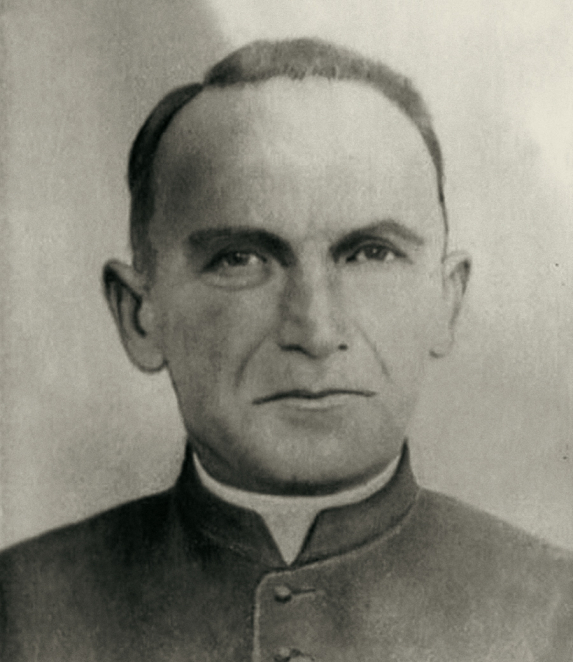
Emilian Kowcz

He was born in Kosmacz (Ukraine) in 1884 and was a Greek-Catholic priest. The Germans arrested him for aiding Jews in Przemyślany in late December 1942. Emilian was detained at the Gestapo Łącki prison in Lviv, and in August 1943 he was deported to Majdanek and registered as prisoner no. 2399. Throughout his entire incarceration in the camp he provided spiritual support to the fellow inmates. He contracted a disease and died in the camp infirmary on 25 March 1944. Pope John Paul II proclaimed him a blessed of the catholic church in 2001.

A black-and-white portrait photograph of a man, showing his head and shoulders. He has short hair and his face is turned slightly to one side. He is wearing a dark cassock with a white clerical collar. The background is light.

Romuald Sztaba

Born in Dąbrowa Górnicza in 1913, he was a physician. The Germans arrested him in January 1941 for his involvement in the resistance. He was first detained at the prison in Mysłowice and then in KL Auschwitz. Romuald was then among the physicians transferred to Majdanek in February 1942. He was registered as prisoner no. 16, worked in the infirmary, and was involved in the in-camp resistance. In April 1944, he was sent in the evacuation transport to KL Gross-Rosen, and later to KL Leitmeritz. After World War II, he became a professor of paediatric surgery at the Medical University in Gdańsk. Romuald testified against the Majdanek garrison members during their trial in Düsseldorf. He passed away in 2002.

Black-and-white portrait photograph of a man, framed from the chest up. He has short hair and looks directly at the camera. He is wearing a striped prisoner unifiorm. The background is plain.

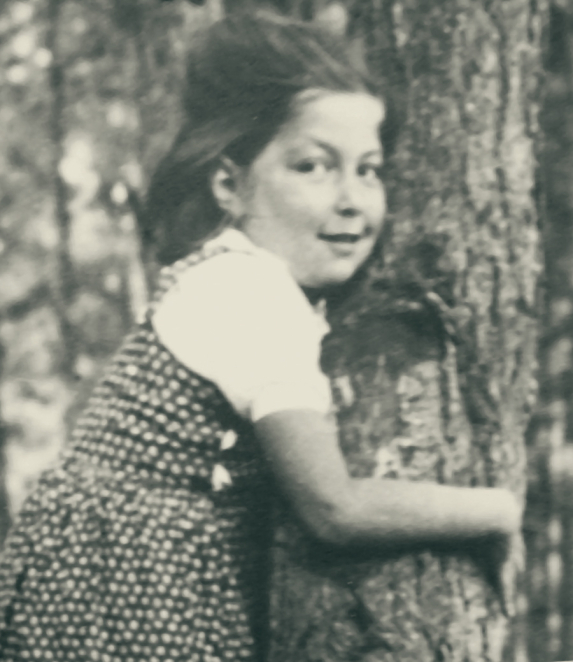
Urszula Tochman-Welc

She was born in 1930. Her family were displaced from the town of Tarnogród during the German pacification of the Zamość region in the summer of 1943. She was initially placed at the transit camp in Zwierzyniec, and them at Majdanek. In August 1943, Urszula and her family were deported to Germany for forced labour. She returned to Poland in June 1945, and lived in Łańcut, where she worked as an accountant.

Black-and-white portrait photograph of a young person in a close-up frame. The hair is short or tied back, and the face is directed toward the camera. The background is light and without details.

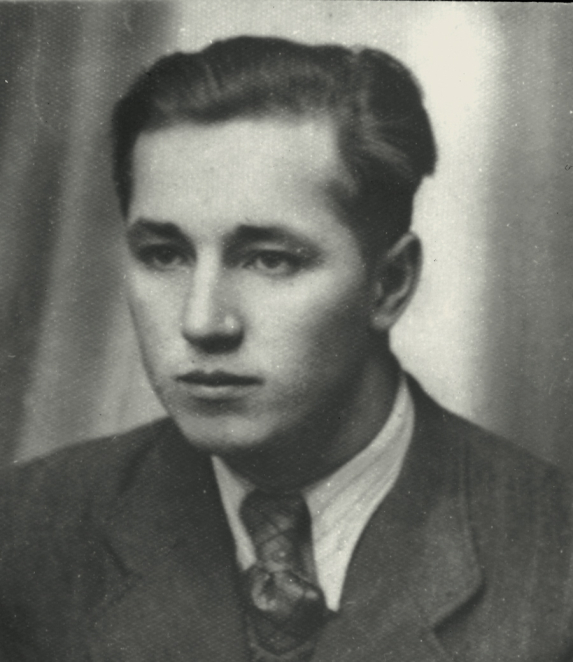
Zdzisław Badio

He was born in the village of Krupiec in 1925. The Germans arrested him in a round-up when he was 17. Following his brief incarceration at the Gestapo prison in Krasnystaw, he was deported to Majdanek as a hostage, and registered as prisoner no. 16291. In the camp he was performing groundworks, and then worked in the SS canteen. He was officially released from the camp in December 1942. Zdzisław received numerous decorations for his involvement in preserving the memory of the victims of World War II and building the Polish-German dialogue, including the Gold Cross of Merit and the Order of Polonia Restituta, as well as the Cross of Merit on Ribbon of the Order of Merit of the Federal Republic of Germany granted by the German president. He passed away in 2021.

Black-and-white portrait photograph of a young man, framed from the shoulders up. He has short hair and looks straight at the camera. He is wearing simple clothing. The background is neutral.

Piotr Kiriszczenko

He was born in the Belarusian village of Szkiele in 1933. During the German pacification operations led in the Vitebsk region in retaliation to the local partisan activity, Piotr, together with his mother and brother, were all displaced. He was deported to Majdanek in the spring of 1943 from the camp in Vitebsk, and then transferred to the children’s concentration camp in Łódź in the autumn of 1943, and a year later to the camp in Crimmitschau. Piotr was liberated in July 1945 and returned to his homeland.

Black-and-white portrait photograph of a child or very young person in a close-up frame. The hair is short, and the face is directed toward the camera. The background is light.

Tadeusz Kosibowicz

He was born in Nowy Sącz in 1893. He was a physician and the principal of the county hospital in Będzin. The German arrested him for sheltering Jews in May 1940. He was first detained in Sosnowiec and then in the KL Dachau and KL Sachsenhausen concentration camps. He was among the prisoner-doctors that were transferred to Majdanek in November 1941. Tadeusz was registered as prisoner no. 23 and worked in the camp infirmary, where he contracted typhoid fever over time. In April 1944, he was sent in the evacuation transport to KL Gross-Rosen and ten months to KL Leitmeritz. Following his liberation in 1945 Tadeusz returned to Będzin. He passed away in 1971. The Yad Vashem Institute proclaimed him a Righteous Among the Nations in 2006.

Black-and-white portrait photograph of a middle-aged man, framed from the chest up. He has short hair and faces the camera. He is wearing formal clothing. The background is plain.

Natan Żelechower

He was a dental technician. His wife and daughter were murdered in Treblinka. Natan was deported to Lublin after the outbreak of the Warsaw Ghetto Uprising in April 1943. He was first detained at the Flugplatz labour camp and then at Majdanek, where he was registered as prisoner no. 612. Then, he was transferred to KL Auschwitz and worked in the coal mines of its Jawischowitz sub-camp and Brzeszcze. Later Natan was also detained in KL Buchenwald, Ohrdurf, and KL Mittelbau-Dora. He was liberated by the American troops in 1945. He emigrated to Israel in 1949. Natan wrote his wartime memoir entitled I Survided to Tell: A Holocaust Memoir about Survival in the Warsaw Ghetto and 7 Camps. He passed away in 1994.

Marcin Gryta

He was born in Zakrzówek in 1896. He owned a grocery store. Marcin was arrested as a resistance member in February 1943 and detained at the Gestapo prison at the Lublin castle. Two months later, he was transferred to Majdanek and registered as prisoner no. 7803. He managed to escape from the death march to KL Auschwitz in July 1944. Marcin wrote a memoir entitled Byłem numerem [I was a Number]. He passed away in 1964.

Black-and-white portrait photograph of a man, framed from the shoulders up. He has short hair and looks directly at the camera. The background is light.

Maria Bielicka-Szczepańska

She was born in Warsaw in 1909, graduated from the Warsaw Conservatorium, and was a professional actress and singer. The Germans arrested her as a resistance member in August 1942 and detained her at the Gestapo Pawiak prison. In January 1943, Maria was deported to Majdanek and registered as prisoner no. 4441. She worked as a cleaner in the camp infirmary. In April 1944, she was transferred to KL Auschwitz, and then to KL Ravensbrück and KL Neustadt-Glewe. After World War II, she worked as a theatre actress in Łódź and Warsaw. Maria received numerous decorations, including the Officer’s Cross of the Order of Polonia Restituta and the Silver Cross of Merit. She passed away in 1989.

Black-and-white portrait photograph of a woman in a close-up frame. Her hair is neatly styled, and she faces the camera. She is wearing dark clothing. The background is plain.

Jerzy Kwiatkowski

He was born in Vienna in 1894, and graduated from the University of Vienna with a Ph.D. in law. The Germans arrested him as a resistance member and detained him at the Gestapo Pawiak prison. In March 1943, Jerzy was deported to Majdanek and registered as prisoner no. 8830. He worked as a gardener and later in the camp records office. In July 1944, he was sent in the evacuation transport to KL Auschwitz, and then further to KL Sachsenhausen. After World War II, he lived in western Europe, eventually migrating to the USA in 1950. Jerzy wrote a memoir entitled 485 Days at Majdanek. He passed away in 1980.

Black-and-white portrait photograph of a man, framed from the chest up. He has short hair and faces the camera. He is wearing formal clothing. The background is neutral.

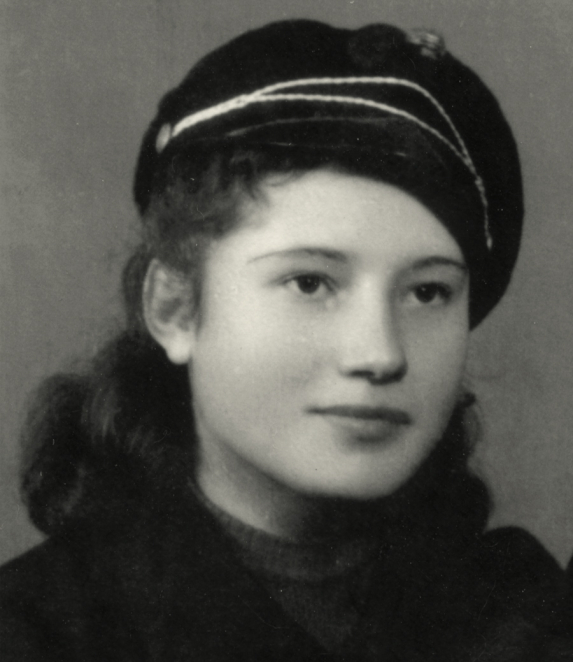
Jadwiga Ankiewicz

She was born in Warsaw in 1926. The Germans arrested her during a street round-up on 16 January 1943, and took her to the Gestapo Pawiak prison. On the following day she was sent in a transport to Majdanek, where she was registered as prisoner no. 5322. During her detention in the camp, Jadwiga was secretly writing down the most important events in her smuggled notebook – thus keeping a diary she entitled Majdanek. 15 I–17 V 43. She was among the group of female inmates caught in the round-up, who were released from KL Lublin in May 1943. On 30 January 1944, some German soldier shot her in one of the streets of Warsaw. She was just 17 years-old.

Black-and-white portrait photograph of a young woman in a close-up frame. Her hair is neatly combed, and she looks toward the camera. The background is light.

Bronia Zysman

She was born in 1930, to Perla and a renowned Lublin tailor Nechemiasz Zysman. She also had a sister, Basia, born in 1926. Both girls were taken to Majdanek after the liquidation of the Majdan Tatarski ghetto in November 1942. In the camp, Bronia declared higher age to survive – stating she was three years older. She was among the 66 female inmates that were transferred to the Gestapo prison at the Lublin castle. There, she reunited with her sister, that had been kept there from February. Both sisters works as seamstresses, and they were both murdered during the mass execution on 22 July 1944 – hours before the liberation of Lublin.

Black-and-white portrait photograph of a young girl, framed from the shoulders up. Her hair is short or tied back, and she faces the camera. The background is plain.

Tadeusz Stabholz

He was born in Warsaw in 1916, and studied medicine at the University of Warsaw. When he was locked in the Warsaw ghetto, he continued his education at underground courses, and worked in the Jewish Hospital in Czyste. In May 1943 Tadeusz was deported to the extermination camp in Treblinka, where he was selected for labour and deported to Majdanek. In the summer of 1943 he was transferred to KL Auschwitz, and later further to KL Sachsenhausen and KL Dachau. In 1947, Tadeusz published his memoir entitled Siedem piekieł [Seven Hells]. In 1948 he emigrated to the USA. He finished his medical education in 1953 and settled in Ohio. He passed away in 2009.

Otto Hett

He was born in the German city of Augsburg in 1913. He graduated from medicine and worked as a physician. For his criticism of the Nazi regime he was arrested in 1938 and sentenced to 14 months of imprisonment. After that time, he was not released, but instead he was taken into “protective custody” and sent to KL Dachau in April 1940. He was then transferred to Majdanek in December 1941 and registered as prisoner no. 15. Initially he worked at the infirmary barracks at field III, and then became the chief physician in the lazaret for Soviet invalids at field II. Otto was murdered in unclear circumstances during a death march to Auschwitz in July 1944.

Black-and-white portrait photograph of a man, framed from the chest up. He has short hair and faces the camera. He is wearing formal clothing. The background is light.