Dolls from Majdanek

Photographic Exhibition

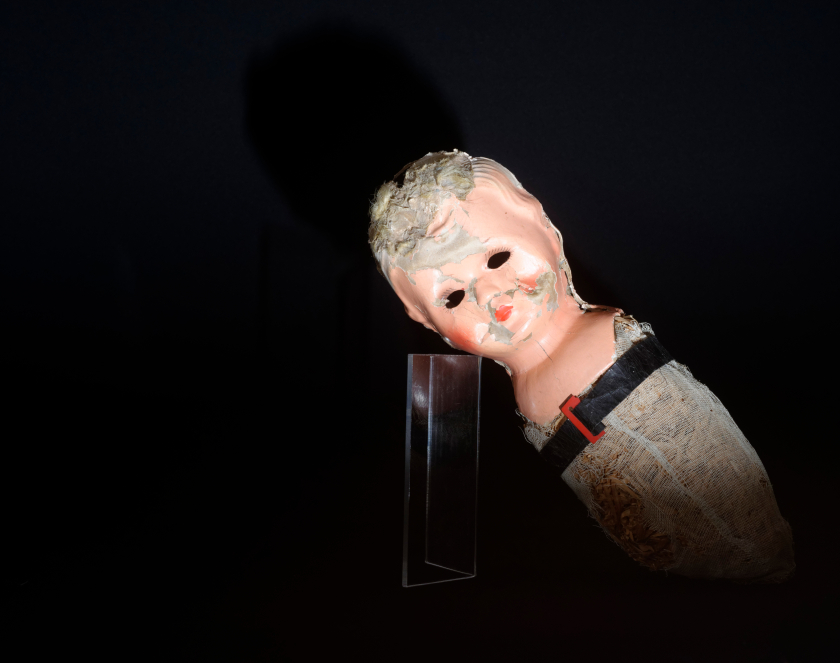
A destroyed doll's head and body leaning against a plastic pedestal, surrounded by a black background.
There are sixteen dolls in the collections of the State Museum at Majdanek. Most of them were found on the grounds of the former German Nazi concentration camp immediately after its liquidation in 1944. They were photographed by the Israeli artist Tal Schwartz and arranged into an exhibition.

Important information

Temporary exhibitionArchival
  • Exhibition date:07.07.2016 - 10.05.2018
  • Place:House of Words of the “Grodzka Gate ‐ NN Theatre” Centre / State Museum at Majdanek / the Culture Centre in Białystok
  • Curator:Tal Schwartz
  • Language version:Polish

The exhibition has resulted from the cooperation between the photographer Tal Schwartz, the “Grodzka Gate ‐ NN Theatre” Centre, and the State Museum at Majdanek.
Dolls in the Museum

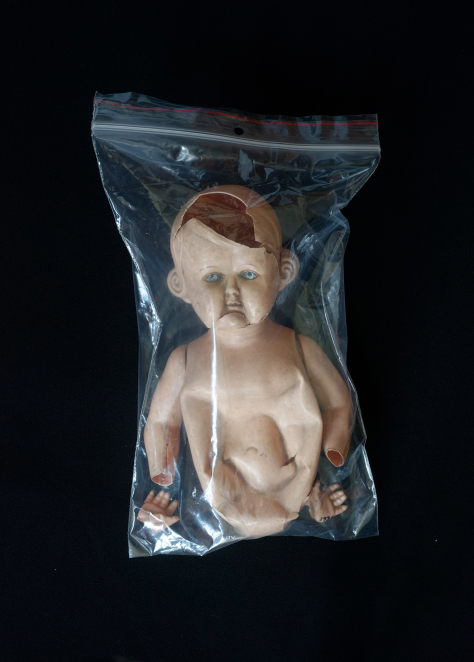
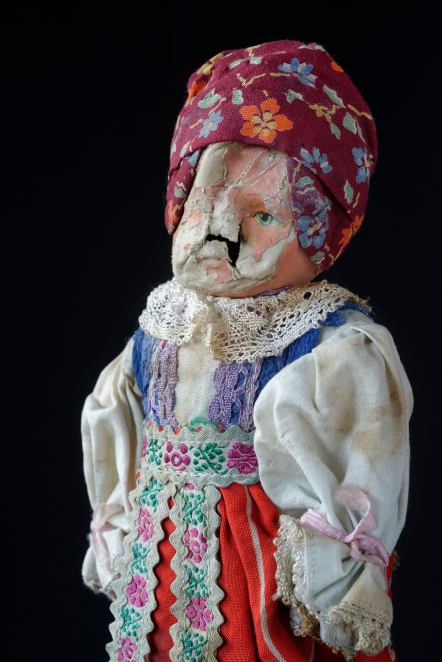
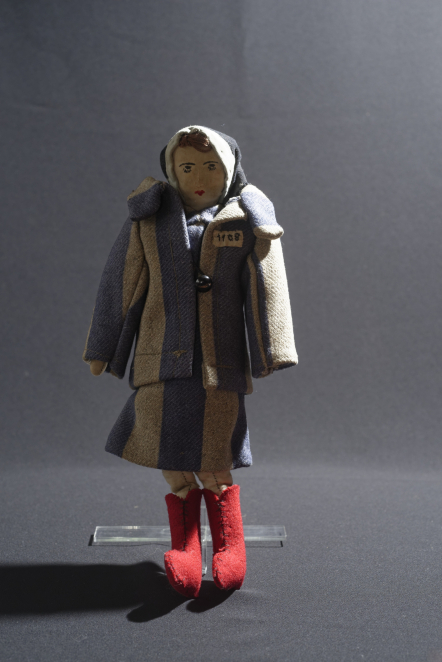
Fifteen dolls or their remains were found on the camp grounds. The toys are partially damaged. The papier mâché heads have dented faces, cracks and flaking paint are visible, and eyes are often missing. One sawdust-stuffed doll has no head, others lack legs, arms or hands. The wooden and a rag jester doll and a rag baby doll are in better condition. Most are carefully and colourfully dressed: in folk costumes, a velvet embroidered dress and knitted shorts. The Gypsy doll wears a red cap and has eyes made of beads. One doll is different. It was made in the camp, “Szarusia” is dressed in a prisoner’s striped uniform, a headscarf and shoes. It was donated to the museum collection in 1944 by Jadwiga Giebułtowicz, the wife of Józef Giebułtowicz. He was a former prisoner who escaped during the last transport from Majdanek. He received the doll in exchange for food and, with the help of prisoners working in external groups, sent it to his two-year-old daughter.

A doll dressed in a striped dress, a headscarf, and red shoes.
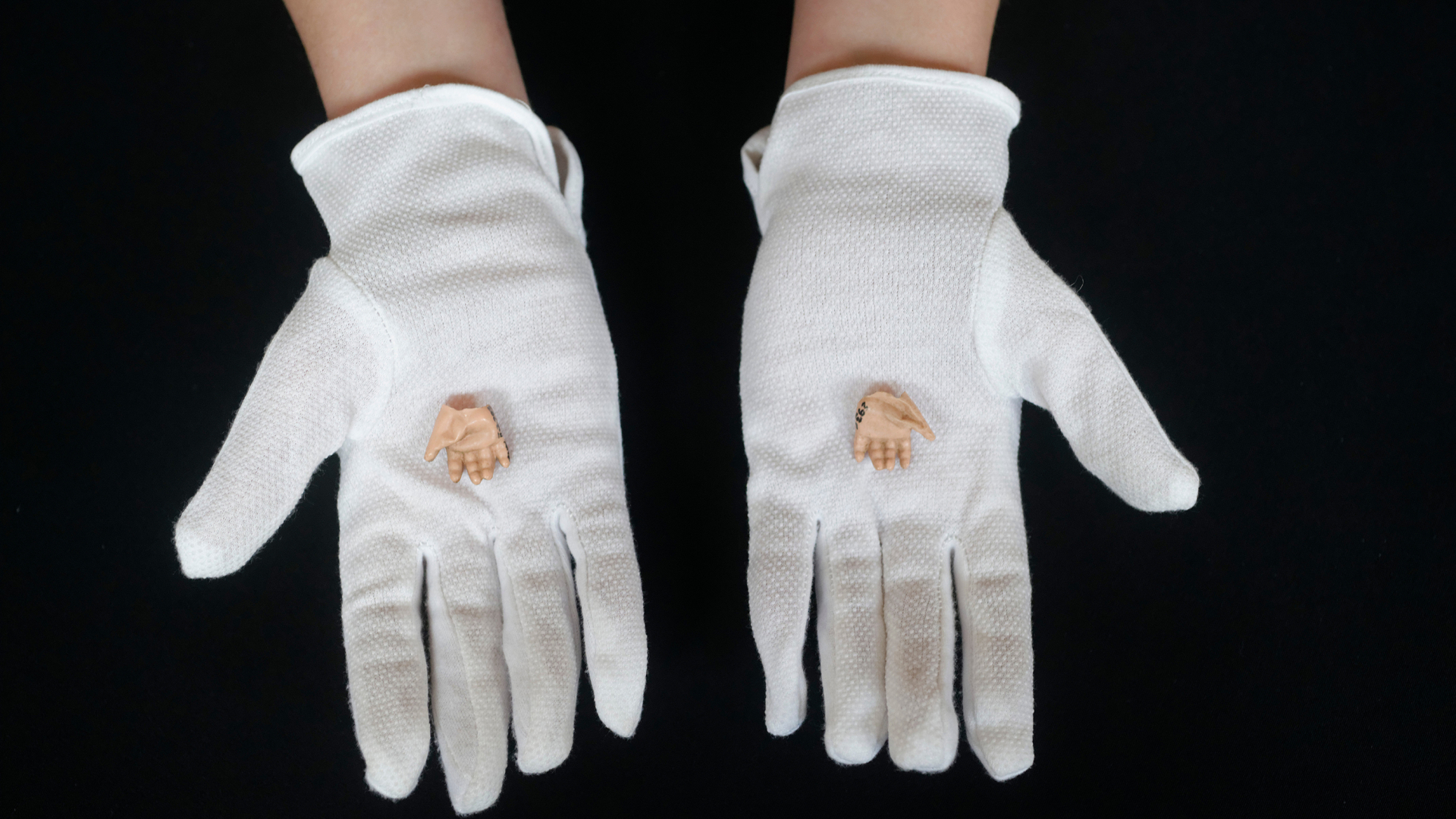
Two hands with thumbs pointing outward, wearing white gloves, with the hands of dolls resting on them; black background

Photographic Series

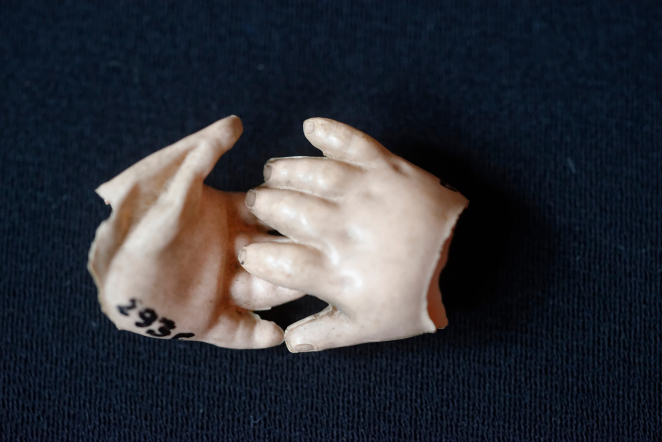
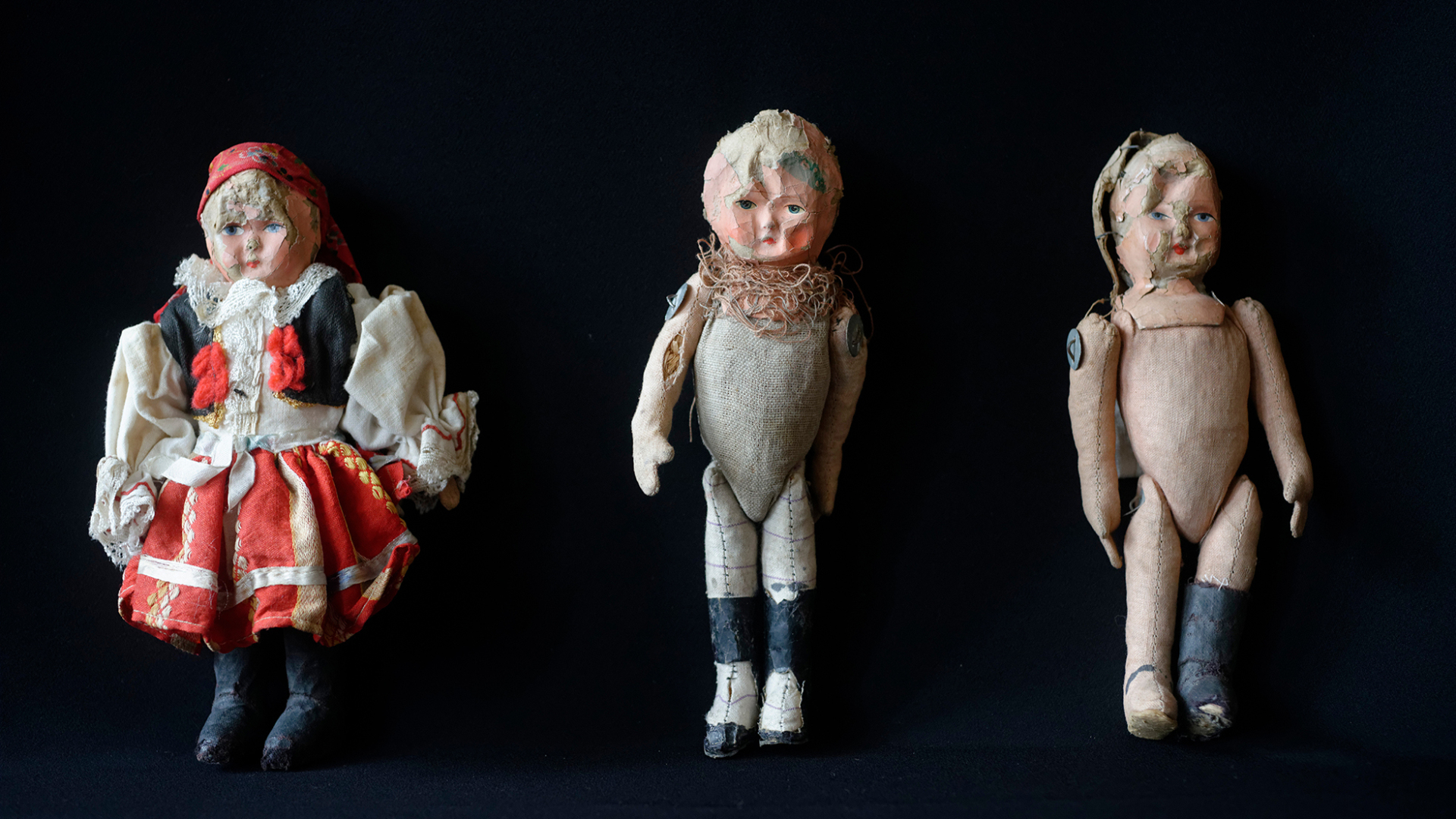
The artist did not place the museum objects against a white background but chose the black one. This made it possible to show them in the simplest way, while not distracting the viewer’s attention from the objects themselves. Against a black background, all imperfections are more visible. The photographer chooses different framings, from photographs that gather the entire collection to close-ups focusing on details: a head, tiny hands that were originally attached to arms. In one image, the doll’s remains are held on open palms in museum gloves.

Damaged doll body in a plastic zip-lock bag

The Status of the Doll

In the text accompanying the exhibition, Tal Schwartz wrote: “A doll plays multiple roles. It can be a source of comfort, a friend, a reminder of the outside world or of a distant person, a remnant of the family home, a gift. It can be anything and nothing. […] After being transferred to a museum collection, the status and purpose of dolls change. Stored in a box on a shelf, they become historical evidence. Every smallest detail is catalogued: a break, a hole in a dress, a damaged limb.” The exhibition at Majdanek was accompanied by a brochure containing photographs and descriptions of the objects taken from inventory cards. Detailed yet dry and technical, focused on the state of preservation of the dolls, these descriptions symbolically tell the story of the tragedy of their child owners.

A doll with a damaged face dressed in traditional clothing, wearing a floral headscarf.

Tal Schwartz on Photographing the Dolls

“As I photographed these dolls,” the artist states, “I tried to consider their other functions, that the process of archiving paradoxically threatens to conceal or erase — though this paradox is arguably inherent to photography in general, as it is itself an act of archiving. Nevertheless, photography — at least in the field of research and historical archives — is held to the values of scientific objectivity and historical truth. Objectivity, with its strict norms and rules, is traditionally associated with a specific type of photography, one that precludes intervention (i.e. “staging”) and demands consistency, sharpness, and clarity. By challenging these rules and norms through various means of deliberate intervention, the displayed works try to re-mark the process of archiving while reconsidering the dolls and their possible functions beyond the realm of the historical evidence.”

Plastic hands joined together
Three dolls on a black background; the one on the left is wearing traditional clothing, the other two are naked, and their faces are dented