Accessibility

Architectural Accessibility

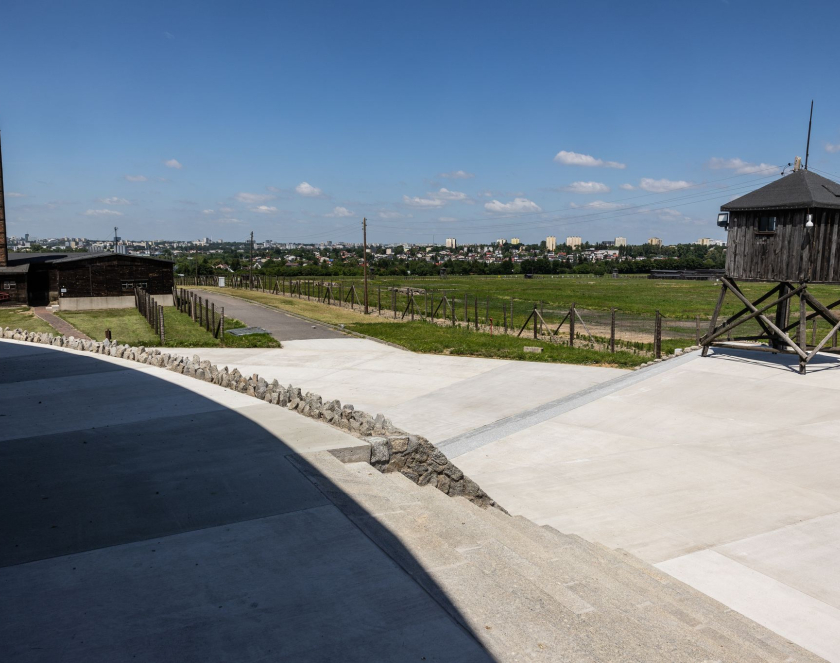
View of the former concentration camp at Majdanek from the Mausoleum, with the crematorium building with its tall chimney on the right, the watchtower and stairs on the left, and city buildings in the distance in the background.
Make sure to verify the architectural accessibility before visiting the Museum. Most objects that contain our exhibitions are not easily accessible for people with physical disabilities as they are authentic post-camp barracks.

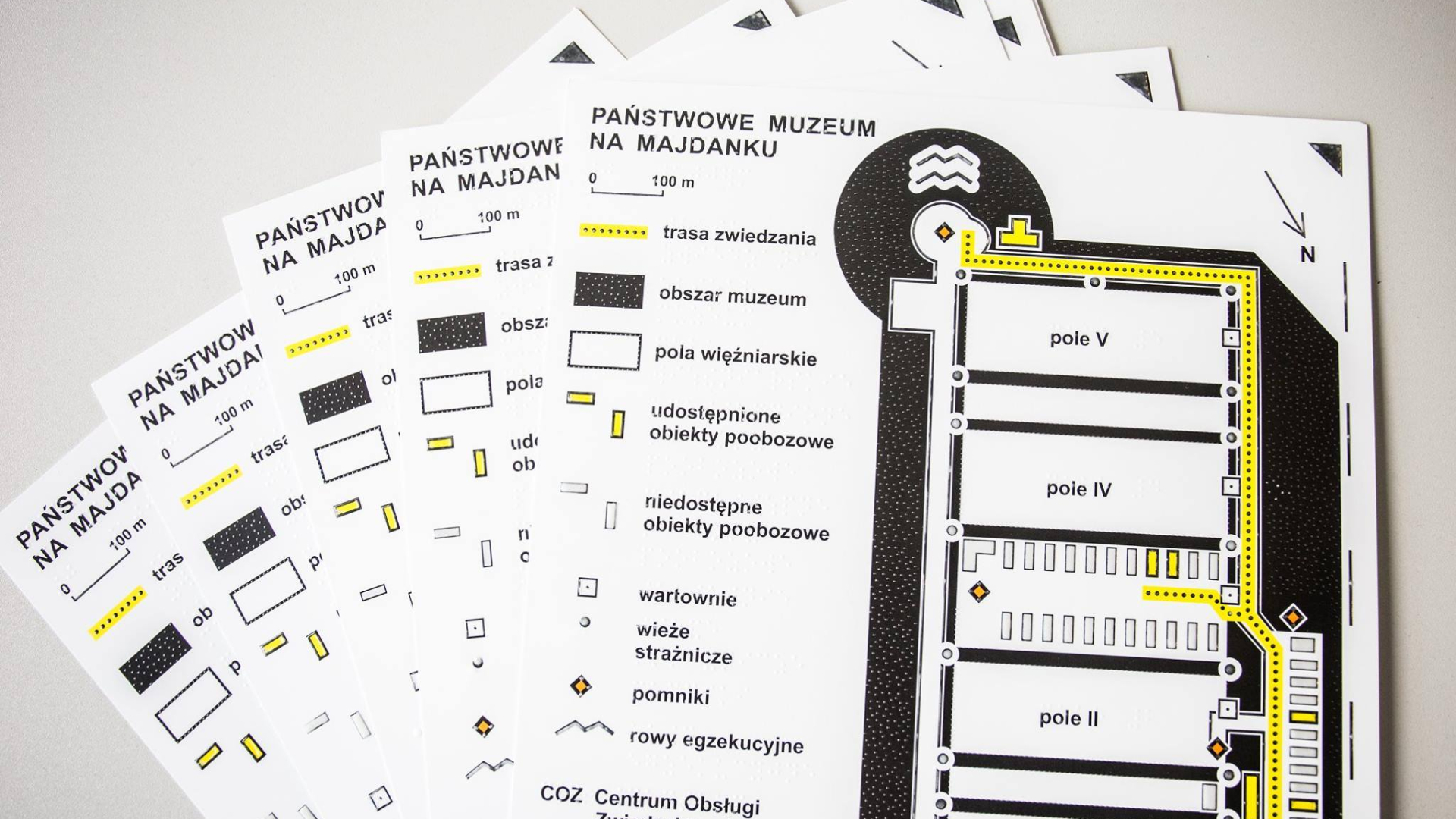
The Visitor Service Centre building is accessible to visitors on wheelchairs. It is equipped with a special restroom, and a braille map of the Museum grounds. The information desk and our bookstore are also equipped with induction loops. Our staff do not know the sign language.
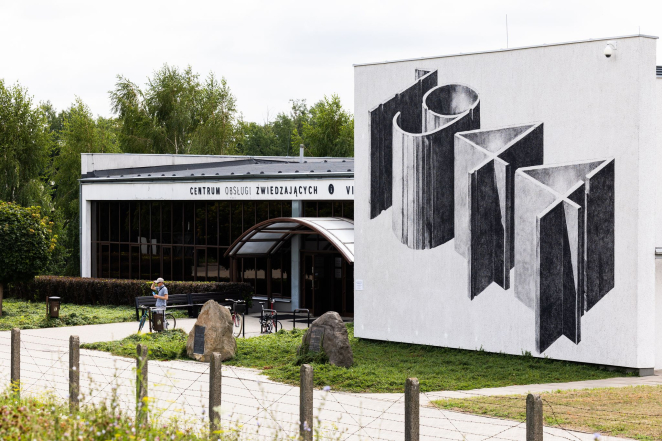
Visitor Service Centre building, monochrome mural on the front wall: 1944, semicircular canopy above the entrance, inscription above it: Visitor Service Center, two stone-shaped monuments in front of the building.
Several tactile maps showing the layout of the former concentration camp at Majdanek

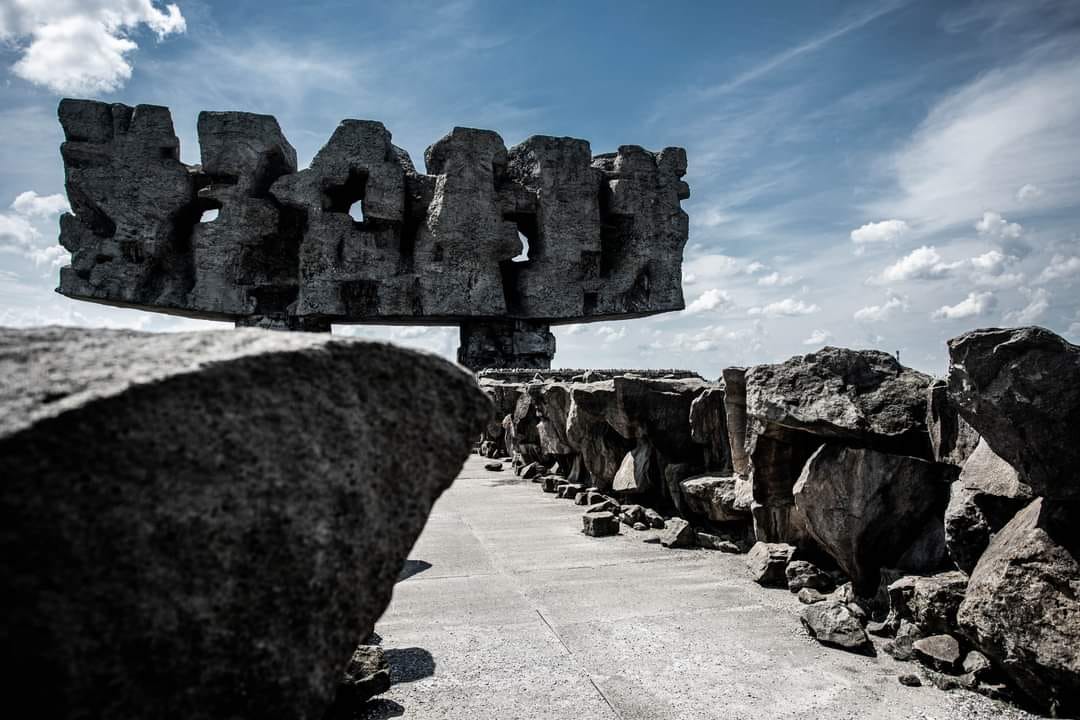
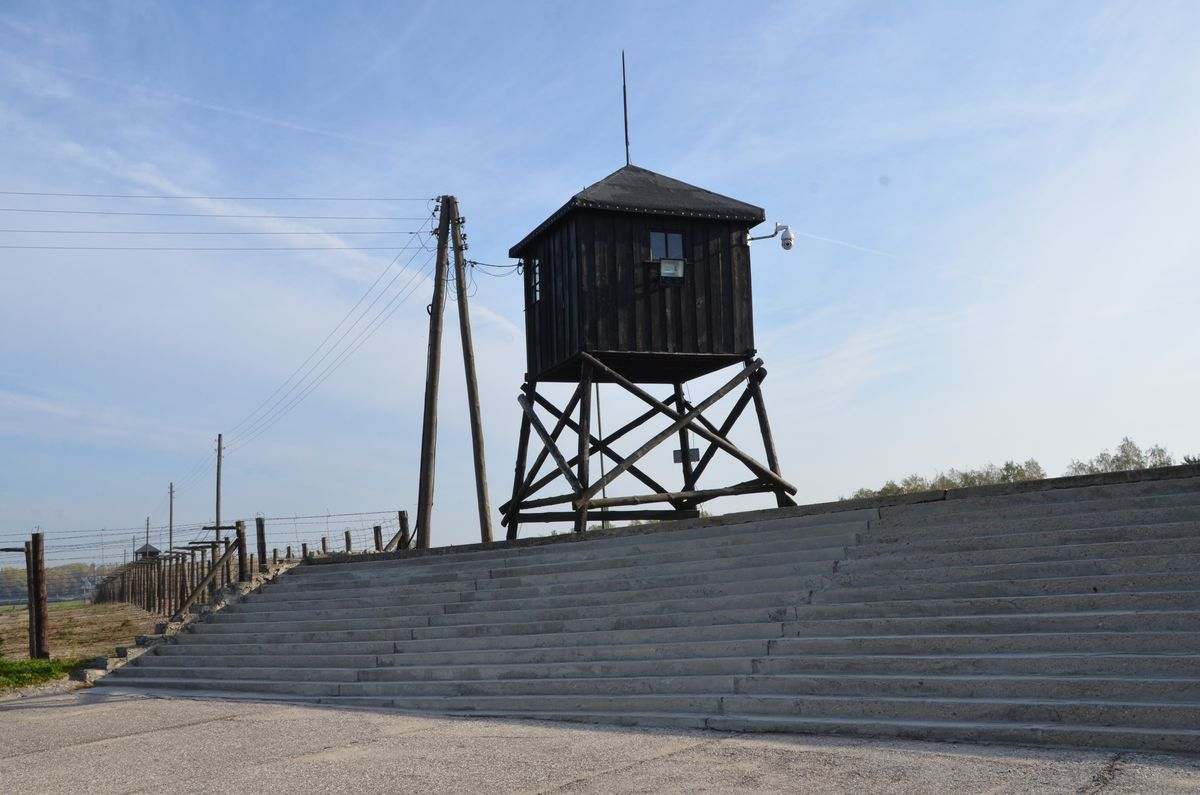
Steep stairs make it impossible to reach the Gate-Monument on wheelchairs. Physically disabled visitors can only reach its close vicinity by approaching from the side of the Visitor Service Centre or the Road of Homage and Remembrance.

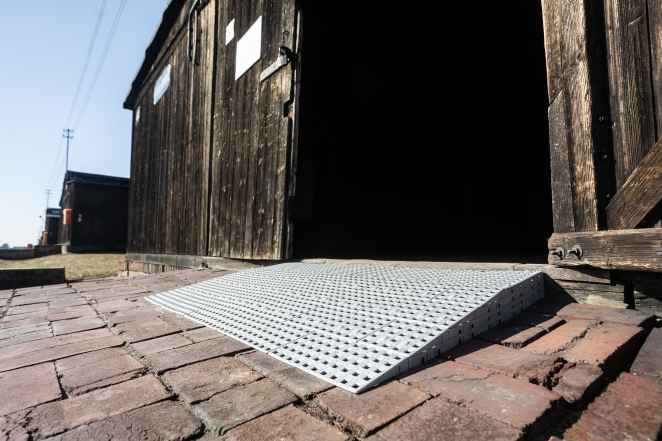
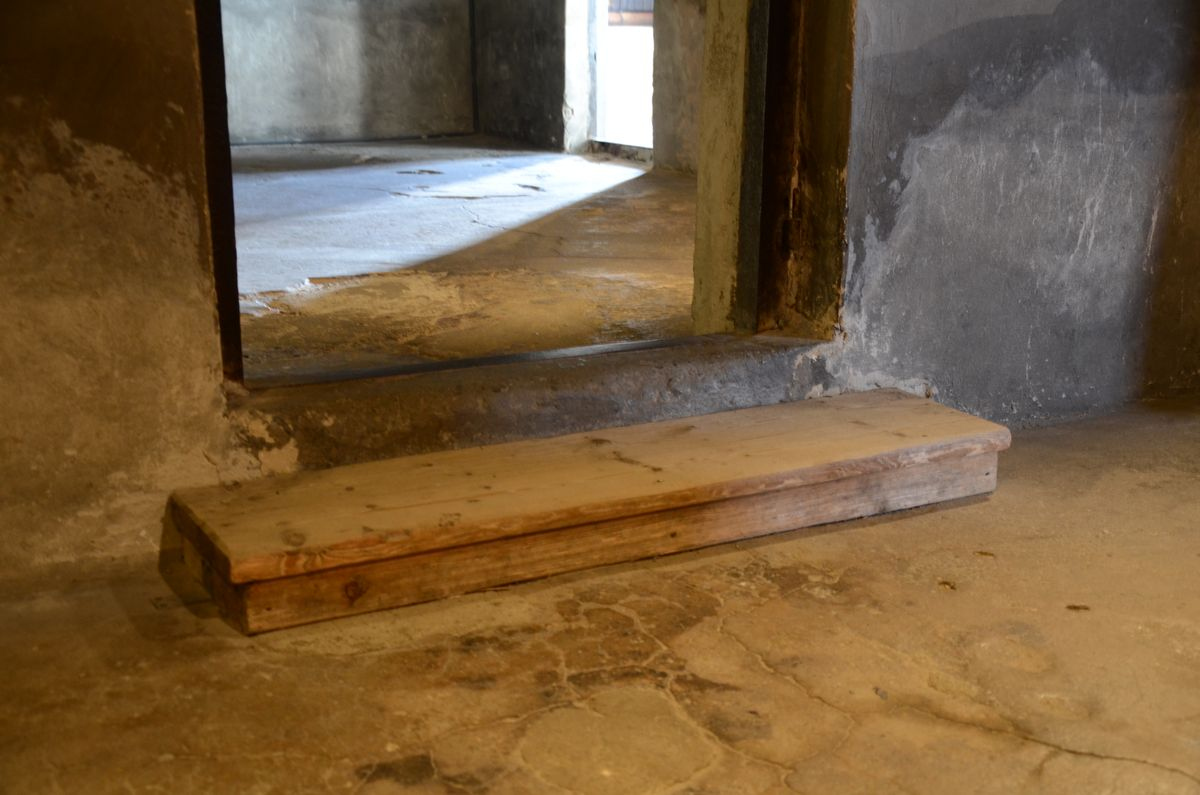
The buildings have doorsteps and narrow doors. The barracks nos. 43, 44 and 52 are equipped with non-slip ramps that provide access to those buildings from the sidewalk level. We offer the assistance to our employee equipped with portable rains that allow entry into the remaining objects. In order to have this assistance granted, the Museum must be notified at least three days before the visit.

A latticed platform under the door of a wooden barrack.

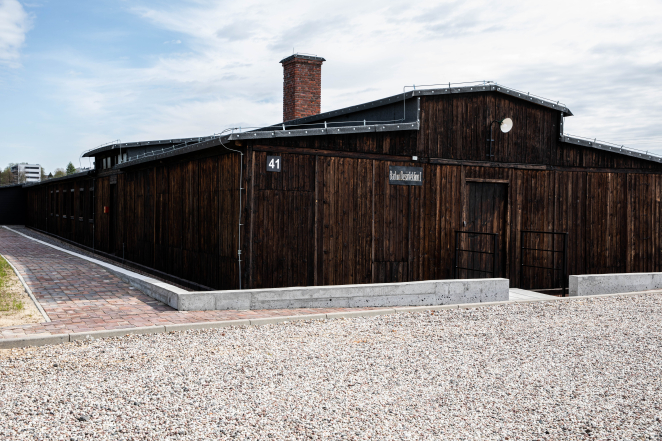
Concrete and metal ramps are installed to provide access to the bathhouse barracks nos. 41-42 and to the gas chamber bunker. A steep doorstep separates barracks no. 41 and the gas chamber building. The gas chambers can be accessed by physically disabled visitors from the other side, which can be reached by going back and around the bathhouse barracks.

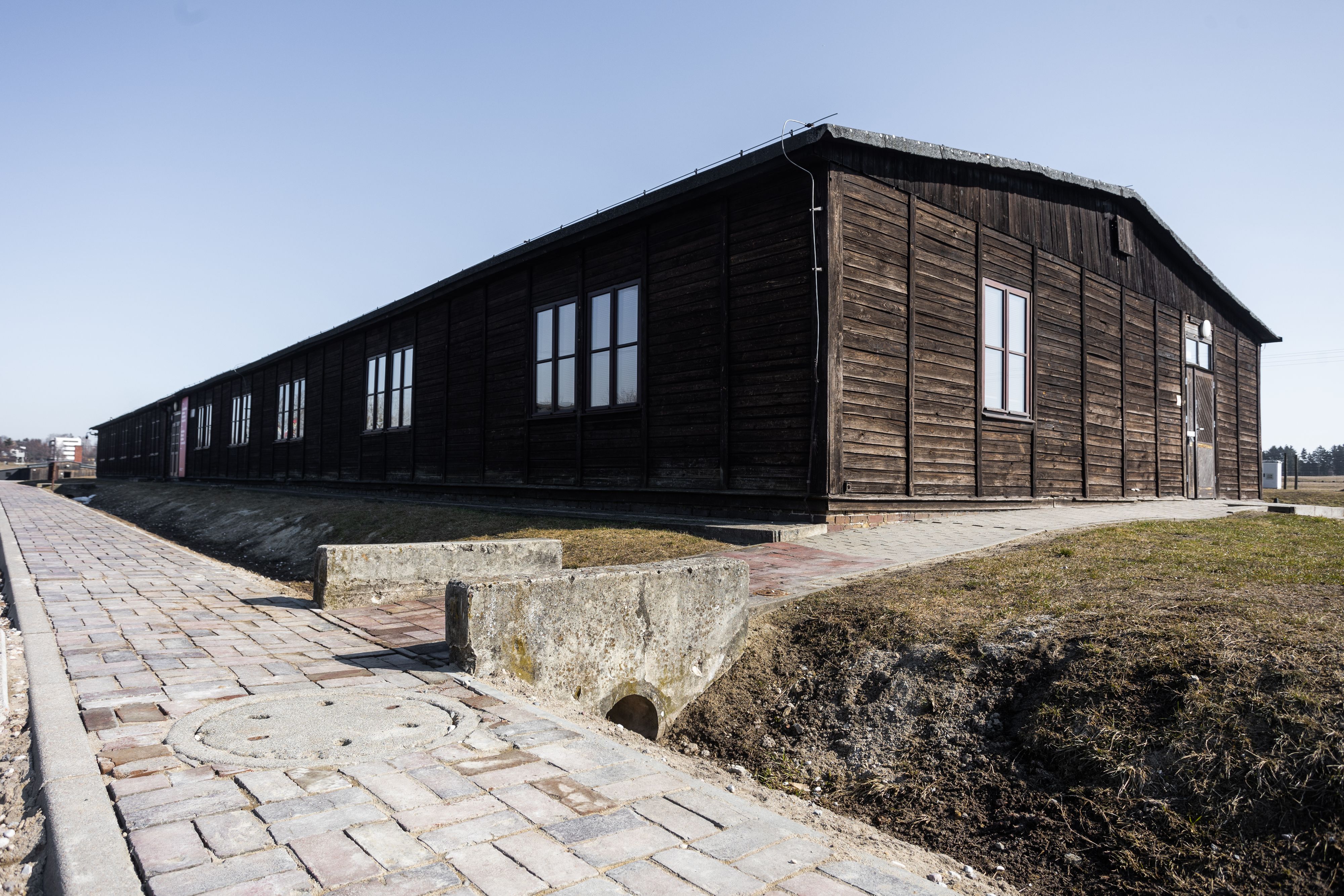
A wooden prison barrack with a tall rectangular chimney, surrounded by a concrete band.

Barracks no. 62 with the “Prisoners of Majdanek” exhibition is accessible to wheelchairs, features an adjusted restroom, and is equipped with an induction loop. However, it must be entered from a different side. In order to reach it, one must use an elevated path crossing located in the vicinity of barracks no. 62 and 48. The second path is located near barracks no. 56. The staff members working on sight do not know the sign language.
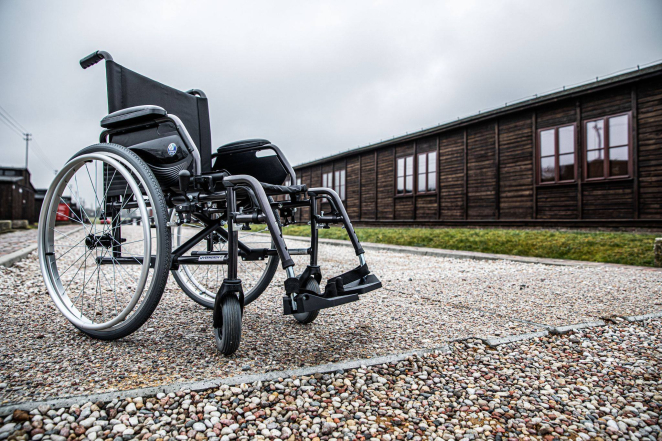
An orthopedic cart placed on a road paved with small stones,  in the background a wooden prison barracks with 6 pairs of windows.
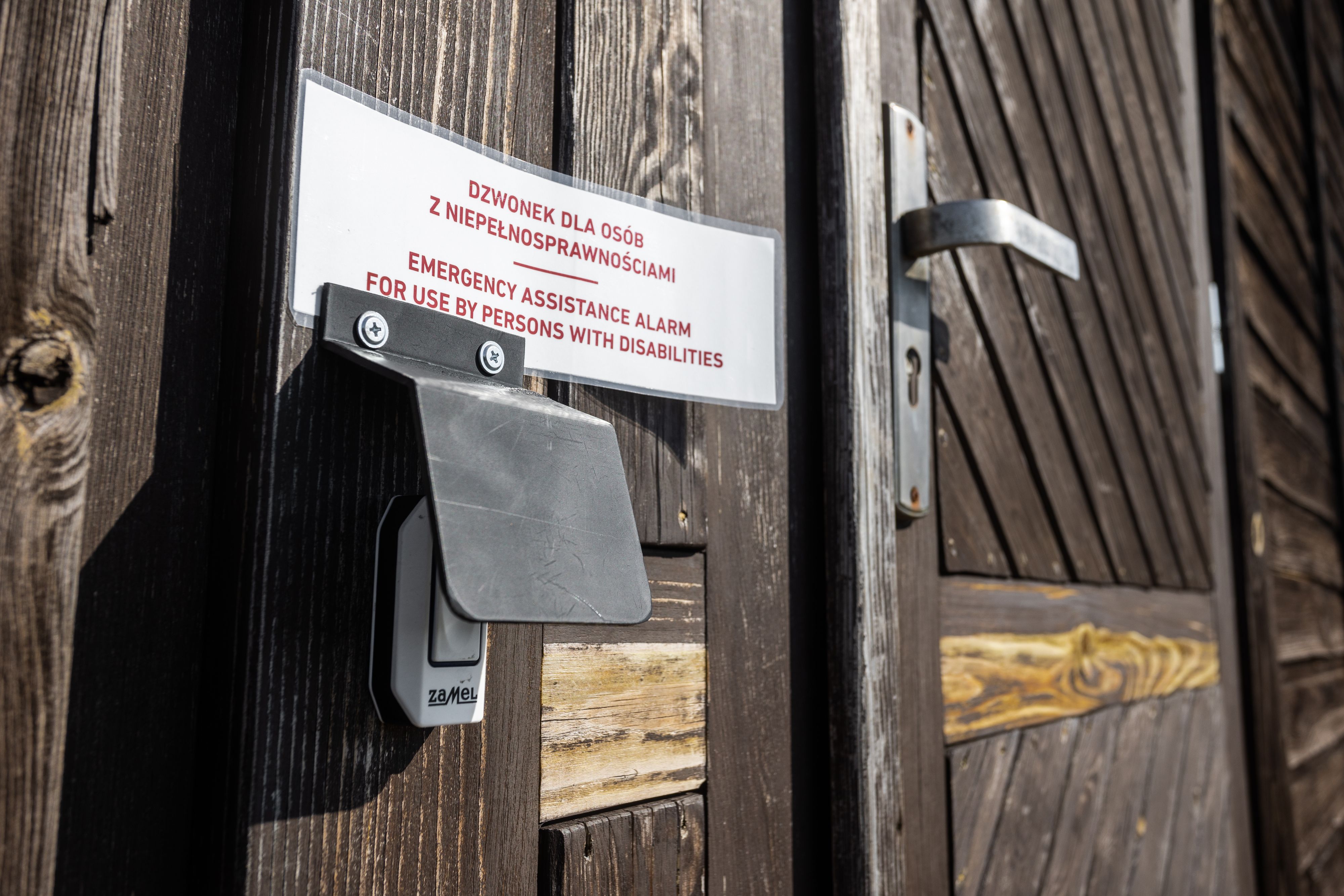
  • Button labelled: Emergency assistance alarm for use by persons with disabilities
  • Wooden barracks, concrete vehicle visible in the foreground

The elevated crossings are made of reinforced concrete prefabricated elements that help the wheelchair users to cross the regular walkway filled with stones and gravel. Visitors with special needs can also complimentarily rent a wheelchair in our Visitor Service Centre and barracks no. 62.

The crematorium building is not accessible to wheelchair users due to original high doorsteps and narrow doors.

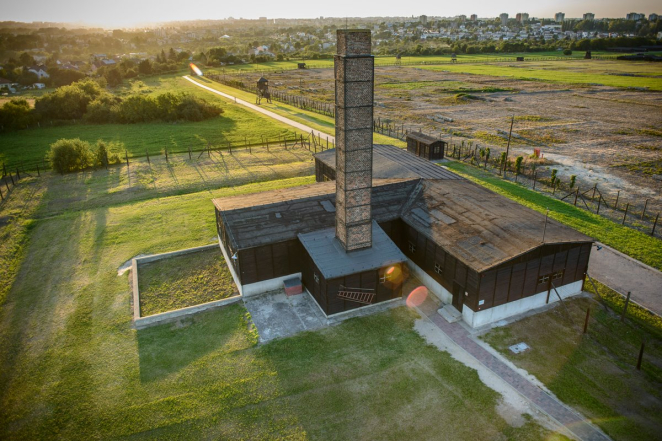
Aerial view of the crematorium, a sprawling wooden building consisting of four elements and a tall rectangular chimney, with urban buildings in the background.

The Museum is equipped with designated parking spaces for visitors with disabilities. They are located near the entrance gate, near the Visitor Service Centre, near the Museum office building, and near the Mausoleum. Disabled visitors can access the Museum grounds with their assistance dogs.

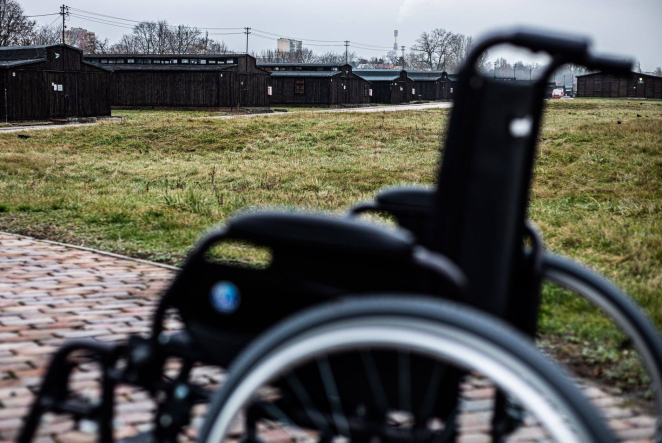
An orthopedic wheelchair against the backdrop of a row of prison barracks.

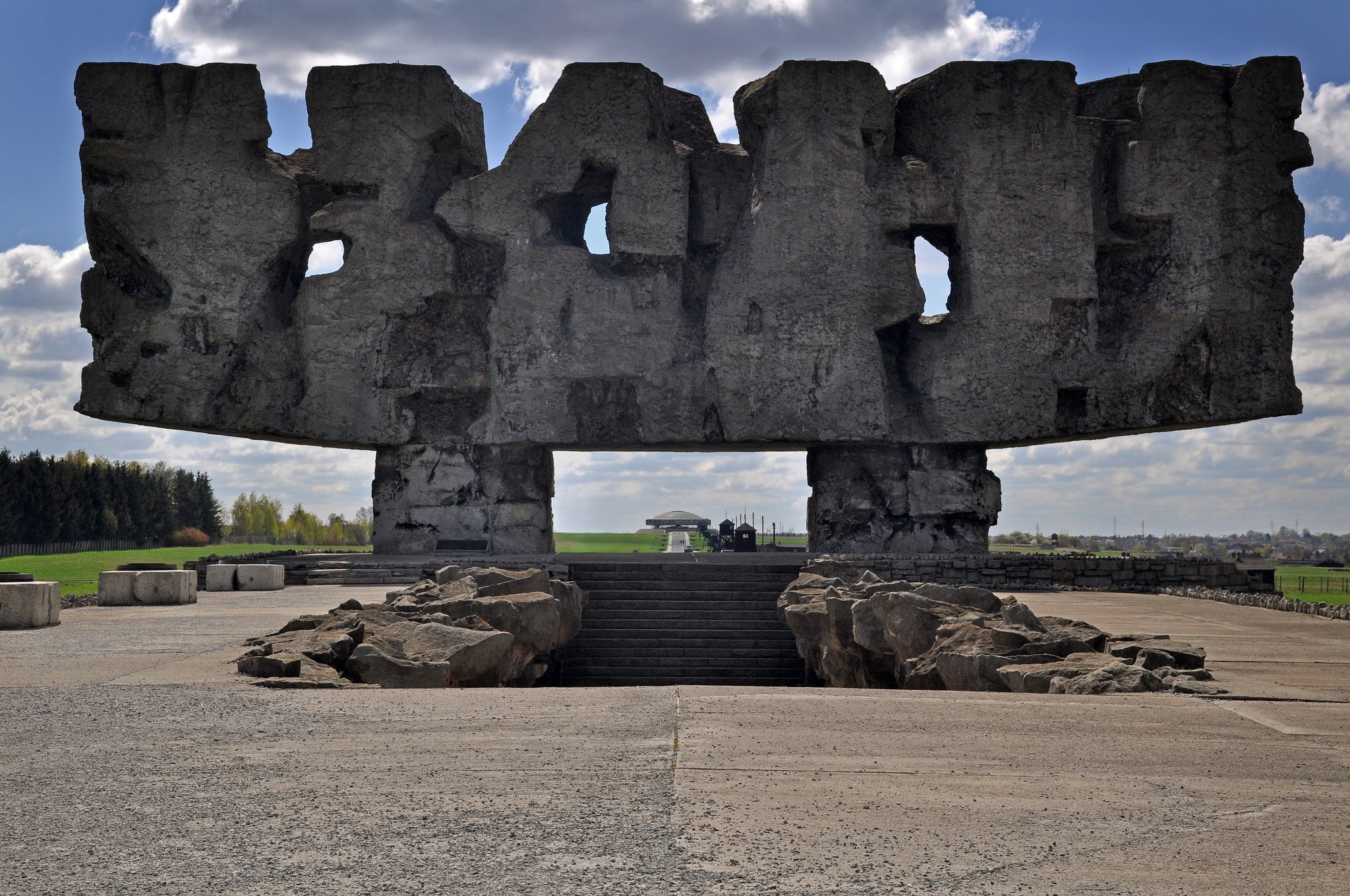
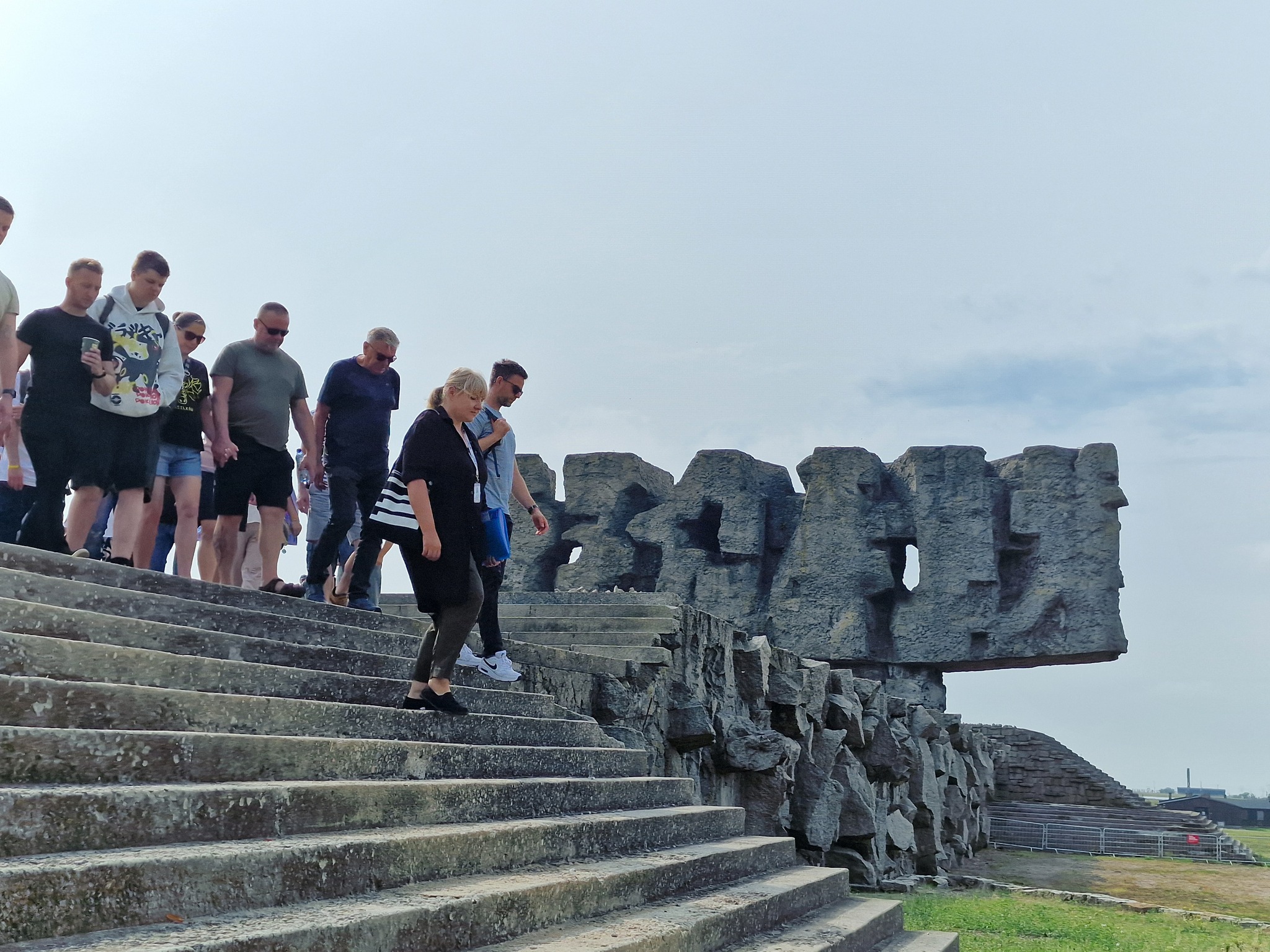
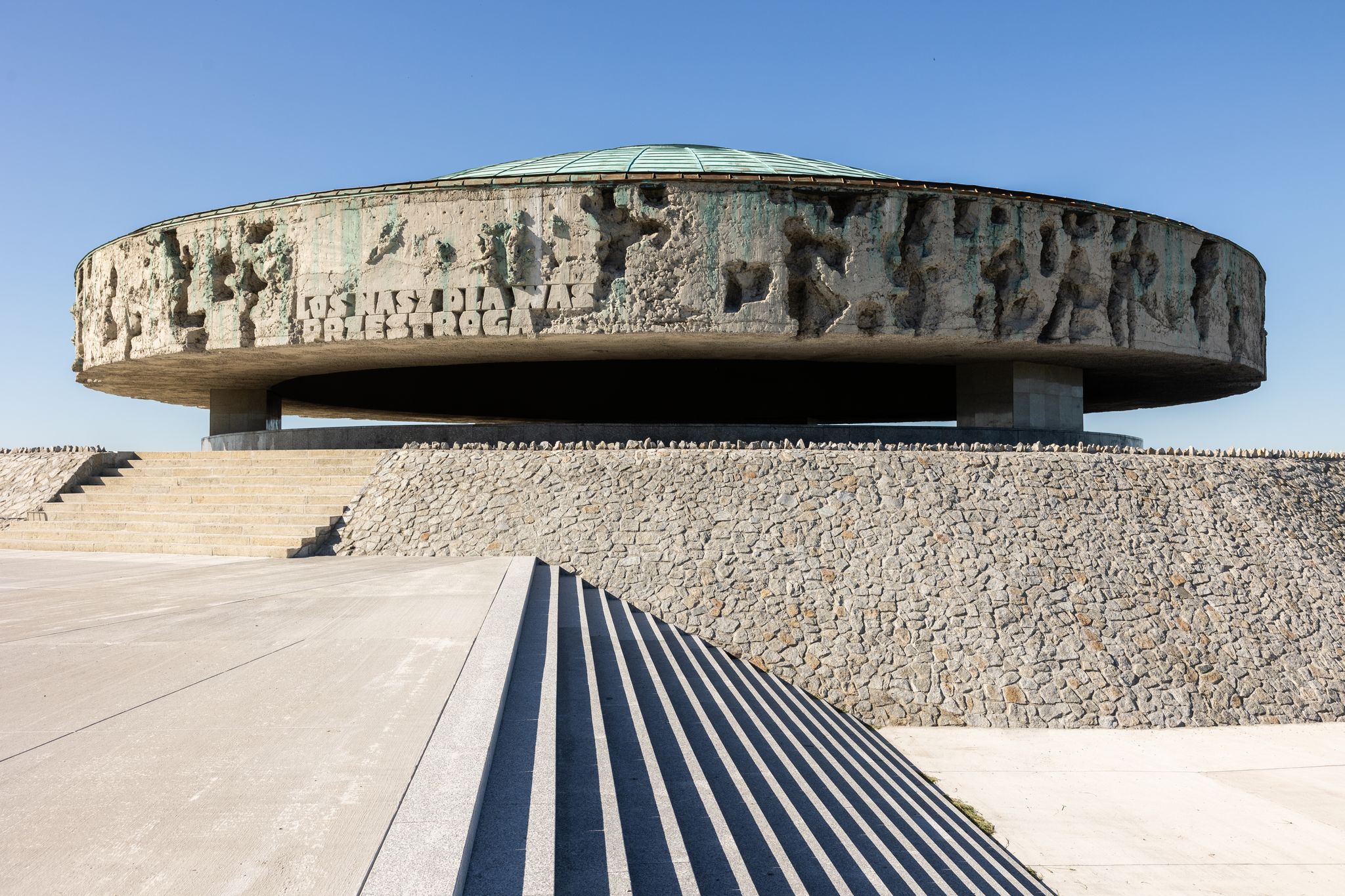
The Mausoleum-Monument is not accessible to wheelchairs users as it comprises of steep steps and is not equipped with access ramps. The vicinity of the Mausoleum can only be accessed by wheelchairs from the side of the Road of Homage and Remembrance.

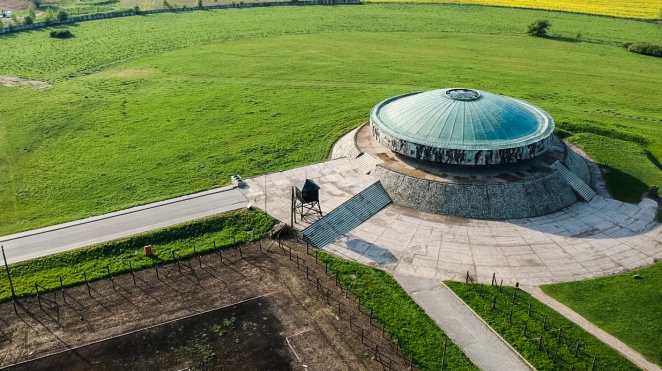
The monument-mausoleum seen from a bird's eye view, a building with an elliptical cross-section resembling a bowl, a dome covered with patina, surrounded by a concrete band, one wooden watchtower visible, a large green area on the left.
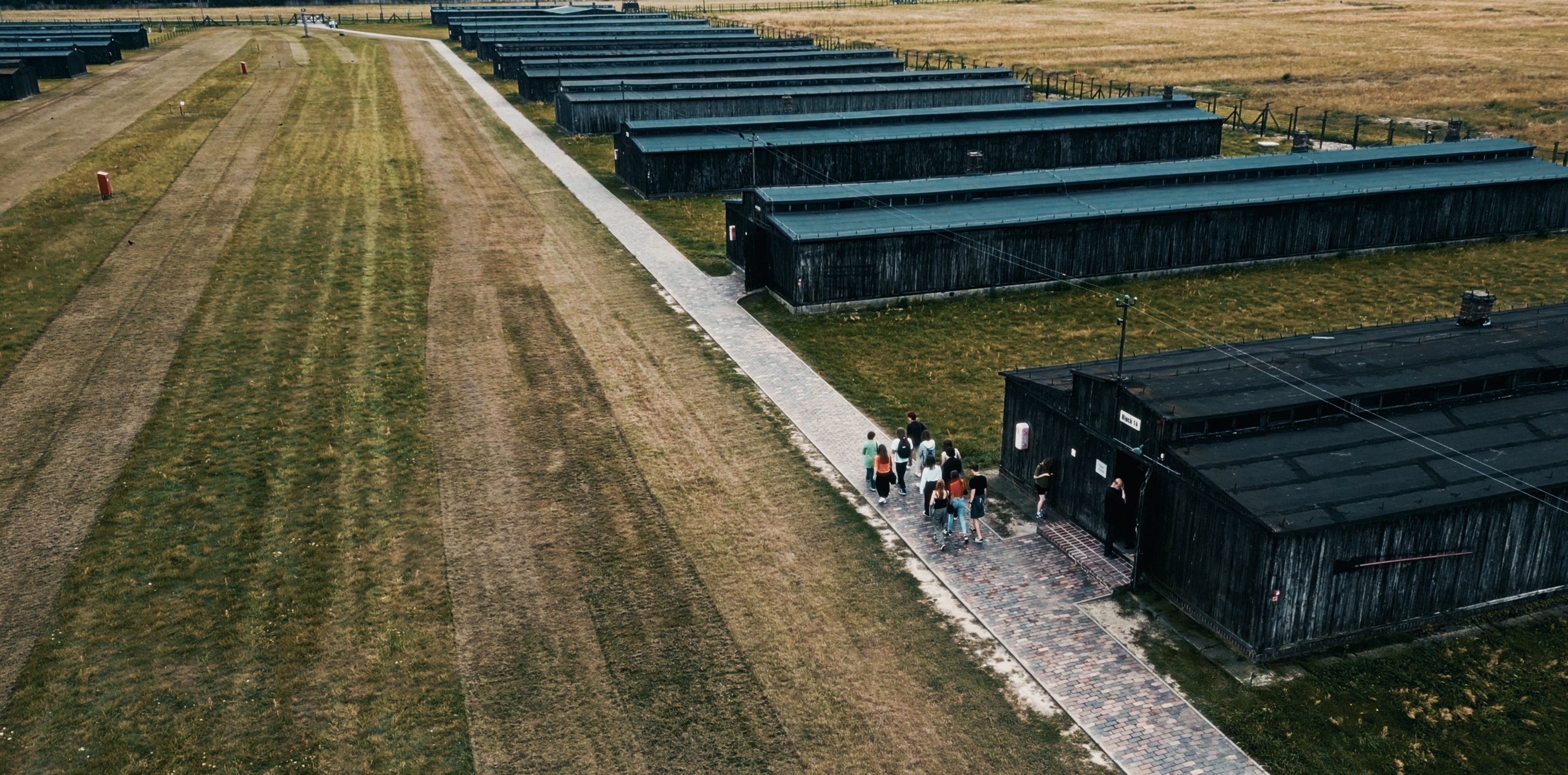
  • Aerial view, row of wooden prison barracks, group of visitors on the road between the first and second barracks.
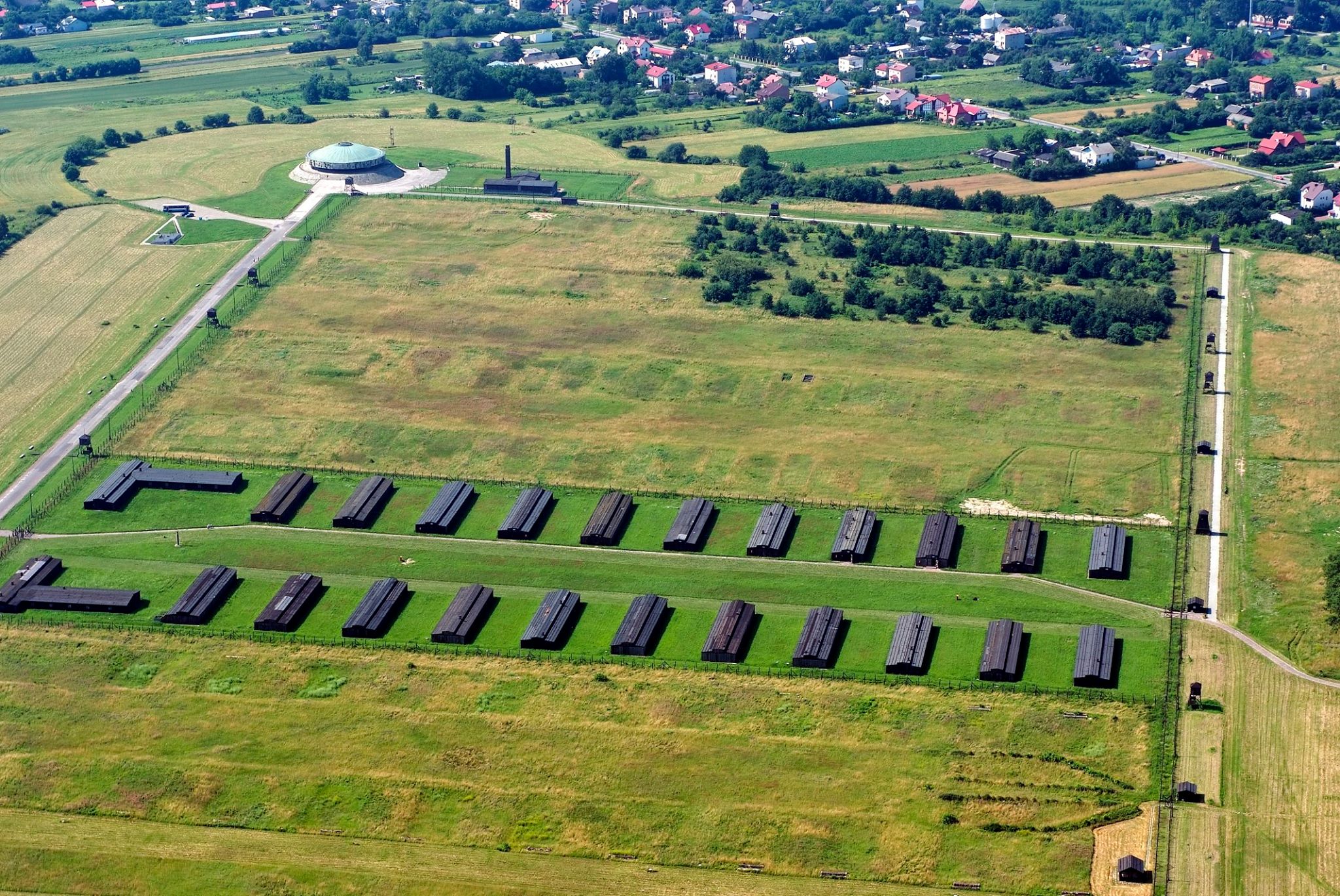
  • Aerial view of the former concentration camp at Majdanek, two rows of barracks, the Mausoleum, the Crematorium, and city buildings in the background.
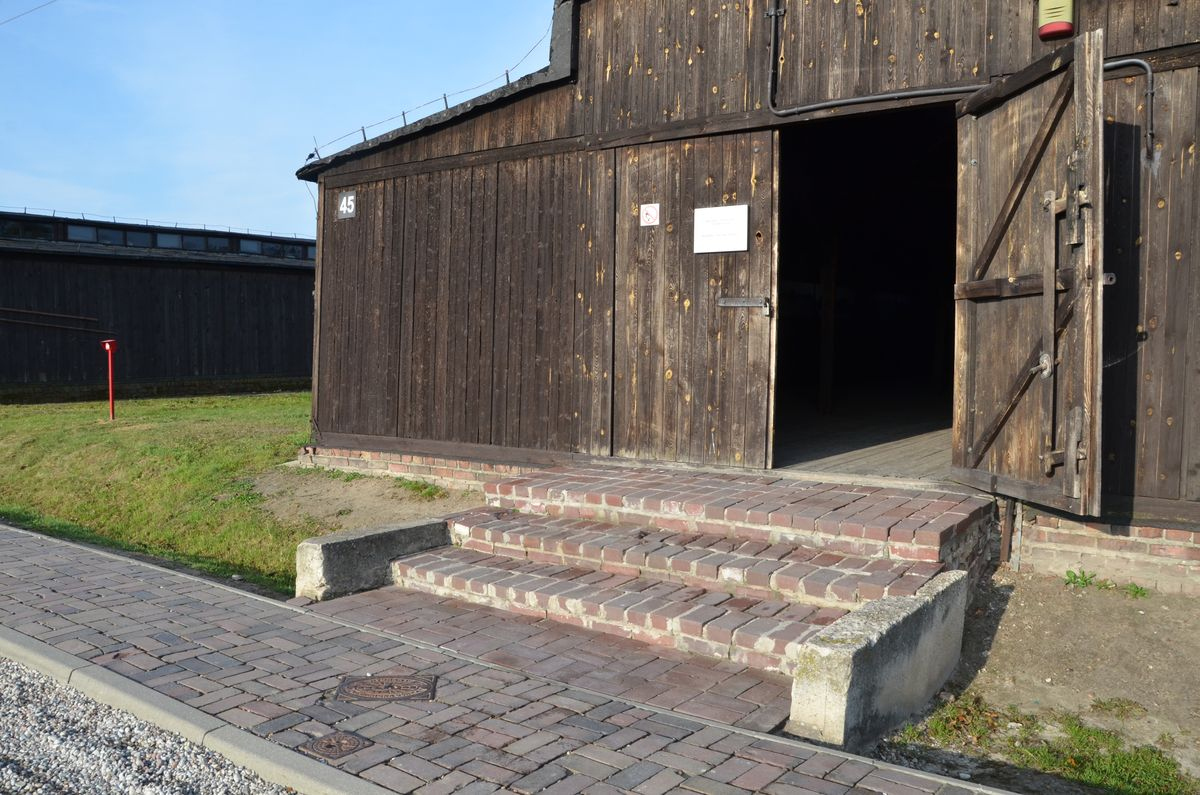
  • Entrance to the prison barracks, double wooden doors, one side open, concrete and stone stairs
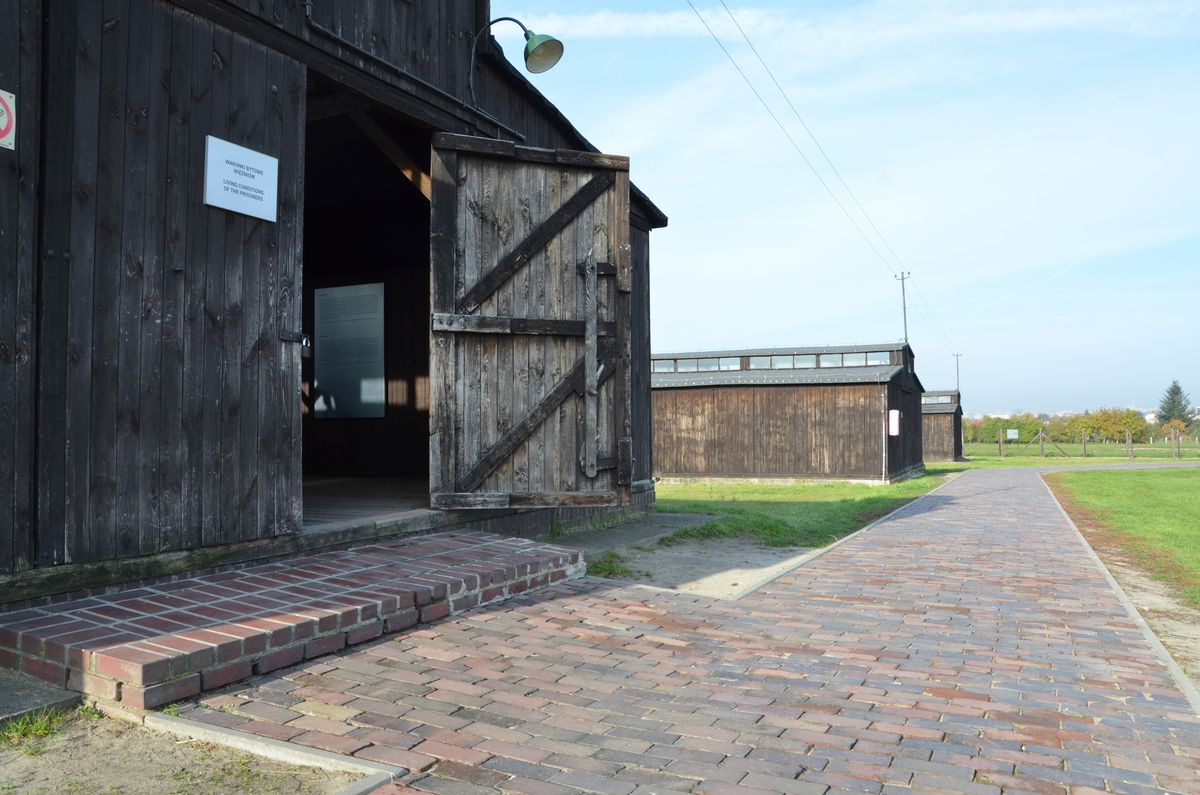
  • Entrance to the prison barracks, double doors, one side open, high concrete and stone step
  • The monument-mausoleum and the steep stairs leading to it
  • Steep stairs and watchtower
  • High threshold and step between two rooms
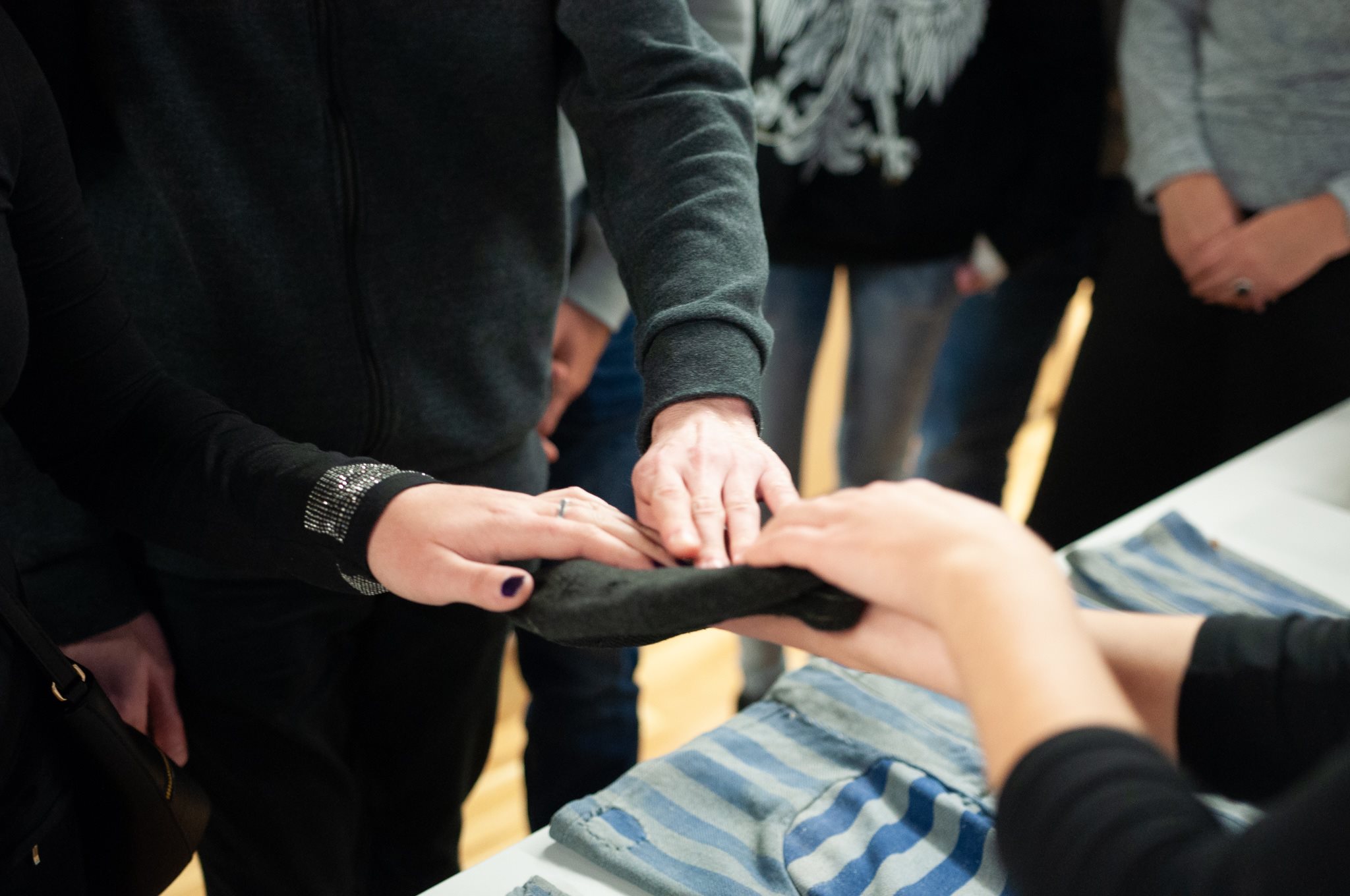
  • The hands of two people touching a piece of black fabric held by a woman's hands, underneath a fragment of prison clothing, striped fabric.
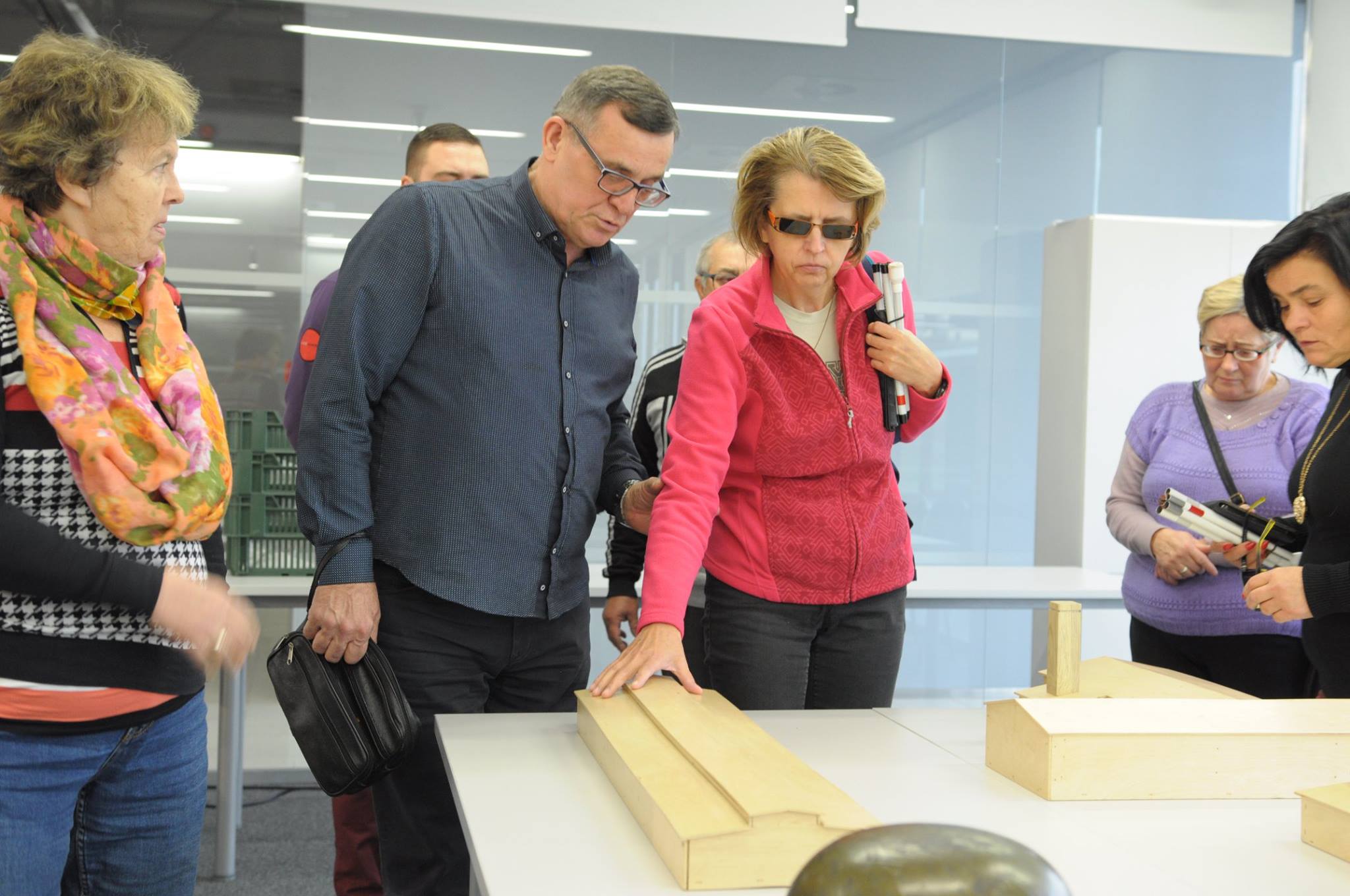
  • Visitors in a glass-walled room, a woman wearing dark glasses touches a wooden model of a prison barracks with her right hand.
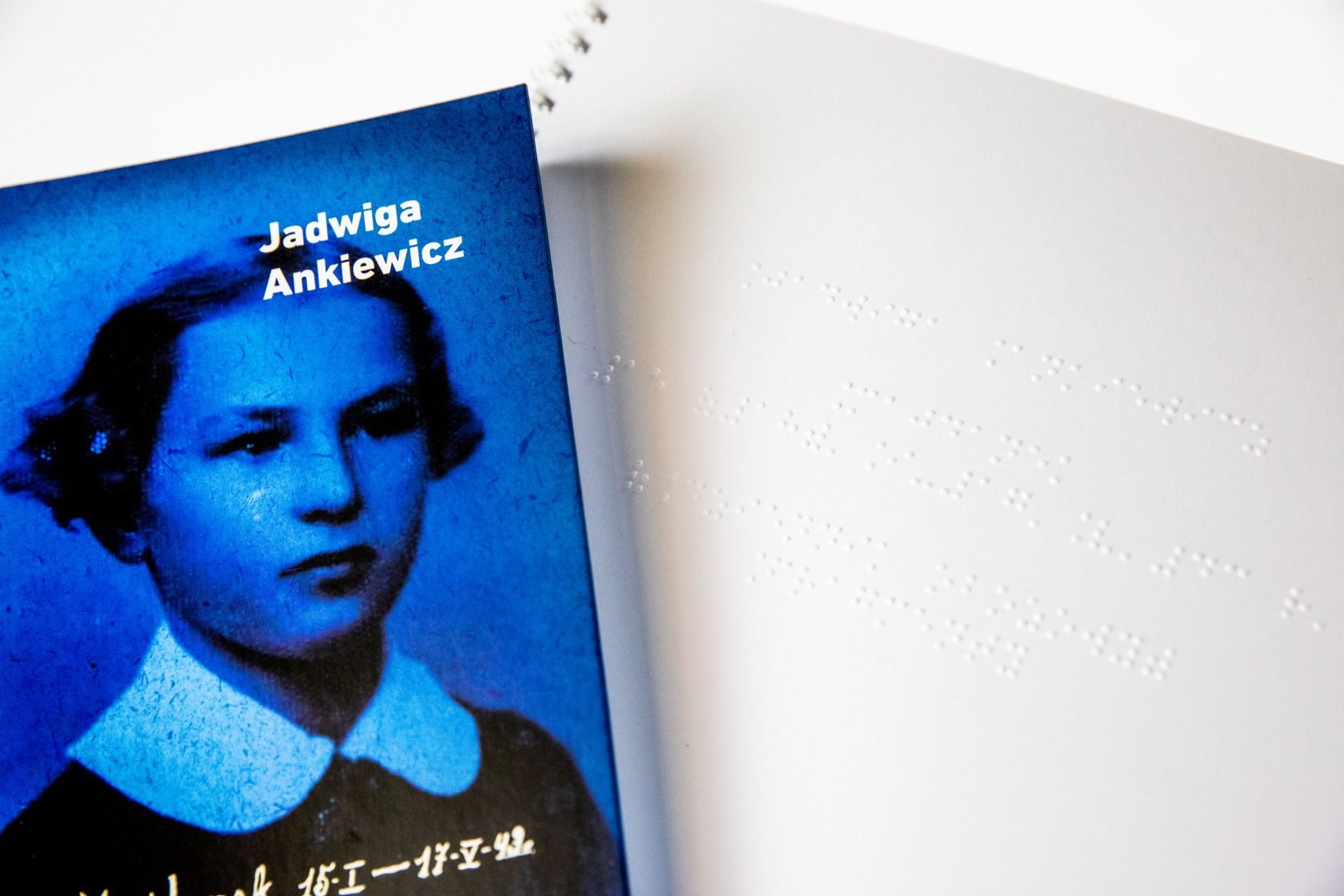
  • Jadwiga Ankiewicz's diary and a Braille version of selected excerpts from the diary.
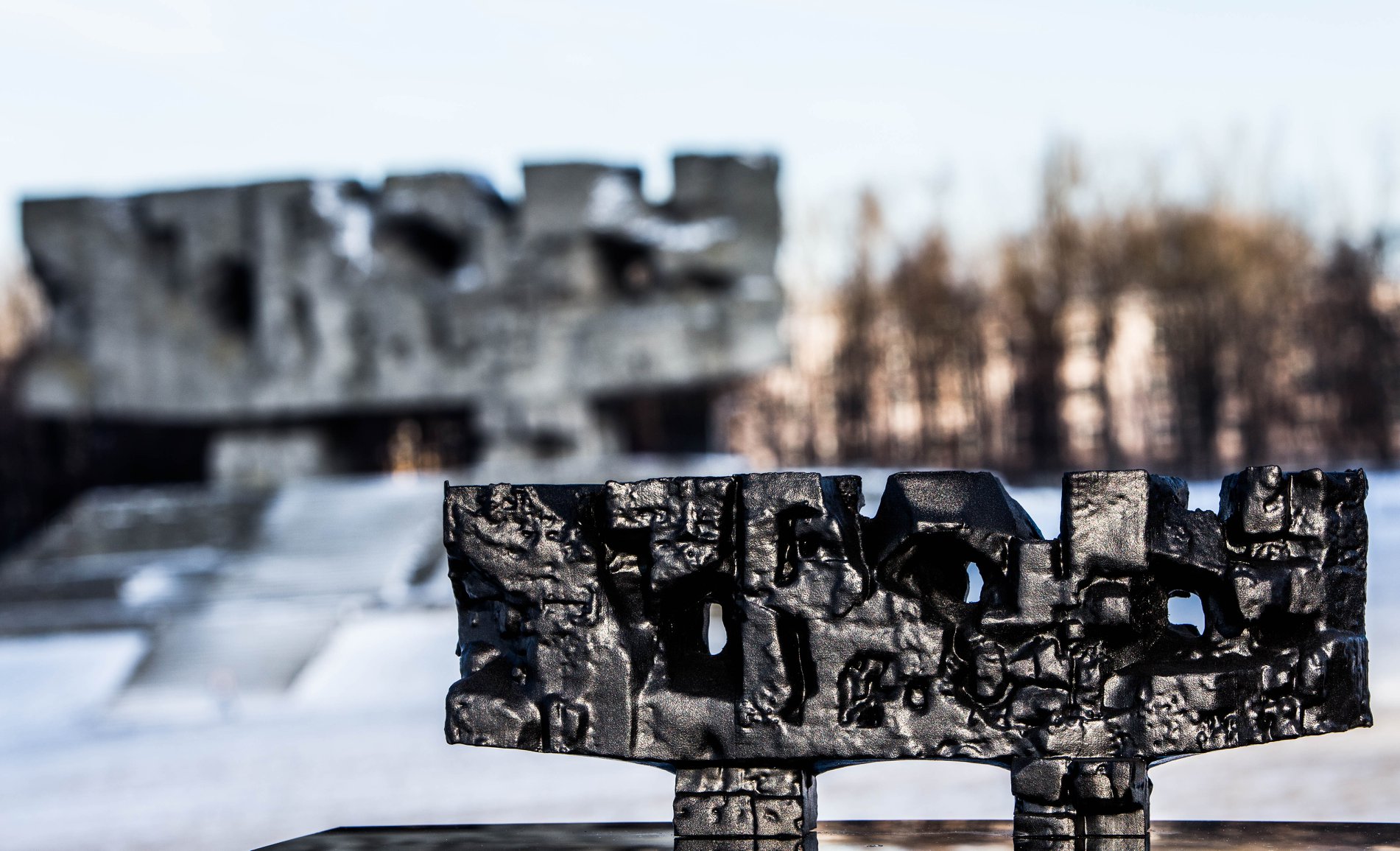
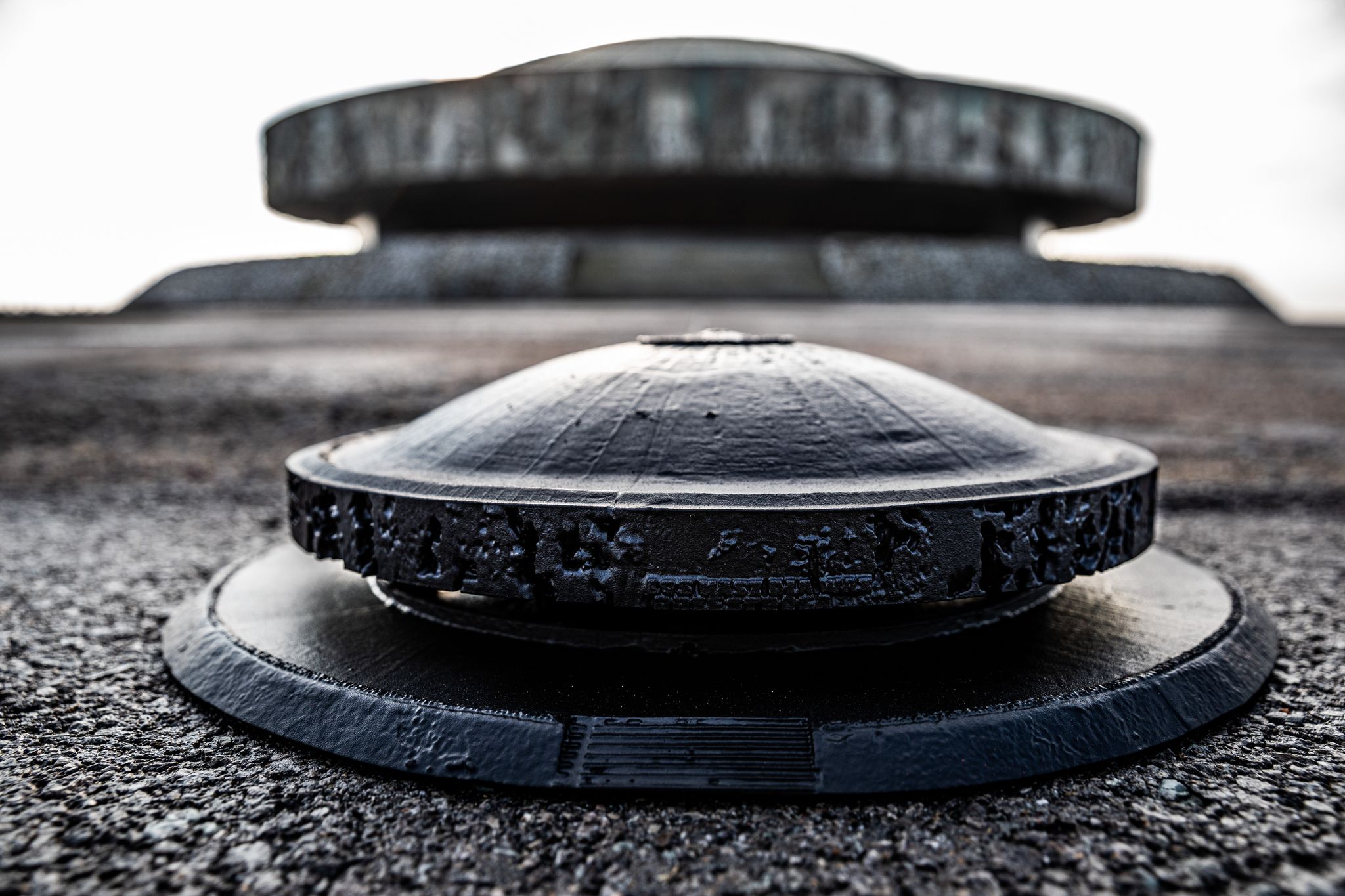
  • Black 3D model of the Mausoleum Monument, with the outline of the Mausoleum Monument in the background.
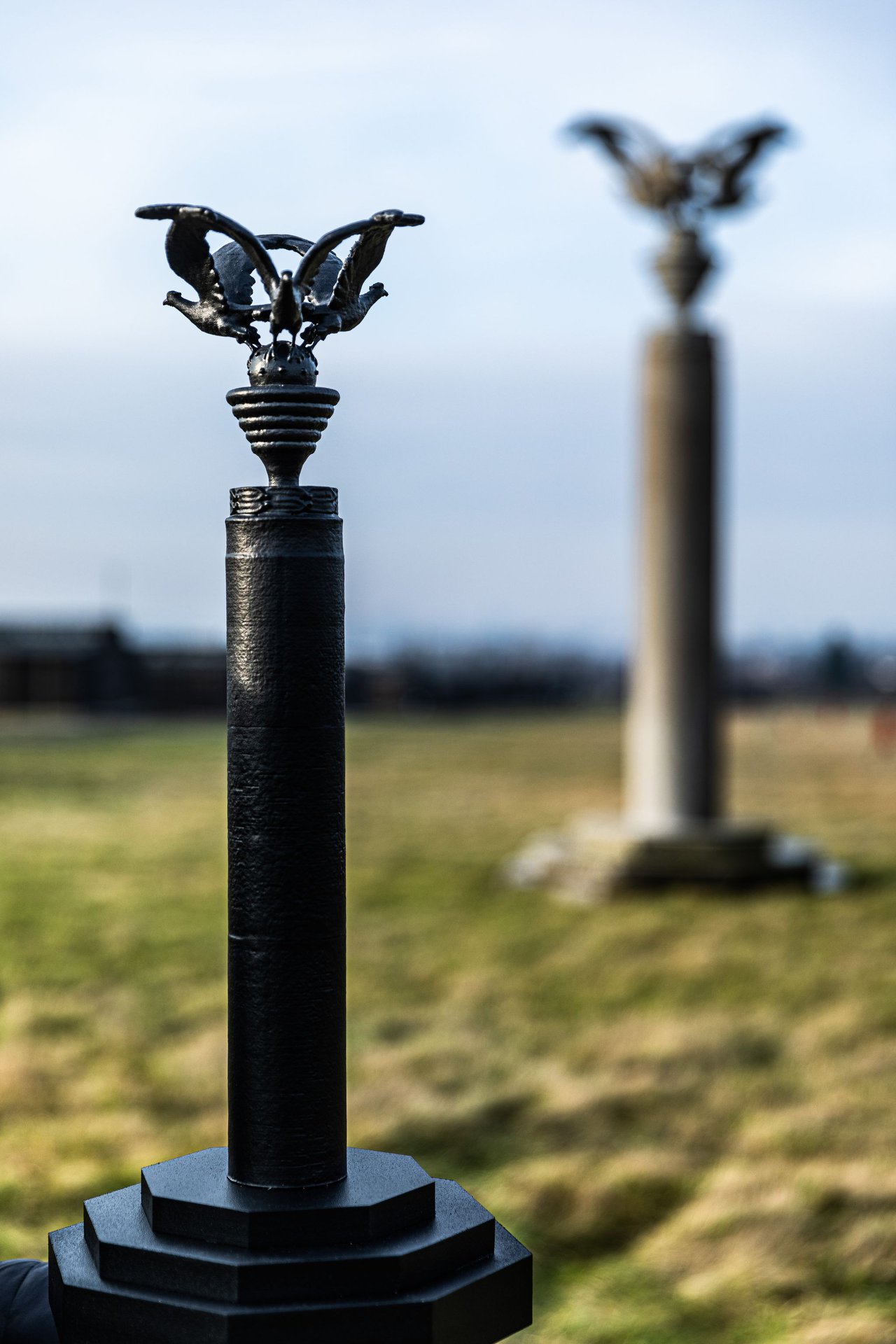
  • 3D model of the Column of the Eagles, with the outline of the Column of the Three Eagles in the background (column mounted on a triple pedestal, capital: three birds with raised wings supported by a sphere and a conical form).

Majdanek history in Polish sign language

Information for visitors in Polish sign language

Visiting tips in Polish sign language

Scope of activities and contact with the State Museum at Majdanek in Polish sign language