Educational Activities at the State Museum at Majdanek in 2025

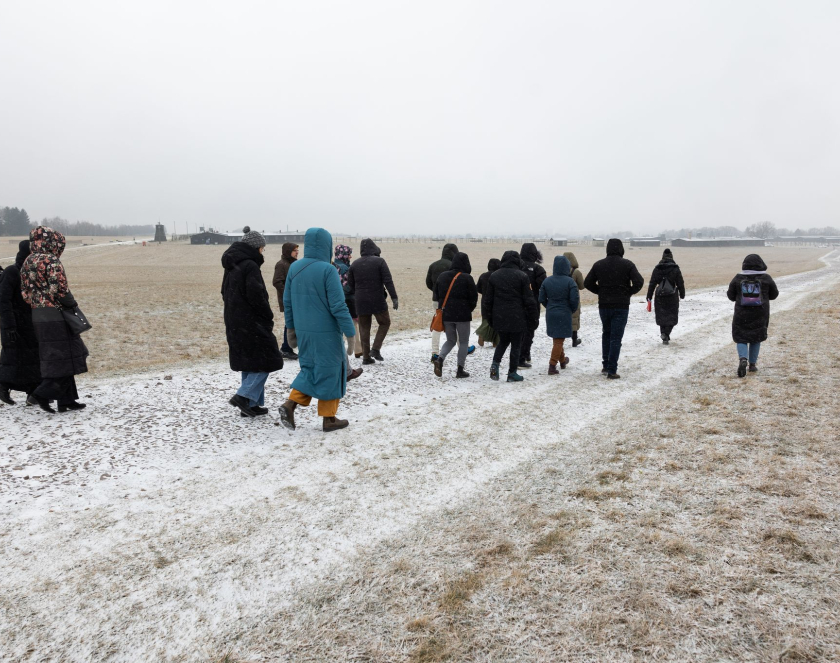
A group of people at the former Majdanek concentration camp.
In 2025, employees of the Education Department of the State Museum at Majdanek organised and conducted 160 diverse educational activities, prepared for Polish and foreign audiences. Over 4,500 people took part in museum lessons, participatory workshops, seminars, lectures, international exchanges, projects and online events that brought the history of the former concentration camp at Majdanek closer to the public.

During numerous meetings with schoolchildren, teachers and educators, groups at risk of exclusion, as well as representatives of uniformed services, a variety of topics were used to present the fate of KL Lublin and its victims. The most frequently chosen topics were classes based on the written memoirs of former prisoners and their accounts recorded on video, workshops on the analysis of the biographies of perpetrators of mass crimes, as well as events devoted to the stories hidden in photographs and museum exhibits.
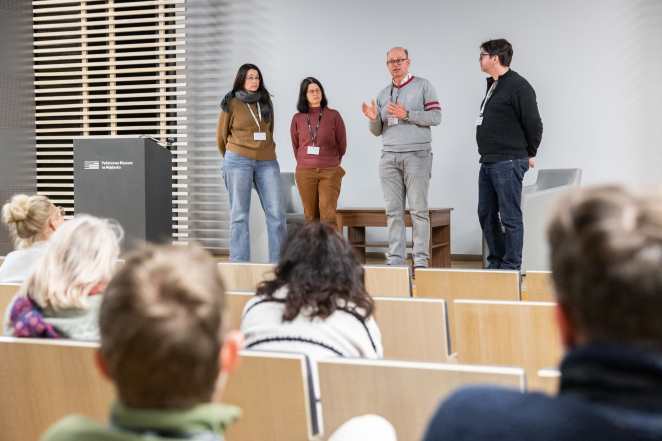
Two men and two women speak on stage in an auditorium.

Over the past 12 months, we have developed ongoing cooperation with educators, which resulted in two methodological seminars organised in March and October. In the spring, together with teachers from Lublin, we reflected on the propaganda mechanisms used by the Third Reich, and in the autumn, together with educators from all over Poland, we explored the pitfalls and opportunities that the Internet creates in historical education. Meetings with teachers from the United Kingdom, the United States, Finland, Scotland, France, Italy, Ukraine, Germany and the Netherlands also provided a space for the exchange of educational experiences, during which the didactic concept used at the Museum was presented, along with its practical application in the work of a memorial site.

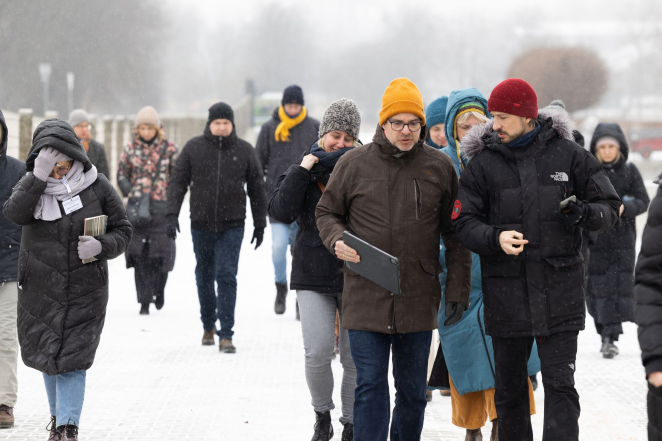
A group of middle-aged people in winter jackets and hats.

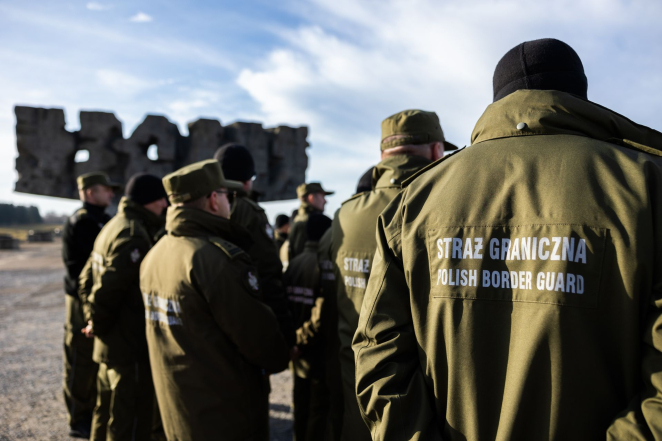
In 2025, a series of seminars addressed to representatives of uniformed services was also continued. During 12 meetings, police and border guard officers analysed the biographies of perpetrators from Majdanek, as well as selected psychological and sociological concepts that deepened reflection on the motives behind the crimes committed, both from a historical and contemporary perspective. Officers from the Nadbużański Border Guard Unit in Chełm additionally expanded these considerations to include human rights issues.

A group of men standing back to back, with the inscription on their uniforms: Border Guard, Polish Border Guard

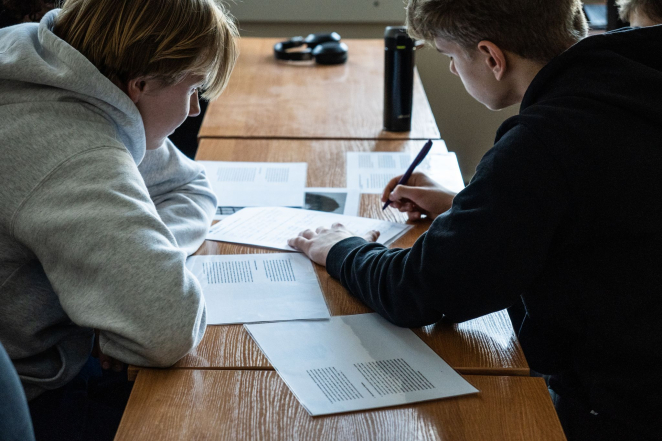
An important element of educational activities remains the project ‘Bio(topo)graphy. Discovering the Lost,’ carried out in cooperation with students from the Rev. Jan Twardowski High School No. 30 in Lublin. As part of the second edition of the project, students independently gathered information about the fate of Lublin's Jews over the centuries, which resulted in a video recording created by the young people about the history of Lublin's Jewish community in the 19th century. Currently, the research group is developing materials devoted to the 20th and 21st centuries, which will be presented during the project finale. The aim of the entire initiative is not only to interest young people in local history, but also to encourage them to talk about cultural memory and forgetting.

Two teenage men at school desks are completing materials on printed A4 sheets of paper.

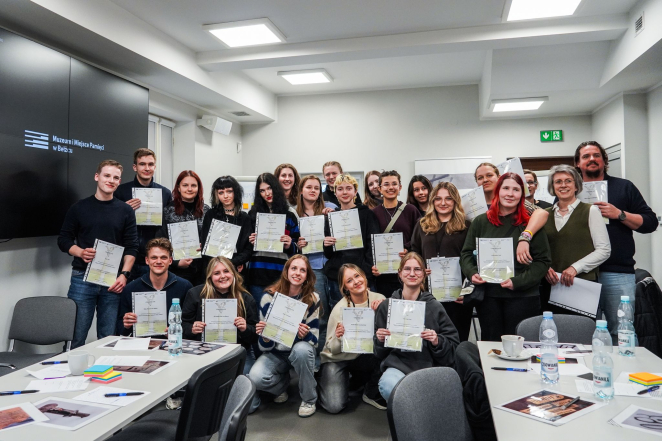
Two international exchanges involving secondary school students and teachers from Poland, Germany and the Netherlands were also special events of the past year. These meetings created a space for intercultural dialogue, reflection on different ways of remembering the past, and the search for common values in teaching about World War II and the Holocaust. They also included the Spaces of the Holocaust – Majdanek, Bełżec, Sobibór publication. Teaching Materials for Teachers, prepared in three language versions. This publication was created as a support and substantive tool for Polish and foreign educators who want to convey knowledge about Majdanek, Bełżec and Sobibór to their students in an accessible and interesting way.

A group of a dozen or so young people in a room holding diplomas in their hands.