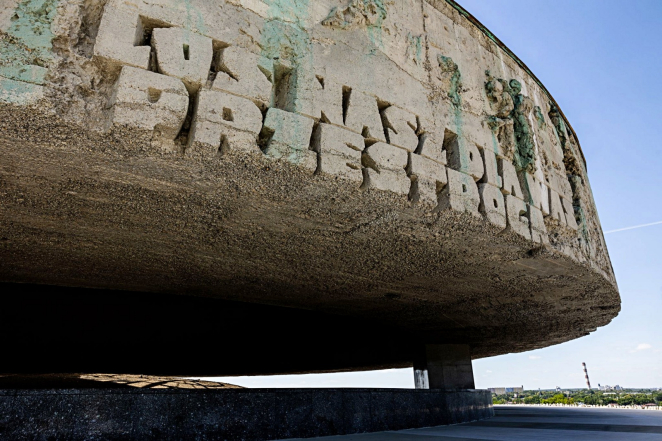
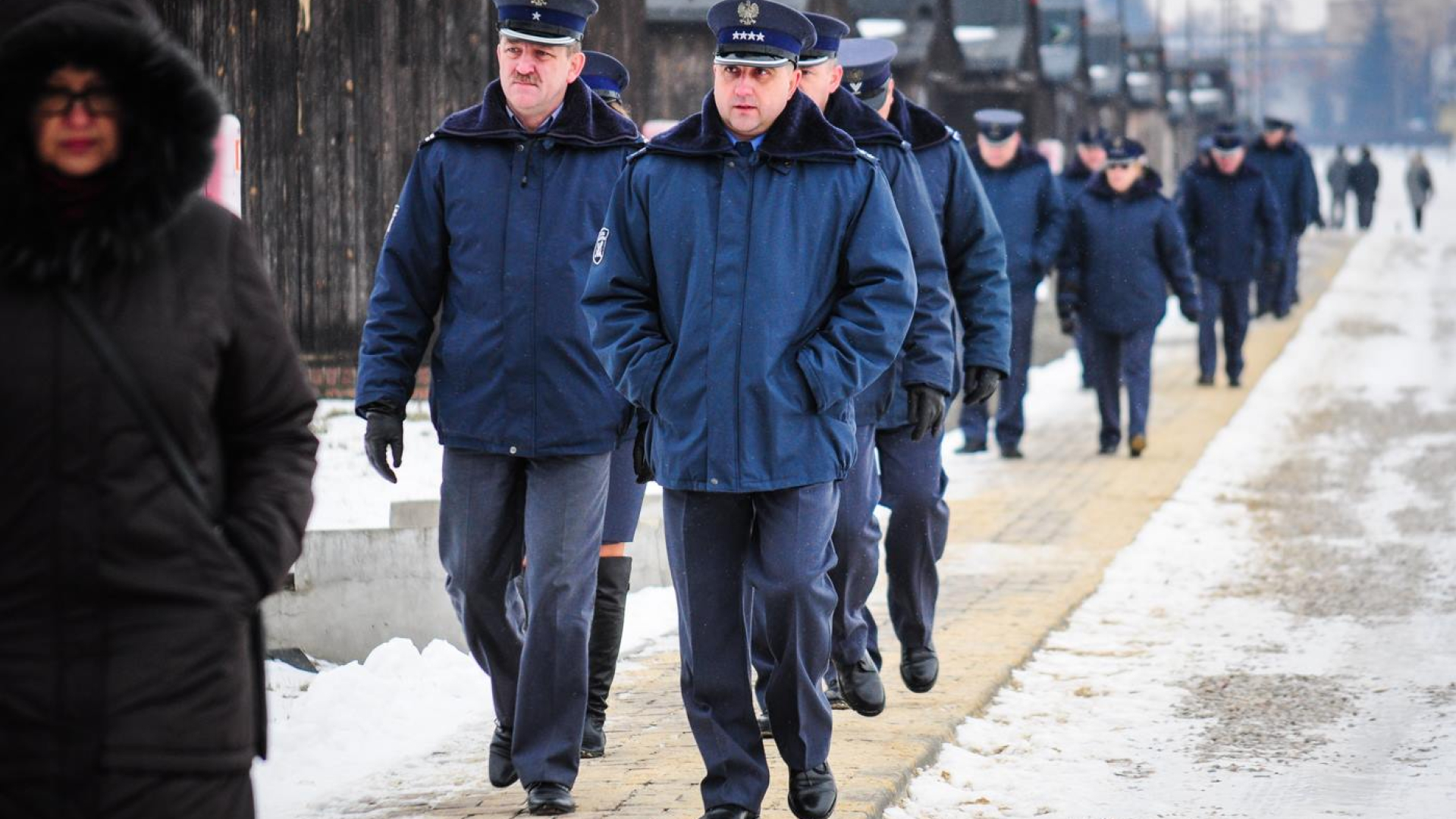
The Education Department of the State Museum at Majdanek has been actively cooperating with uniformed services for many years. Our permanent partner is the Provincial Police Headquarters in Lublin, with which we prepare participatory workshops for nearly 200 officers every year. We also cooperate with the Regional Inspectorate of Prison Service in Lublin, whose employees regularly participate in classes held at the Museum. Recently, the Nadbużański Border Guard Unit in Chełm has become our partner.
Uniformed services
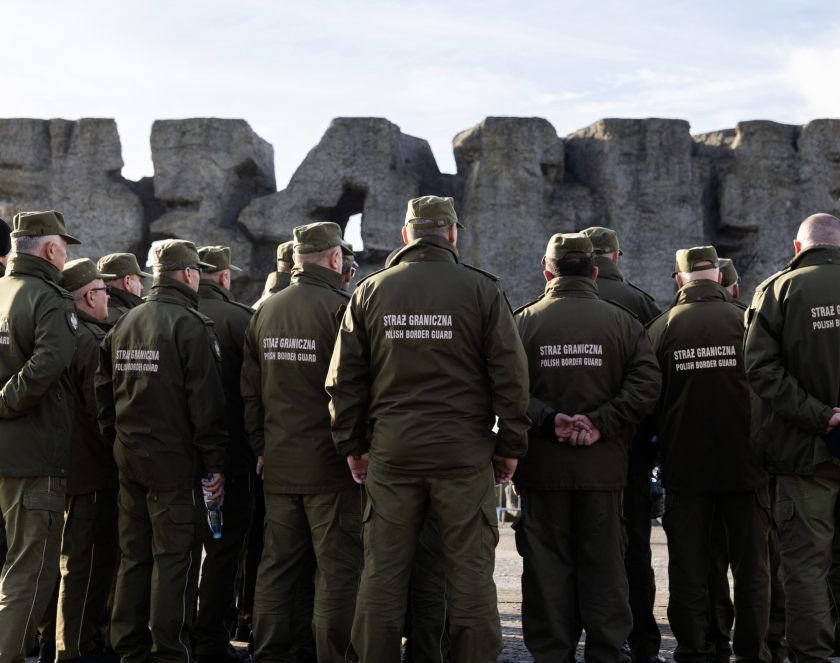
As part of our meetings with uniformed services, we offer lectures and participatory workshops, which can be held both at the Museumheadquarters and at partner institutions. Each visit by officers to the Museum is accompanied by a tour of the former concentration camp at Majdanek and historical exhibitions. The thematic scope of the classes concerns axiological reflection, analysis of the mechanisms of human behaviour and choices made, and human rights.
Topic 1: Perpetrators – ordinary people or enthusiastic executors of the Holocaust? (workshop)
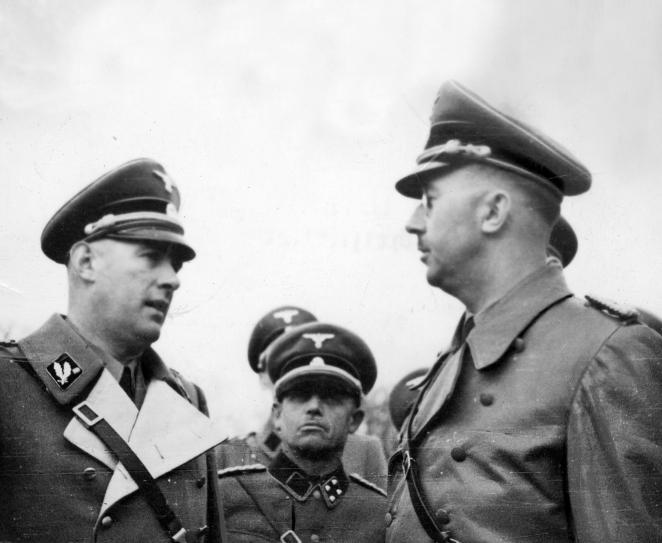
The meeting will focus on reflecting on the motives behind the actions of perpetrators of mass murder. During a joint analysis of the biographies of SS officers from Majdanek and selected sociological and psychological theories, we will discuss the factors that can lead to crimes being committed by both individuals and groups of “ordinary people.” The question of passive and active perpetrators of violence will therefore not only be an opportunity to learn about the history of KL Lublin from a different perspective, but also an incentive to discuss the issues of racism, xenophobia, exclusion, and hate speech.
Number of participants: up to 30
Duration: approx. 5 hours (tour of the former camp and workshops)
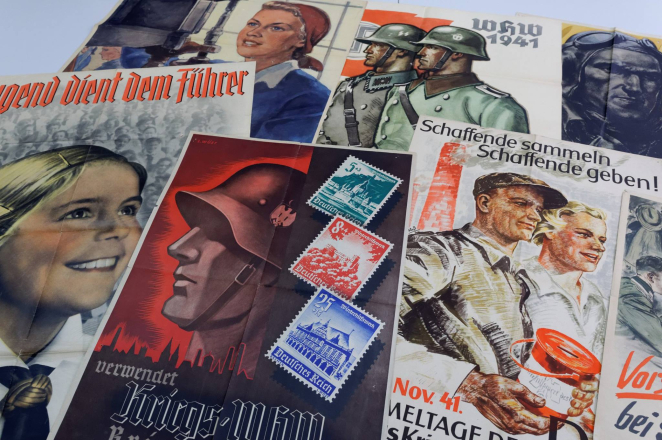
Topic 2: Distorting reality. The role of Third Reich propaganda (workshops)
The press, radio, literature, and education were among the most popular tools used by the Nazis to indoctrinate German society. During the classes, we will look at the content of newspapers, school textbooks, posters, and books published in the Third Reich in order to identify propaganda mechanisms. The workshop is also an opportunity to discuss manipulation in contemporary societies and the role of critical thinking in the process of analyzing and interpreting the reality around us. Together, we will also consider how propaganda can shape public opinion.
Number of participants: up to 30
Duration: approx. 5 hours (tour of the former camp and workshops)
Topic 3: Against violence? The past and present and human rights (lecture)
The lecture is devoted to the analysis of the phenomenon of exclusion and deprivation of dignity of individuals and social groups, both in the past and present. Participants will learn about the origins of human rights, the crisis of humanity that occurred in the 20th century, the mechanisms of violence, and the current dimension of this problem. The classes not only serve as a reflection on the past, but also encourage active counteraction against human rights violations and support for their protection.
Number of participants: up to 75
Duration: 4 hours (tour of the former camp and lecture)