1
00:00:02,534 --> 00:00:06,213
Welcome everyone. My name is Krzysztof Tarkowski, and I'd like to
2
00:00:06,213 --> 00:00:11,067
invite you to watch the second installment of our series,
3
00:00:11,067 --> 00:00:17,768
"History in the Background". In this series, we'd like to show you some rather well-known
4
00:00:17,768 --> 00:00:22,428
photographs from our archives, but we'd like to draw your
5
00:00:22,428 --> 00:00:26,536
attention to what's happening in the background of these photographs,
6
00:00:26,536 --> 00:00:28,969
to show the history in the background.
7
00:00:30,000 --> 00:00:32,673
State Museum at Majdanek presents
8
00:00:32,673 --> 00:00:40,568
History in the Background ep. 2
9
00:00:53,838 --> 00:01:00,000
Today we would like to present the photo entitled
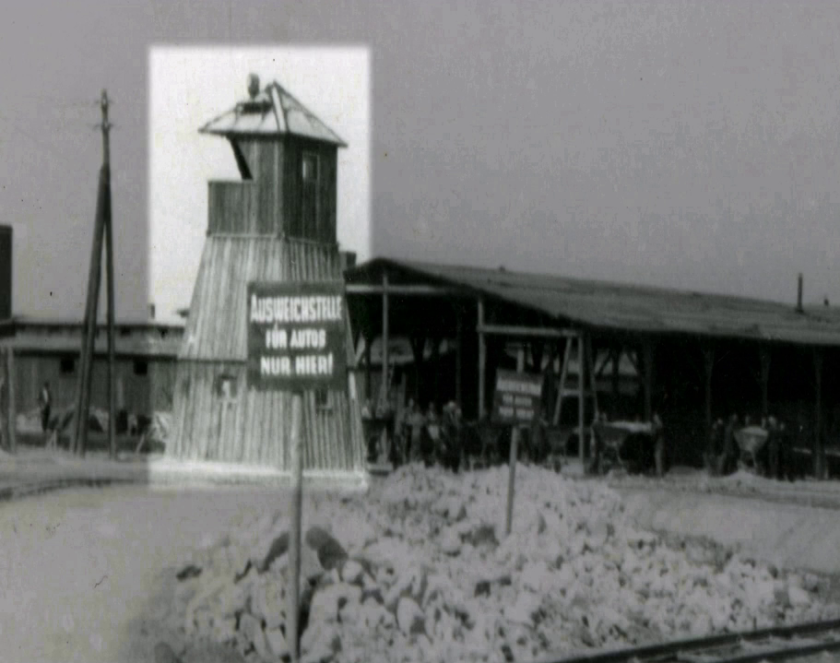
"View of the Wachbataillon and field I".
10
00:01:00,000 --> 00:01:04,267
In the spring of 1943, the barracks for the SS staff
11
00:01:04,267 --> 00:01:07,321
were already under construction. More than half of
12
00:01:07,321 --> 00:01:13,171
the camp command barracks and some of the barracks for the SS barracks were built. Although
13
00:01:13,171 --> 00:01:19,050
only two of them are visible in the presented photo. However, the first field is clearly visible. Thanks to the fact that the barracks for
14
00:01:19,050 --> 00:01:24,919
the female overseers had not been built yet and it does not obstruct the view.
15
00:01:24,919 --> 00:01:26,919
[Field I]
16
00:01:28,637 --> 00:01:32,796
However, we are more interested in what is happening in the background of the photo, in a sense behind
17
00:01:32,796 --> 00:01:37,973
the scenes of history. And a lot is happening. First of all, we can see a great panorama
18
00:01:37,973 --> 00:01:42,002
of southern Lublin, starting from the
19
00:01:42,002 --> 00:01:47,176
Primary School No. 1 on Bychawska Street, now Kunickiego Street, then occupied by the Germans, through three
20
00:01:47,176 --> 00:01:52,536
buildings of the Polish tobacco monopoly, also occupied by the Germans, to
21
00:01:52,536 --> 00:01:58,648
the elevator built for the army in 1933 - a grain warehouse on
22
00:01:58,648 --> 00:02:04,088
Wrotkowska Street. Further on, we see a tenement house on the site of the
23
00:02:04,088 --> 00:02:07,178
southern camp, No. 1 and 2, i.e., the barracks in the southern part
24
00:02:07,178 --> 00:02:14,138
of Lublin, and even a tenement house at 5 Wojenna Street.
25
00:02:17,732 --> 00:02:23,333
And again we return a little closer to the camp. Here we see barracks number 39 -
26
00:02:23,333 --> 00:02:28,645
since February 1943, the workplace of, among others, Anton Thumann, head of
27
00:02:28,645 --> 00:02:37,006
the labor department. Next to it, barracks number 40, a guard tower, and... unexpectedly,
28
00:02:37,006 --> 00:02:43,400
we encounter finishing work on the construction of a shelter over the gas chambers.
29
00:02:46,882 --> 00:02:51,522
Please note that in the photo, the entire supporting structure of the shelter is already standing,
30
00:02:51,522 --> 00:02:57,000
while work is underway on the roof covering and formwork for the large roof. The shelter measured
31
00:02:57,000 --> 00:03:05,280
20 by 60 meters and covered an area of approximately 1,200 square meters.
32
00:03:05,280 --> 00:03:09,697
Here we can see that the covering on the northwestern side is already finished,
33
00:03:09,697 --> 00:03:16,098
covering two-thirds of the roof. However, the photographer took this photo when the eastern part
34
00:03:16,098 --> 00:03:22,531
of the shelter was not yet covered. Only thanks to this, we can see the bright spot
35
00:03:22,531 --> 00:03:27,372
of the eastern wall of the gas chamber bunker.
36
00:03:30,402 --> 00:03:36,082
What is no less interesting is the smoke rising from the shelter. Looking at it
37
00:03:36,082 --> 00:03:40,289
without a detailed Analysis suggests we're unsure whether this smoke rising so high
38
00:03:40,289 --> 00:03:45,330
could originate from a point within the camp.
39
00:03:45,330 --> 00:03:50,891
Yet we're mistaken. We're close to this smoke, and looking at the photo,
40
00:03:50,891 --> 00:03:56,811
we're sort of walking under it; or rather, it, this smoke, is moving towards us.
41
00:03:56,811 --> 00:04:01,251
If we shift our gaze back to the city skyline, we can easily
42
00:04:01,251 --> 00:04:06,691
see smoke from the city's chimneys, breweries, and factories, blown by the wind in
43
00:04:06,691 --> 00:04:12,505
a direction close to the south, while our smoke is weakly blown
44
00:04:12,505 --> 00:04:17,664
eastward. This is because the smoke in question
45
00:04:17,664 --> 00:04:22,720
most likely originates from the corpse-burning sites at the corner of present-day Wilcza
46
00:04:22,720 --> 00:04:25,880
and Grochowskiego Streets.
47
00:04:25,880 --> 00:04:28,639
This drifting of smoke, or the persistence of fog, is a unique phenomenon still
48
00:04:28,639 --> 00:04:36,202
present in the Lublin landscape today. Wilcza Street runs through Stary
49
00:04:36,202 --> 00:04:43,282
Jar, a transverse depression that encompasses not only
50
00:04:43,282 --> 00:04:49,014
the small area of Kośminek but also extends beyond the Majdanek monument. In this
51
00:04:49,014 --> 00:04:52,933
photo, the smoke moves along this depression, almost unaffected by
52
00:04:52,933 --> 00:04:58,077
the wind. Only at a higher altitude will it be dispersed by the wind. For
53
00:04:58,077 --> 00:05:04,077
now, the smoke is still too low in the photo.
54
00:05:07,259 --> 00:05:11,939
And finally, three more objects from the photo. The first is a shooting range
55
00:05:11,939 --> 00:05:15,998
built on the site of the SS riding stable.
56
00:05:15,998 --> 00:05:20,957
Here, we see it about 10 days earlier than in the previously discussed photo. The
57
00:05:20,957 --> 00:05:26,370
earthen ramparts protecting this structure are not yet as even and
58
00:05:26,370 --> 00:05:31,370
finishing work is still underway. The same is true for the camp greenhouse behind them,
59
00:05:31,370 --> 00:05:39,951
where we can still see the last two windowless window recesses. And the last object in the photo is the building that housed
60
00:05:39,951 --> 00:05:45,272
the Majdanek camp radio station in 1942.
61
00:05:45,272 --> 00:05:50,139
From this building, radio telegrams were sent to
62
00:05:50,139 --> 00:05:56,744
the headquarters in Oranienburg, including information about the camp's daily headcount reports.
63
00:05:56,744 --> 00:06:00,400
Thank you very much for your attention, and see you in the next episode.