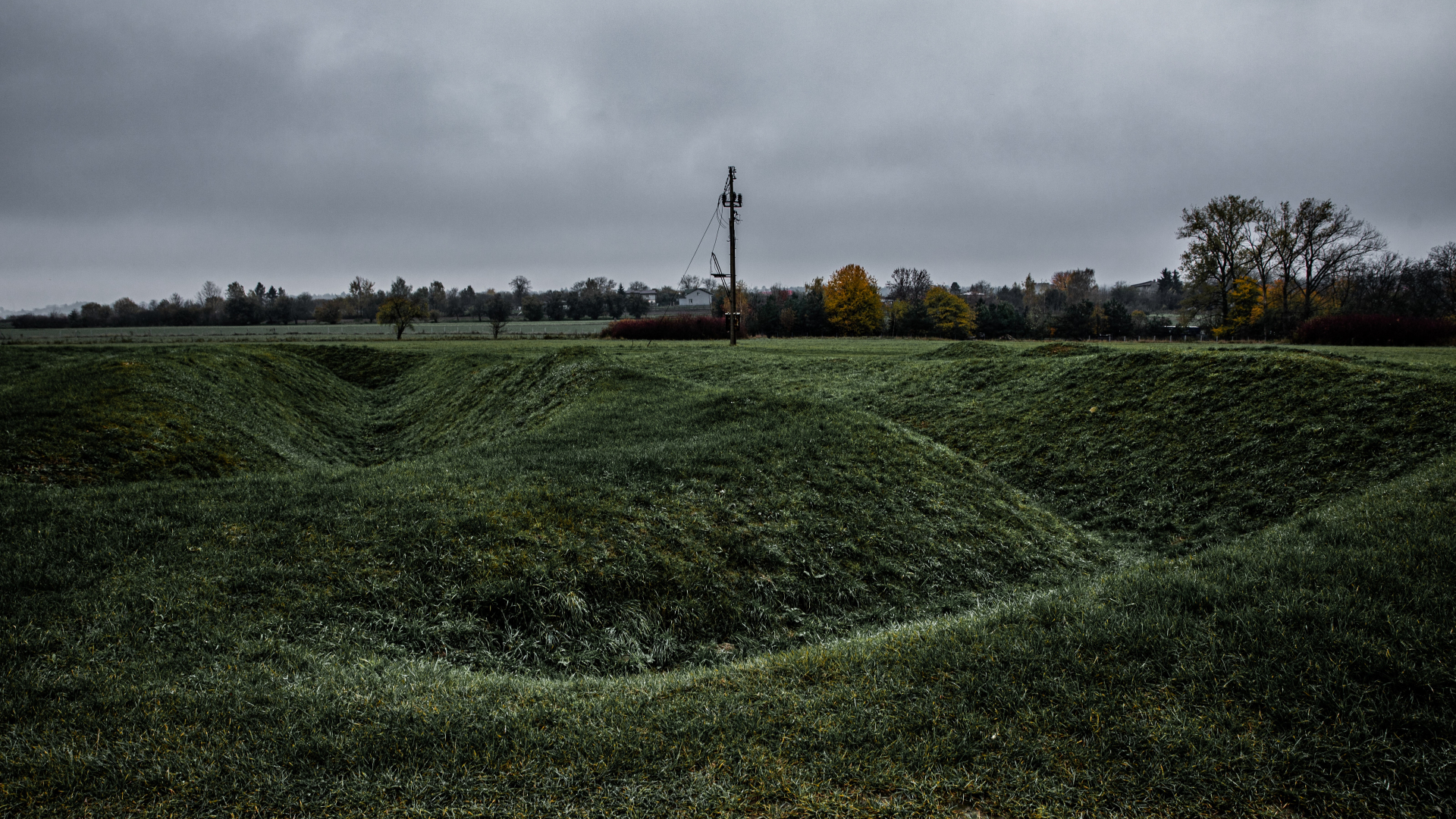
In the last days of October 1942, a group of several hundred prisoners of Majdanek were chosen for a special labour assignment and sent to the area behind prisoner field V. Their task – as told by the SS-men – was to dig anti-tank or air-raid trenches, which were meant to increase the defences of the camp. However, not until the morning of 3 November 1943, did they learn about the actual purpose of those ditches.
Operation “Erntefest”
On 3–4 November 1943, the Germans murdered over 42,000 of Jewish women, children, and men – prisoners of camps located in the Lublin district. Executions took place in three locations – at Majdanek, and in the labour camps in Trawniki and Poniatowa. The genocidal operation was assigned with the codename “Erntefest”.
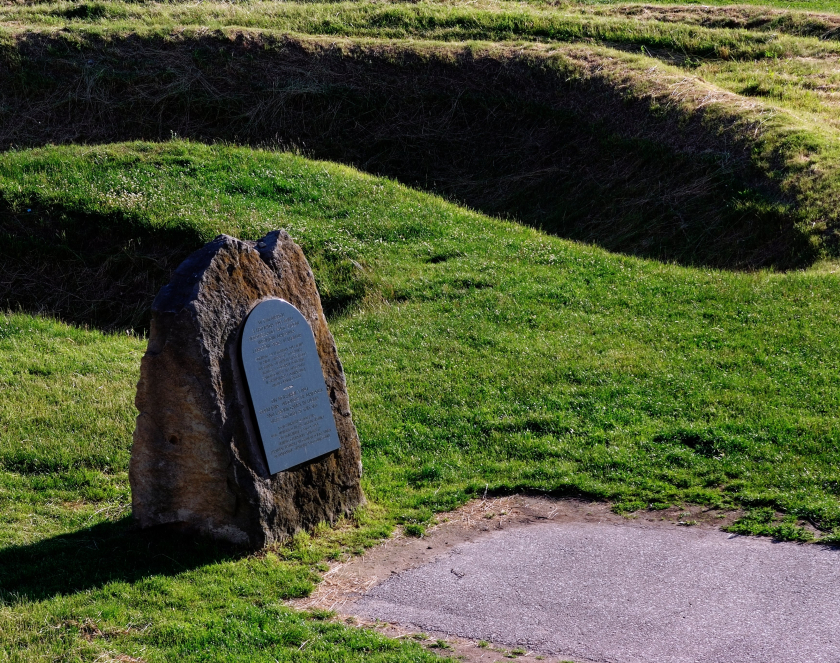
DIGGING TRENCHES RECALLED BY SURVIVOR JÓZEF KORCZ
On Sunday preceding the 3 November, our “Lagergut” kommando was escorted behind field V and divided into four teams. We were given shovels and pickaxes, and ordered to dig four huge rectangular trenches, demarked rather symmetrically, several dozen paces from one another. We came back for lunch at around noon, and shared the news that the Germans were building the air-raid defences of Lublin, because we had just started digging ditches for AA artillery emplacements. Usually, we would not be taken for labour on Sundays, but that day a special team was organised with strong, healthy men that were sent to deepen those trenches. Several hours later, a few hundred Jews were brought in to field IV from Lublin, from the Lipowa camp. In the evening those Jews were sent behind field V to be another shift in that team. They worked all night long by electric light. On the following day, they also worked near those ditches, digging another deep zigzag trench stretching from field V towards the Dziesiąta village. The working pace was vey fast, SS-men were hasting the labourers with sticks for greater efficiency.
EXECUTION COURSE
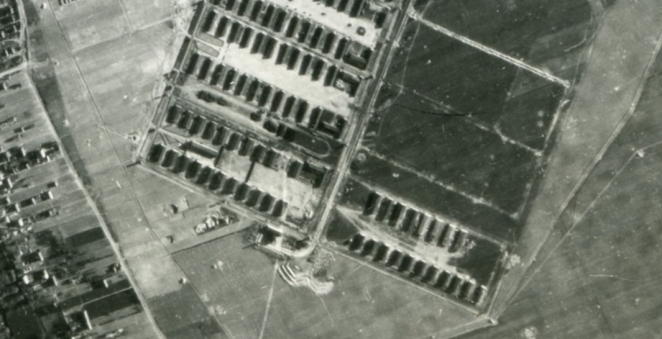
Early in the morning the heavily armed forces of the Waffen-SS and the German police surrounded the camp with a tight cordon. During the roll-calls held in all five prisoner fields, all Jews were separated from the prisoners of other nationalities. Field V was designated as the victim concentration point, and non-Jews had been escorted out of there earlier.
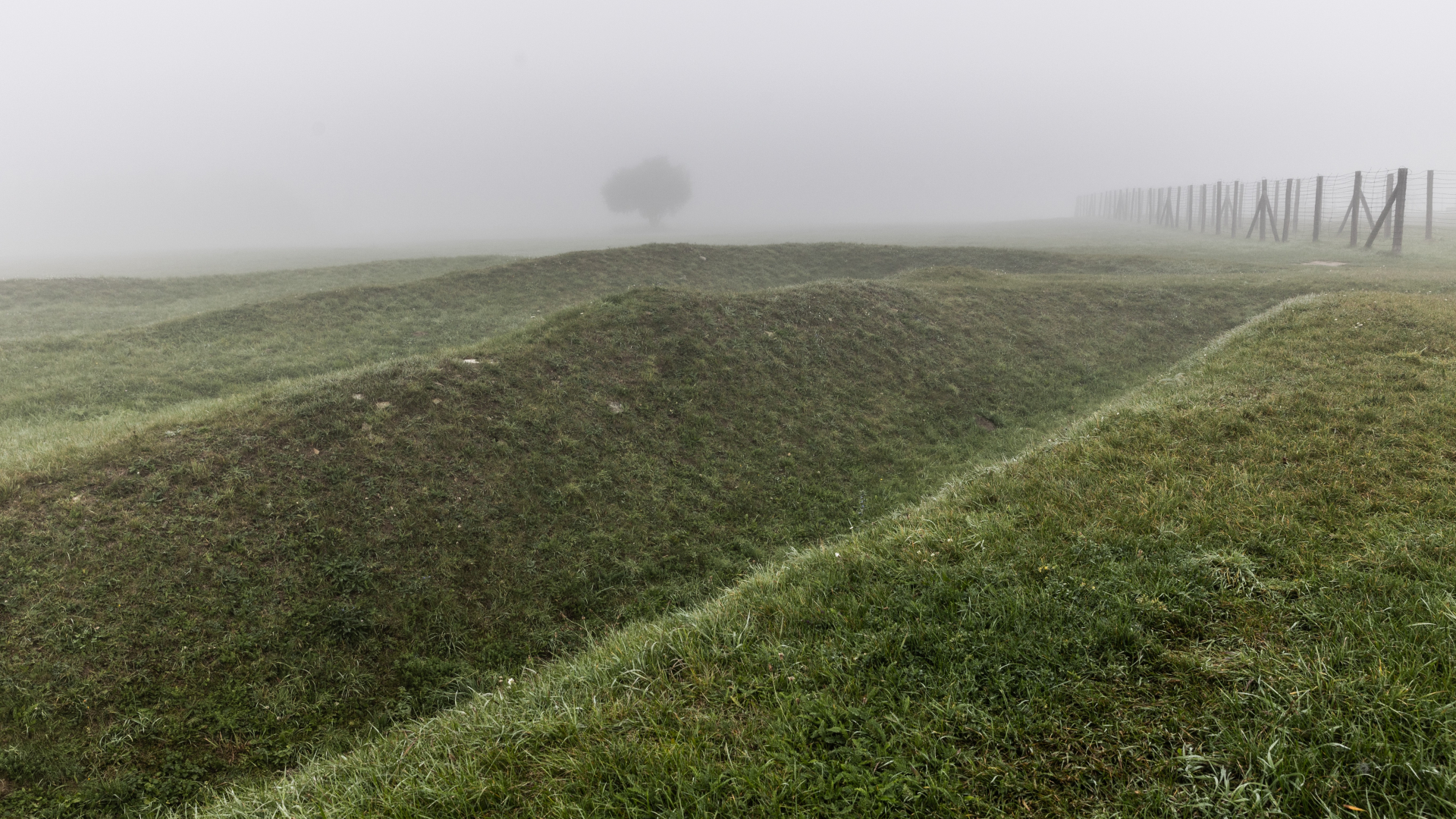
The victims were herded in to the L-barracks, which was open from both ends. Inside, they were forced to leave all their clothes and belongings behind. The naked people were then rushed through a cut barbed wire fencing into the ditches. There, they were forced to lie inside them heads-down. The next groups of victims were forced to lie on the bodies of the previously murdered victims. This procedure continued until all three trenches were completely filled.
NO WITNESSES
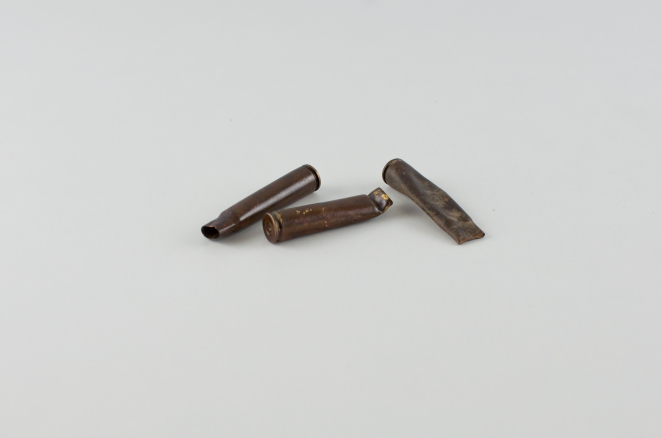
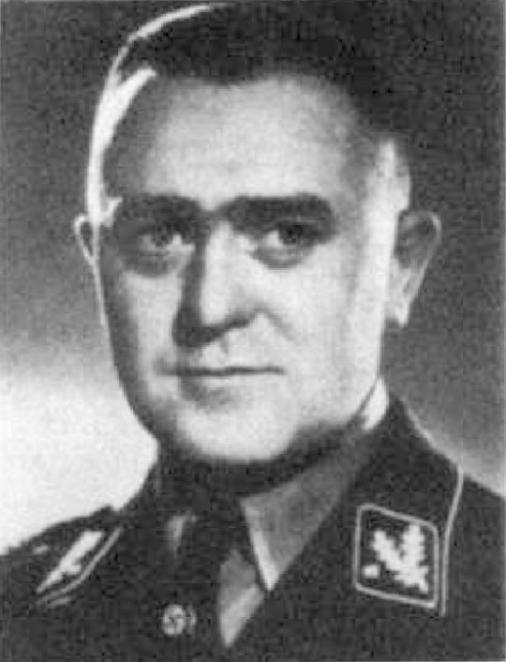
The perpetrators of mass murder of such a tremendous scale cared about concealing their crime. The commander of the SS and police forces in the Lublin district, Jakob Sporrenberg, coordinated the operation while in close contact with the high command in Berlin. He ensured that the shooters were not from the SS garrison of the Majdanek camp, since they would have been easy to recognise by the prisoners, who would have been able to testify against them in the future. Instead, members of various units from outside Lublin were dispatched, including the security police and security service from Kraków and Lviv, and the Waffen-SS “Viking” division. The “ordinary men” from the infamous 101. Reserve Police Battalion from Hamburg also participated in operation “Erntefest”.
During the executions, all the non-Jewish prisoners of Majdanek were ordered to stay inside the barracks at fields I–IV. However, several survivors’ accounts prove that some prisoners risked their lives and sneaked outside to learn what was happening in the camp that day. One of them was a Polish man Henryk Nieścior:
Somebody saw, looking across the barbed wires, that the Jews who had been taken to field V were undressing. And suddenly words did spread through our ranks: ‘Jews are being shot, this is mass murder’. The Jews at field V were indeed undressing inside the barracks, then they walked through a path near the crematorium, and completely naked went into the trenches. There they were shot by the ‘genocidal murderers’ that were completely deprived of decency and conscience.
The perpetrators tried to mask the executions of Jews with music. The German propaganda unit in Lublin dispatched special tracks to Majdanek, that were equipped with megaphones and parked around the camp. Additional loudspeakers had been installed on the sentry towers the day before. Marches, waltzes, and foxtrots were played all day long to conceal the gun noises and the screams of the victims.
ACCOUNT OF HELENA KURCYUSZ
VICTIMS AND SURVIVORS
That day, the Germans murdered nearly all Jews remaining in Lublin. A group of 315 women were temporarily spared to sort all those clothing left behind by the victims inside the L-barracks. Their late fate, however, also proved tragic. During the evacuation of Majdanek they were transferred to Auschwitz in the transport of 13 April 1944. They arrived at Birkenau, and although they were all registered as prisoners and had their numbers already tattooed, they were soon after murdered in the gas chambers. The only survivors were those women, that had escaped from the train. Estera Kerzner was one of them. In 1944 she fought in the Warsaw Rising and eventually survived the Holocaust.
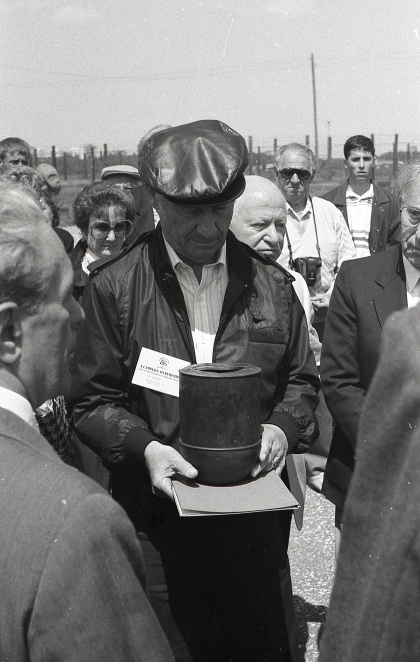
Another group of 300 men were also spared during operation “Erntefest” and picked for labour. They were tasked with burning the victims’ bodies as part of the Sonderkommando 1005 operation. Once they completed their task, they were murdered as eyewitnesses by default. Only a handful of them survived the war after successful escapes. Józef Reznik was among them. In February 1944, he managed to flee from the Sonderkommando team working in the forest of Borek near Chełm.
“ERNTEFEST’ FROM THE MURDERER’S PERSPECTIVE
The carefully planned course of operation “Erntefest”, a small number of survivors, and the code of silence among Nazi war criminals captured after the war, contributed towards the nearly complete lack of direct witness accounts regarding the events of 3 November 1943. The testimonies of Majdanek’s crematoria chief, Erich Mußfeldt, who was tried in the First Auschwitz Trial in 1947, are a genuine exception within this field. While testifying in front of the Polish Supreme National Tribunal in Kraków, he offered extensive descriptions regarding his service in KL Lublin as well.
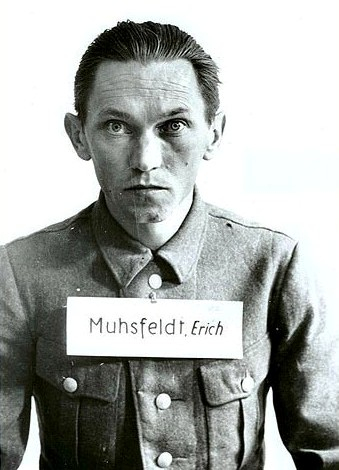
In late October 1943, one day, trenches began to be dug beyond fields V and VI, about 50 metres from the building of the new crematorium. About 300 prisoners were assigned to this work. They worked in two shifts, day and night, 150 men at a time, for three days. During those three days, three trenches more than two metres deep were dug, each approximately 100 metres long and running in a zigzag line.
Over the course of those three days, Sonderkommandos began arriving at Majdanek from the Auschwitz concentration camp and from the SS and police commanders in Kraków, Warsaw, Radom, Lviv and Lublin. From Auschwitz came Otto Moll and Franz Hössler, together with ten other SS-men. In total, approximately 100 SS-men arrived from all the localities I have mentioned, forming a Sonderkommando.
On the fourth day, which may have been 3 November 1943, an alarm was sounded as early as 5 a.m. As a result of the alarm, I went from my quarters to the camp. The entire camp was surrounded by police. I estimate that there may have been about 500 policemen, standing guard with their weapons ready to fire. They were armed with heavy machine guns, light machine guns, and other rapid-fire automatic weapons. Near the new crematorium stood a vehicle equipped with radio transmitting equipment, and another identical vehicle stood at the entrance to the camp, near the Bauleitung offices. When I arrived at the camp, both transmitters were already operating. Marches and German songs were being broadcast, as well as dance music played from records. Both vehicles had been supplied by the Propaganda Office (Propagandamt) in Lublin.
I wish to emphasise that until that day I did not know what had been being prepared. While the trenches were being dug, I assumed that they were air-raid trenches, as an anti-aircraft artillery battery had been positioned nearby. I asked the SS-man who was supervising the prisoners digging the trenches what purpose they were intended to serve, but he was unable to answer my question, and I got the impression that he himself did not know what was going on. The Jews who had been assigned to dig the trenches told me, when I asked them, that the trenches were certainly intended for them. I did not believe them; I laughed at them and replied that they were certainly air-raid trenches. My answer was sincere, because at that time I myself was convinced that this was their purpose.
At about 6 a.m. (possibly it was already 7) the large-scale operation began. Some of the Jews gathered in field V were driven into a single barracks, where they were forced to undress completely. Then Schutzhaftlagerführer Thumann cut through the section of the fence between field V and the trenches. This created a passage. A line of armed policemen was formed between the passage and the trenches. Naked Jews were driven through this line towards the trenches. There, one SS-man from the Sonderkommando drove ten people at a time into each trench. Those who had entered the trench were driven towards its far end. There they were ordered to lie down, and the SS-men from the Sonderkommando standing along the edge of the trench shot them. The subsequent groups were likewise driven along the trench to its far end, where they were forced to lie down on those who had already been shot. In this way, the trench gradually filled up in sections, until it was almost full to the brim. The men were shot separately, that is, in separate groups, and the women in separate groups. The operation continued without interruption until about 5 p.m. The SS-men carrying out the executions took turns; they would leave for the SS barracks in the city to eat, while the operation continued without interruption. Throughout the entire time, music was broadcast from both radio vehicles. I observed the course of the operation from the building of the new crematorium, where I had a room for myself and for the prisoners belonging to the kommando under my command. During that day, all the Jews who were in the Majdanek camp were shot.
I heard that on that day more than 17,000 Jews, both men and women, were shot in total. Among them were all the Jews from my kommando. After all the Jews had been shot on 3 November 1943, the trenches were covered with a thin layer of earth.
DEATH TOLL
The survivors of Majdanek remembered the day of 3 November 1943 as the “Bloody Wednesday”. The scope of that genocidal operation, however, was not limited to the city of Lublin. Similar executions were held simultaneously at the labour camp and Trawniki, and on the following day they continued in Poniatowa. In total, the Germans murdered over 42,000 Jews in those three locations on 3–4 November 1943. “Erntefest” is considered the largest single execution operation in the history of World War II.