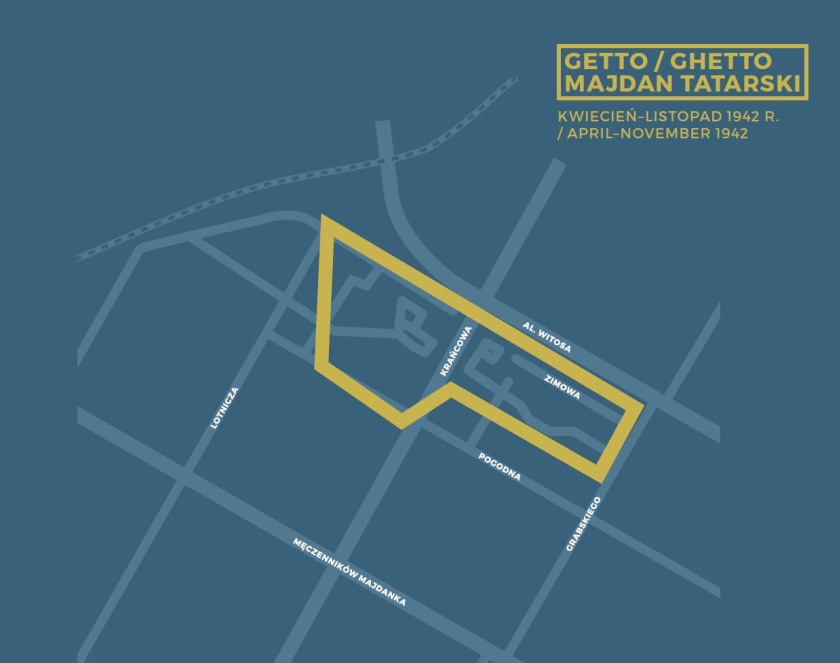
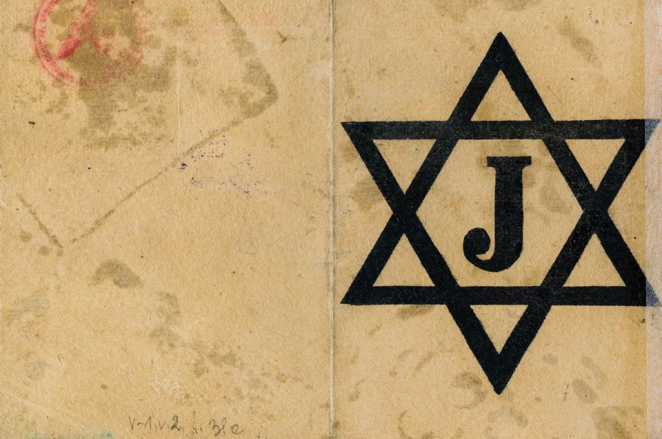
On April 19, around 8,000 Jews were forcibly closed in the secondary ghetto. However, before this could happen, within a few previous days the Germans had resettled the several hundred Polish locals. The boundaries of the newly established closed quarter were marked by: Majdanek, Majdan Tatarski, and Gromadzka streets. The only entry into the ghetto was located at the latter and was constantly guarded by the German military policemen, Poles serving in the Blue Police, or the Jewish Ghetto Police. The ghetto’s most important offices and institutions were located along the inner artery of the quarter – Rolna Street. In accordance with the decrees issued by the German administration, only the Jews who were issued the J-Ausweis, a special document legitimising their settlement, could be present within the ghetto’s boundaries. These were given to the members of the Jewish Council (the Judenrat), Jewish Police functionaries, members of disinfection units, and those employed by the German companies and administration. From the very beginning of the ghetto’s existence, the living conditions were on a catastrophic level followed by massive overpopulation, as nearly half of the resettled entered the ghetto illegally. The Germans realised that and ordered the Judenrat to conduct a census, which was in fact a prelude to the upcoming selection.
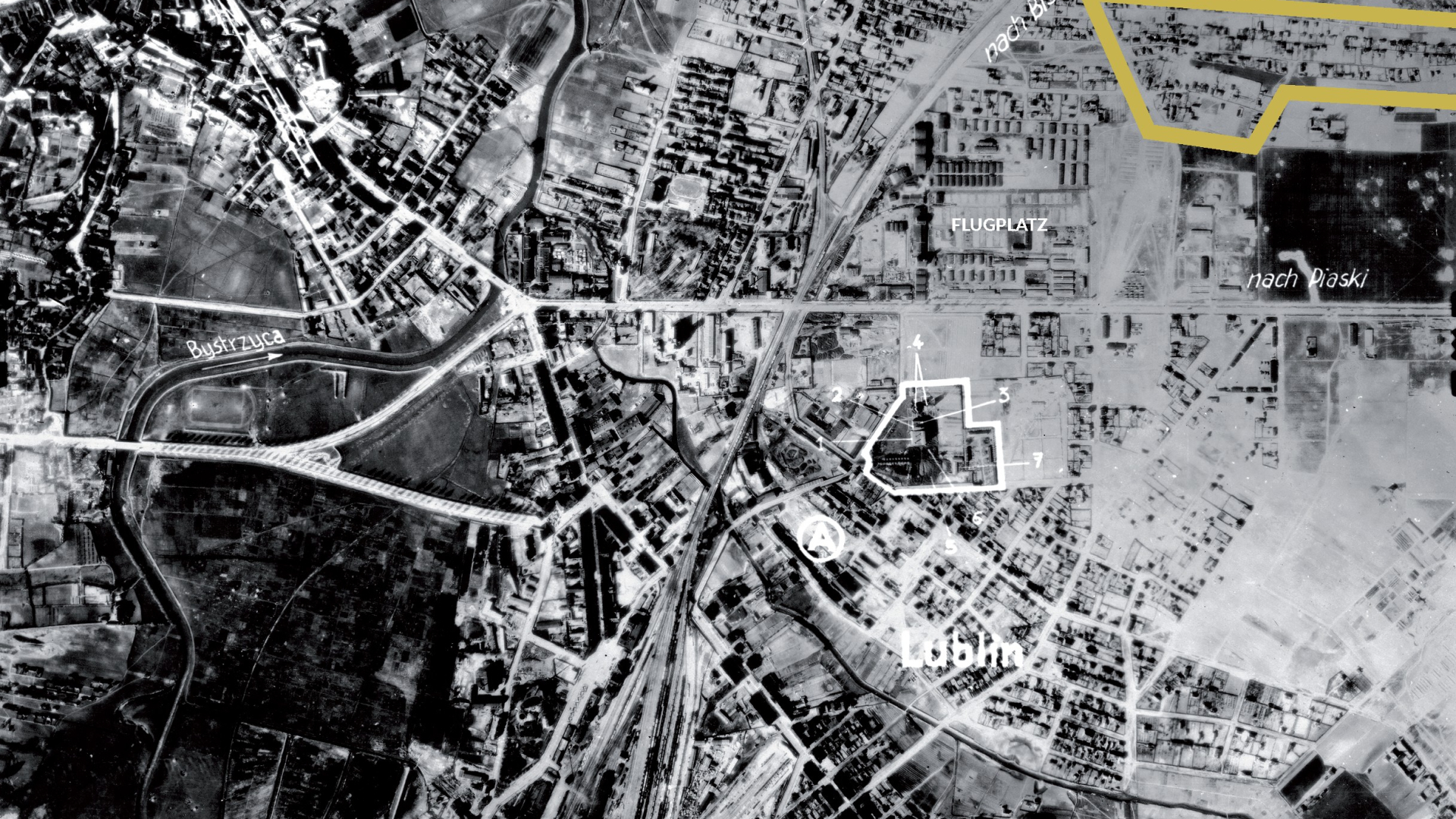
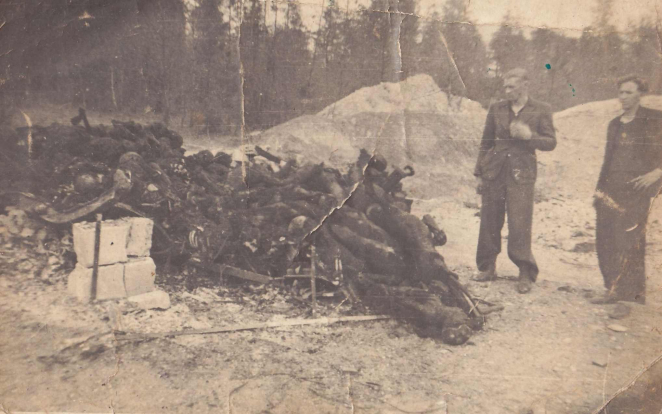
The terrorised and unaware Jews were rallied within the square between the ghetto and the Flugplatz labour camp. Then, the Germans proceeded with the brutal selection process accompanied by incessant beatings. The elderly, small children with their mothers, and those who did not have their J-Ausweis, were all sentenced to death. The families were torn apart once more. Approximately 3,000 people were taken to KL Lublin, where in the storage barracks adjacent to the bathhouse they would undergo another selection. The Germans ordered a Polish doctor-prisoner to conduct some superficial examinations, based on which only the male victims considered fit for labour were separated from the group. Some would count on obtaining a less exhausting work assignment so they faked various diseases and injuries, thus sentencing themselves to certain death. Others joined the rejected ones voluntarily as they did not want to part with their families. Although the procedure was still coordinated by the security police representatives, the SS-men from the camp garrison also participated in the process. Only around 200 men were joined into the prisoners of Majdanek and a small group was also sent back to the ghetto by order of a security police officer. Anna Bach with her daughter Dina, Julian Fogelgarn, and Zofia Akerman alias Janina Tataj were the only ones to survive the war out of the entire group. The remaining 2,700 were among the victims, but since the gas chambers at Majdanek were not yet operational at that time, they were taken to the nearby Krępiec forest instead, and shot within the next following days.