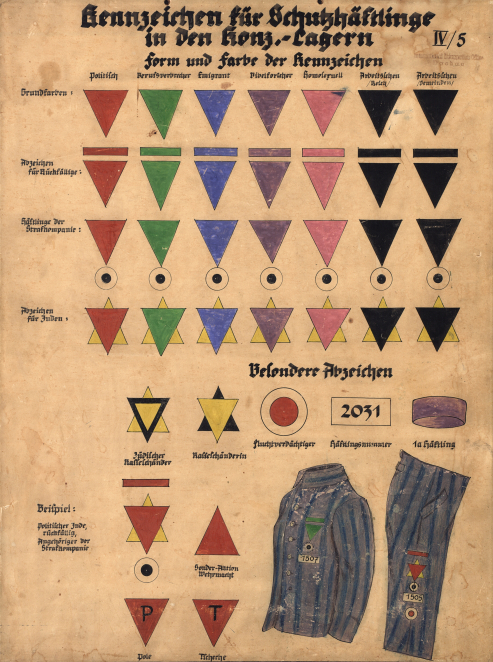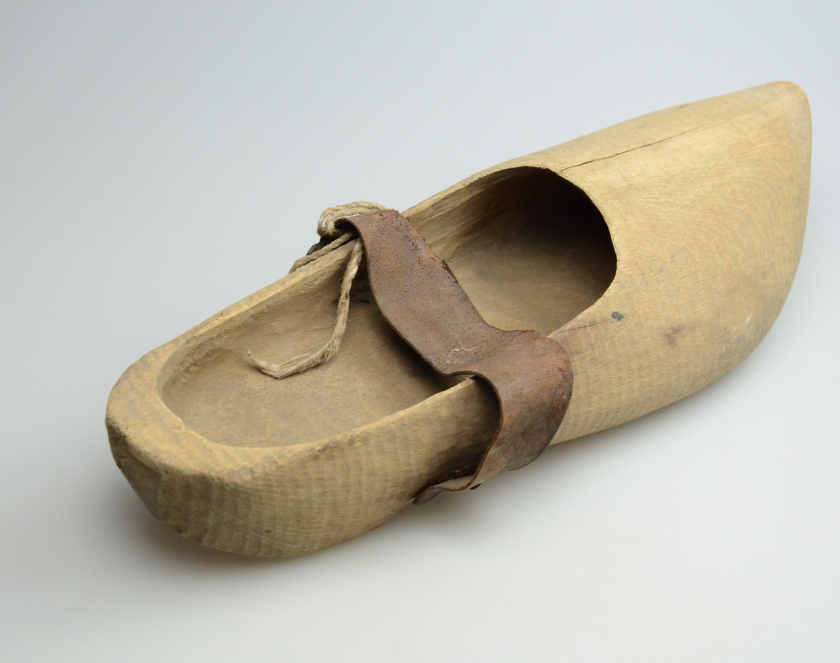
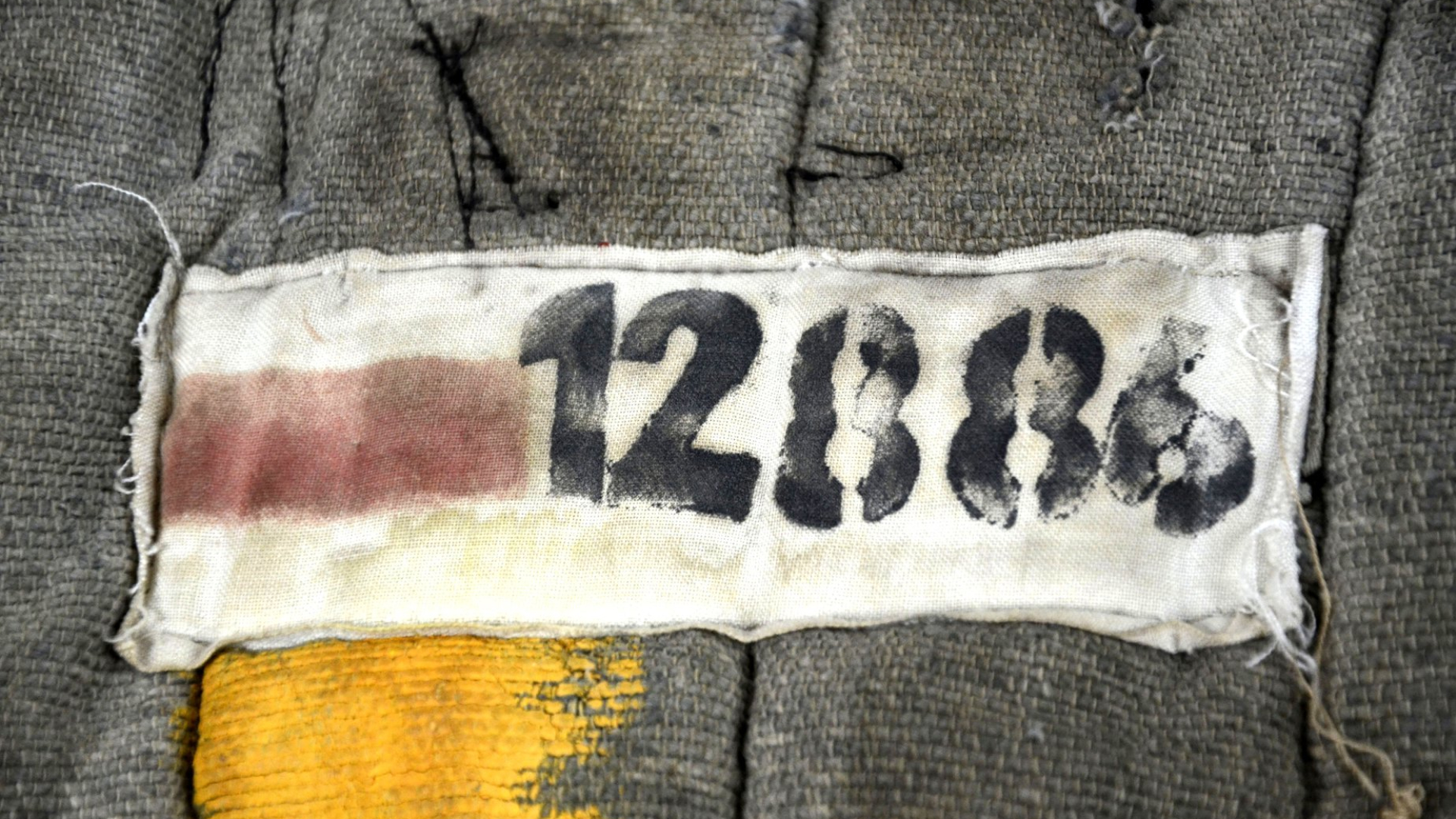
The camp admission process began with registration. All personal data of newcomers was entered into the camp records, and prisoners received labelling badges and numbers, which from then on replaced their names. Numbers were engraved or stamped on metal tags that had to be worn around wrists or necks. They were also visible on a piece of white (or red in case of hostages) piece of cloth, that had to be sewn onto the prisoner uniform. Besides the number, the inmates also had to wear badged indicating their category, loosely referring to the reason for their incarceration in the camp. The marking system included the following categories:
- red triangle – political prisoners, persons suspected of ‘activities hostile to the Reich’, members of the resistance;
- green triangle – ‘professional’ criminals;
- purple triangle – Bible Students (Jehovah’s Witnesses), who were systematically persecuted by the Third Reich;
- blue triangle – citizens of Germany who had left the country (often under duress) after Hitler came to power in 1933, but later returned and were therefore suspected of espionage;
- pink triangle – homosexuals, who were sent to camps for violating paragraph 175 of the German penal code, which prohibited sexual relations between men;
- black triangle – the so-called asocials, including the homeless, vagrants, prostitutes, drug addicts, but also the Roma and Sinti.
Inside the triangle there was an imprinted letter indicating the inmate’s nationality in accordance with the German spelling, while triangles without letters were given to the citizens of the Third Reich. The system also included markings for Jews – to the triangle of the given category, a second yellow triangle was added, together forming the Star of David. There were some additional special markings including the so-called Flughtpunkte – a red circle on a white background that was used to label the prisoners that were particularly suspected of making escape attempts. The Soviet POWs had the large “SU” letters painted on their backs.