Prisoner Origins

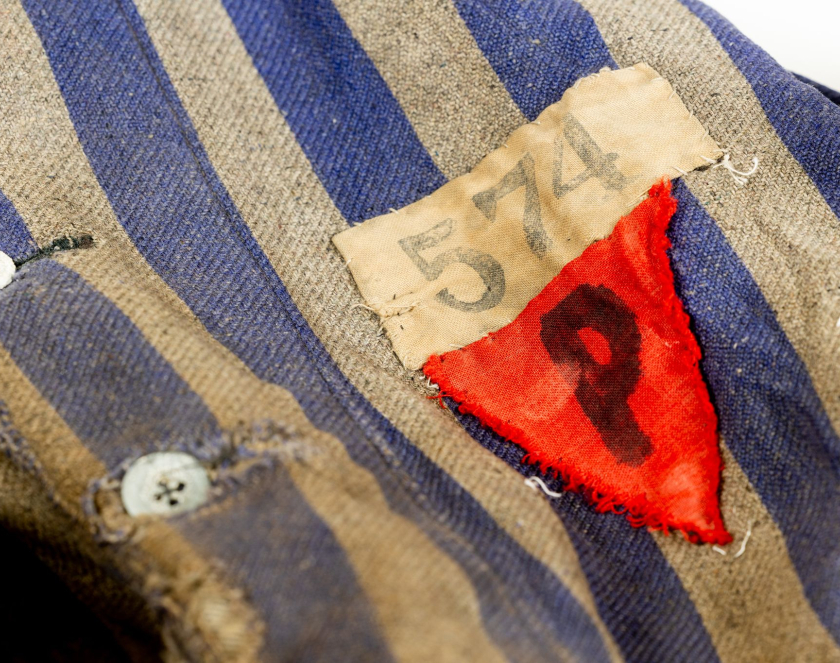
A fragment of a white and blue striped jacket with buttons. On the right side, there is a red triangle made of fabric with the letter P sewn on it. Above it, there is a rectangular piece of fabric with the number 574.
Around 130,000 women, children, and men of various origins were deported to Majdanek in the years 1941-1944. Jews were the most numerous group in the camp (74,000-80,000), while Poles were the second-largest (35,000) and the citizens of the Soviet Union third with Belarusians dominating among them.

Various Nationalities

Throughout the first stage of the camp’s functioning, Soviet POWs were the majority of its prisoners exploited as slave labour force. They quickly perished in large numbers due to primitive living conditions, diseases, and brutal treatment by the SS. Other prisoner groups were brought in from other concentration camps locate in the Reich from late 1941 including Poles, Germans, Czechs, and later also Jews and Poles from Lublin and its vicinity.

Large transports of Jews were sent to Majdanek from the spring of 1942, mainly from Slovakia, the Protectorate of Bohemia and Moravia, Germany, and the Lublin region. The Germans used KL Lublin as part of the Nazi plan for the physical extermination of all European Jews, who were killed through exhausting conditions and labour, or later were deliberately murdered. At the same time Majdanek served as a penal camp for Poles arrested for violating occupational regulations (mostly not fulfilling obligatory quotas of agricultural products provided to the German army) or in retaliation for partisan activity.
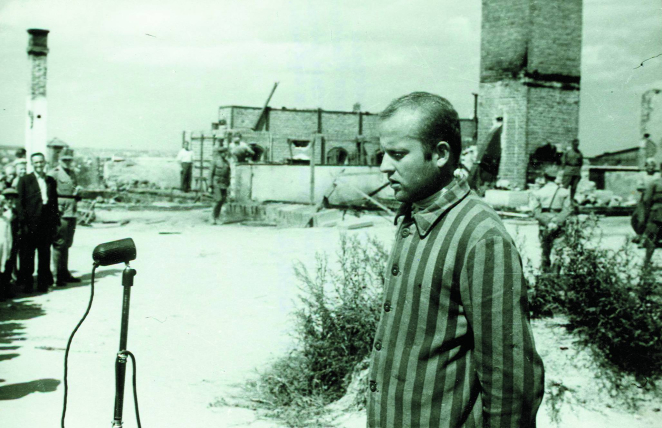
A man in a striped shirt stands in front of a microphone and speaks. Next to him is a brick stove and a tall chimney. Around him are a few people.

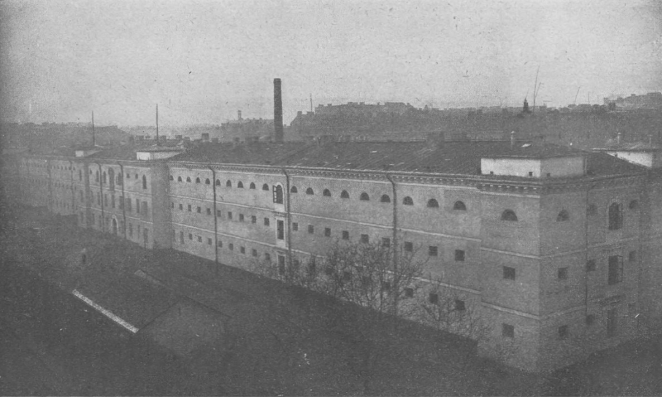
From January 1943, Poles arrested primarily as resistance members were deported to Majdanek from  various Gestapo prisons in the Radom district (Częstochowa, Kielce, Radom), the Pawiak prison in Warsaw, the Łącki prison in Lviv, and the Lublin castle. Many Poles were arrested during street round-ups. From the spring of 1943, the rural Belarusian population (including children) was deported to Majdanek as part of a full-scale pacification operation. For them KL Lublin served the function of a transit camp, as they were further deported into the Reich. At the same time the transports with Jews deported from the Warsaw ghetto (form late April 1943) and the Białystok ghetto (August 1943) arrived at Majdanek.

A brick three-story building with a chimney in the middle
Men’s section of the Pawiak prison, 1920s.
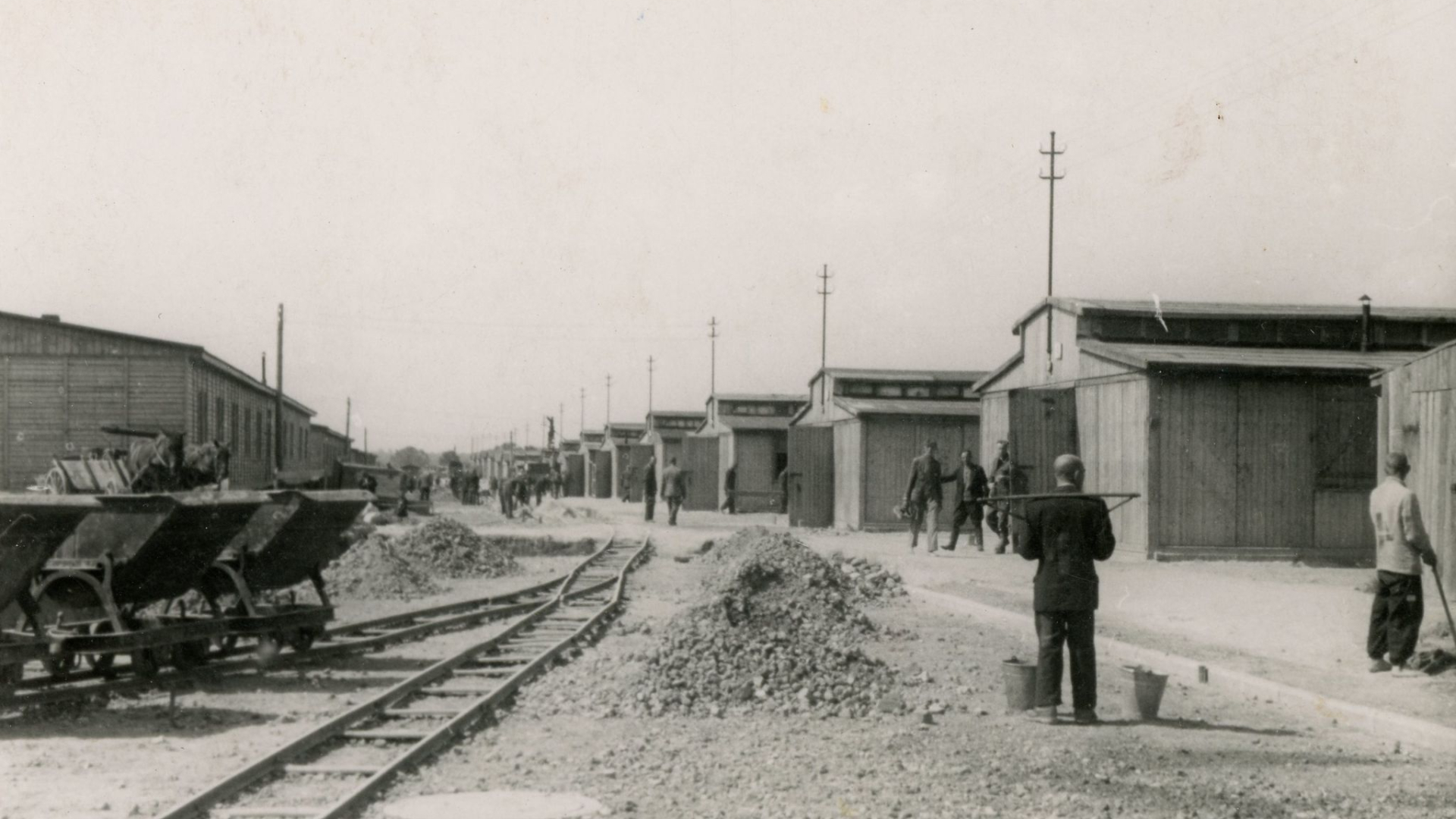
A black-and-white photograph showing the railway tracks and a carriage on the left, and men at work on the right.
Prisoners during work in the economic sector of Majdanek, 1943.

Soviets

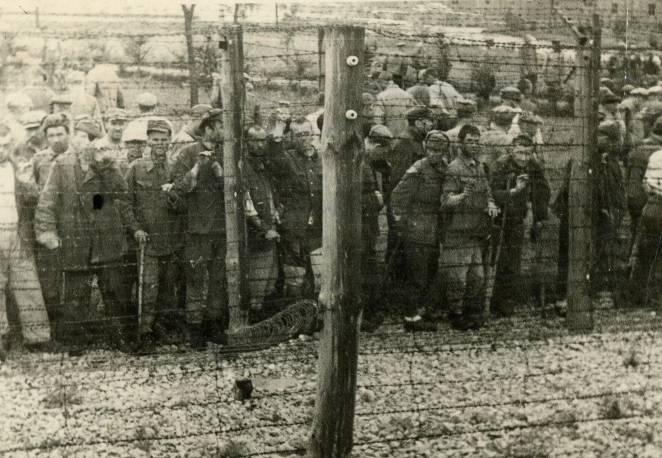
From May 1943, Soviet invalids (former Red Army troops) were detained at Majdanek’s field II. They had become injured after deserting, or already after getting captured by the Germans and working and fighting on their side. It was a distinctive group of prisoners, who were not formally subordinate to concentration camp command.

A barbed wire fence, behind which dozens of men are crowded together.

People Displaced from the Zamość Region

Polish families displaced from the Zamość region were deported to Majdanek from the summer of 1943. For them it was a transit camp, from where they were sent as slave labourers to the Reich. Certain small groups were also released from the camp, though many of them perished due to hunger and awful living conditions.

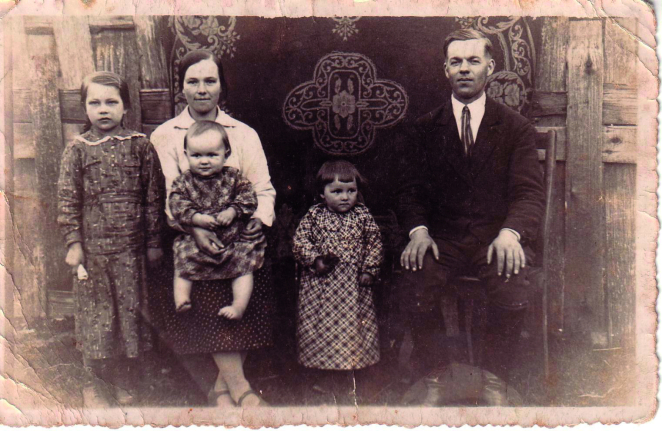
he photo shows two adults sitting down—a woman and a man. Between them stands a little girl in a plaid dress. Another little girl in a plaid dress is sitting on the woman's lap. Next to her stands a third girl, around 10 years old, wearing a long dress with a collar.
The Wilczak family, who were displaced from the village of Dereźnia Solska in the summer of 1943. Jan and Katarzyna were deported to Majdanek with their five children: Julianna, Jan, Stanisława, who are visible in the photograph, as well as Krystyna and Franciszek, who are absent in this family portrait.
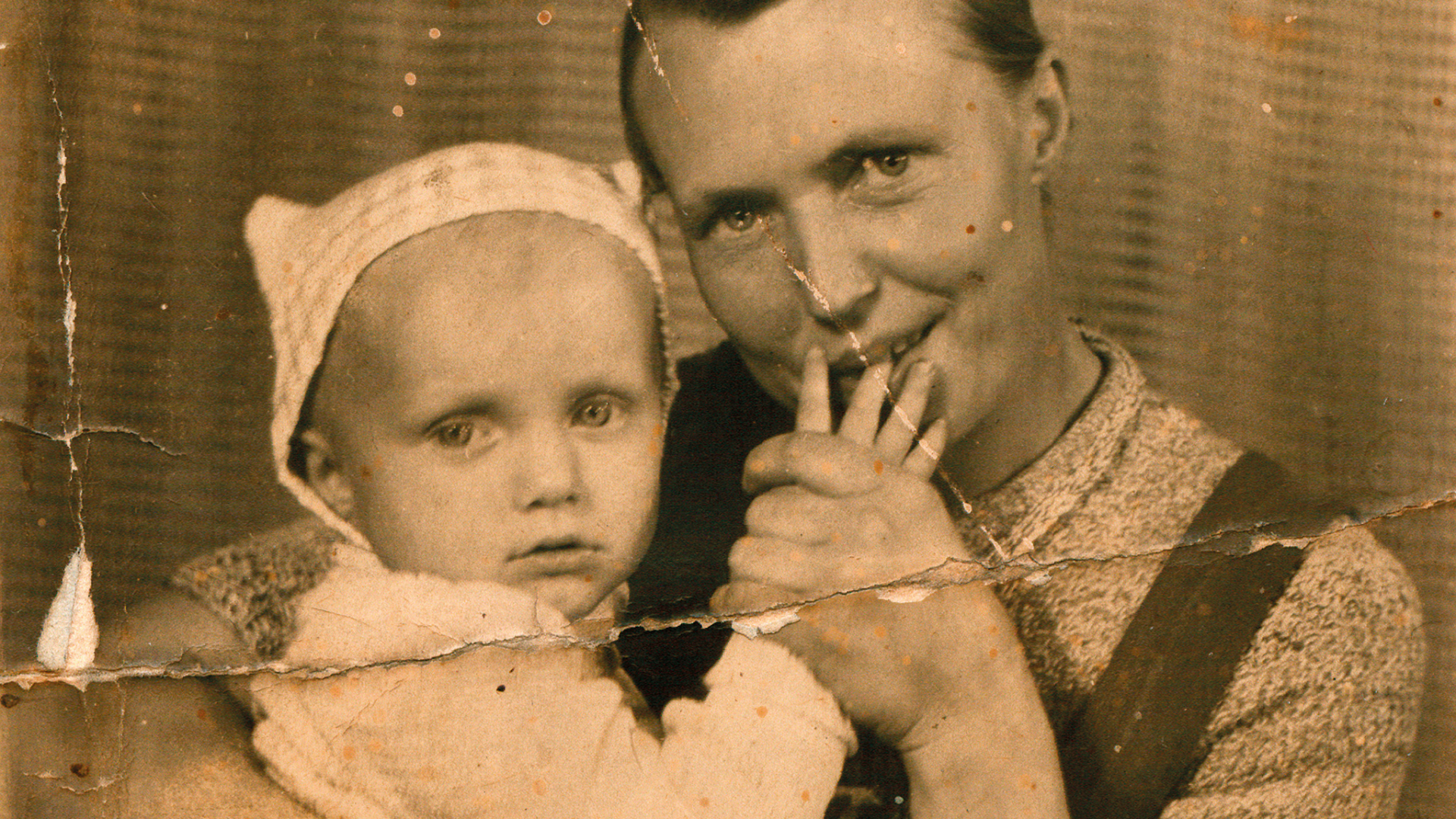
Portrait of a mother and child
Aniela Kryń with her son Janusz. They were displaced from the village of Łukowa and deported to Majdanek in the summer of 1943.

Transports from the Camps in the Reich

From December 1943, transports of sick and emaciated prisoners transferred from other concentration camps located in the Reich were sent to KL Lublin. With the arrival of approximately 7,000 of those deportees, the number of prisoner nationalities at Majdanek significantly increased, since besides Poles, and the Soviet Union citizens, they included hundreds of French, Dutch, Germans and Italians. Those inmates died in large numbers as they were critically ill and exhausted from labour.

Apart from that, additional 500 prisoners (mostly Germans and French) were brought to Majdanek in connection with re-establishing the German Equipment Works plant in Lublin in January 1944.

Wehrmacht Labour Camp

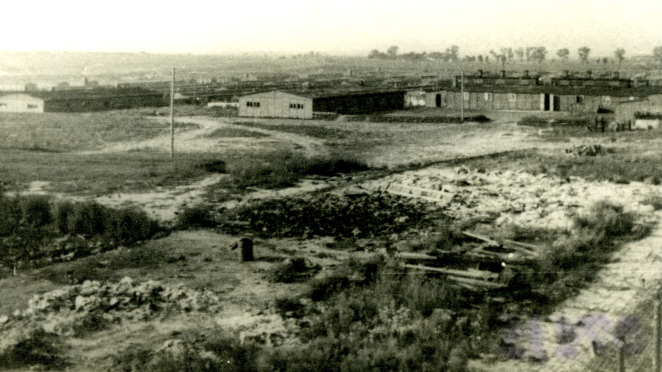
At Majdanek’s field V, the Wehrmacht labour camp was established in May 1944. Up to 2,000 prisoners were detained there, mostly the residents of various towns and villages around Lublin including Kurów, Lubartów, and Piaski. They were tasked with building field fortifications on the outskirts of Lublin. Additionally, Majdanek also served the function of the German security police detention site for Poles arrested in anti-partisan operations throughout the Lublin region.

In the foreground of the photo, there is wasteland and trampled earth. Further away, there are several single-story wooden buildings.
Prisoner field V, 1944.