Camp Admission Process

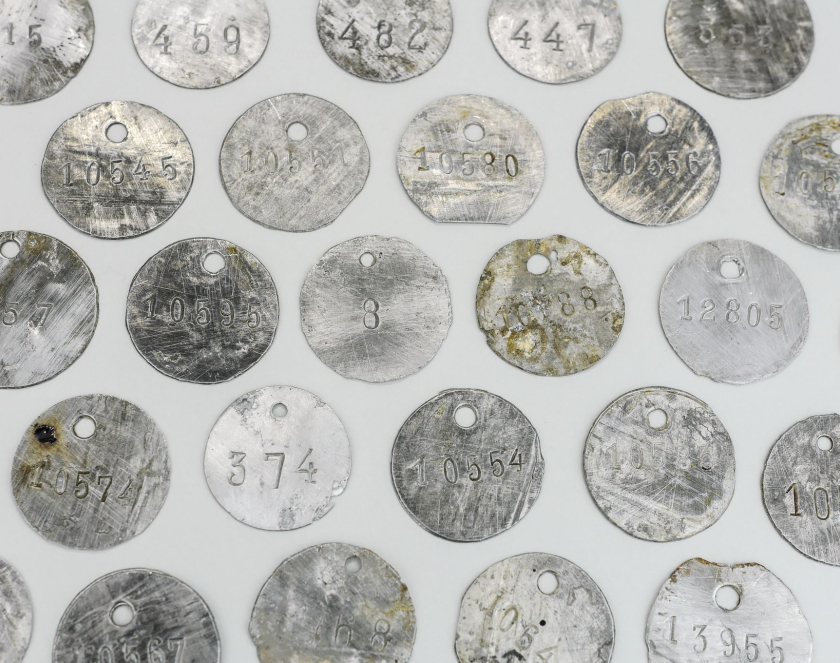
Several dozen round metal plates with holes at the top and stamped numbers
Large transports of prisoners were brought to Lublin by railway, usually in cattle cars, while smaller transports (mostly from the Lublin district) were brought with trucks. Harsh transport conditions combined with no access to food and water caused many deaths among the deportees. Bodies were not unloaded until the transport’s arrival in Lublin.

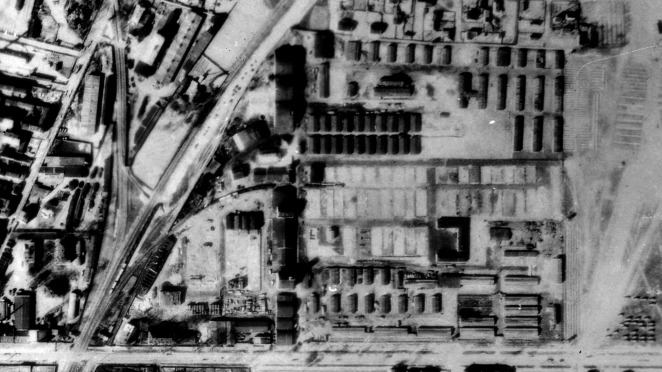
Since the camp never had its own railway infrastructure, the trains with the deportees arrived several kilometres for the prisoners’ final destination – either the man train station or the spur line of the Flugplatz labour camp in Wrońska St. Then, the deportees marched to Majdanek on foot.

Aerial photograph showing streets and rows of buildings. On the left, railway tracks with a siding are visible.
Aerial photograph of the Flugplatz labour camp in Wrońska St. Railway tracks with a spur line, where the trains with Majdanek deportees arrived, are visible on the left.

First Moments in the Camp

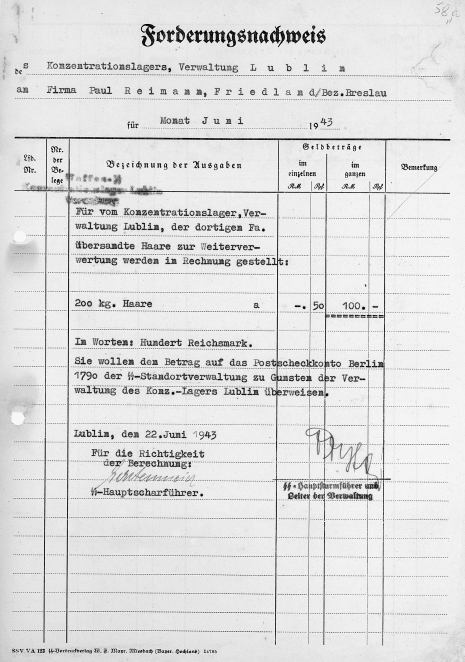
Upon arrival, the newcomers were subjected to the camp admission process. All their belongings and clothes were taken, their bodies were shaved and hair was collected and sold to be used as a resource in the German war effort. Then the newcomers went through bathing and disinfection, after which they were distributed their prisoner clothes. Following those brutal and humiliating first steps, they were sent to one of the prisoner fields.

Jews were treated even harsher, as they were subjected to preliminary selections. A special SS commission divided the Jewish newcomers into two groups. One included those that were supposed to be accepted into the camp and registered as prisoners. The remaining ones, deemed by the SS “unfit for labour”, including all small children, were murdered in the gas chambers.
Document in German, typed
Invoice issued by the camp administration for the P. Reimann company, related to the supply of 200 kilos of hair sent in June 1943.