The World Needs to Hear This

Story of Counterfeit Countess

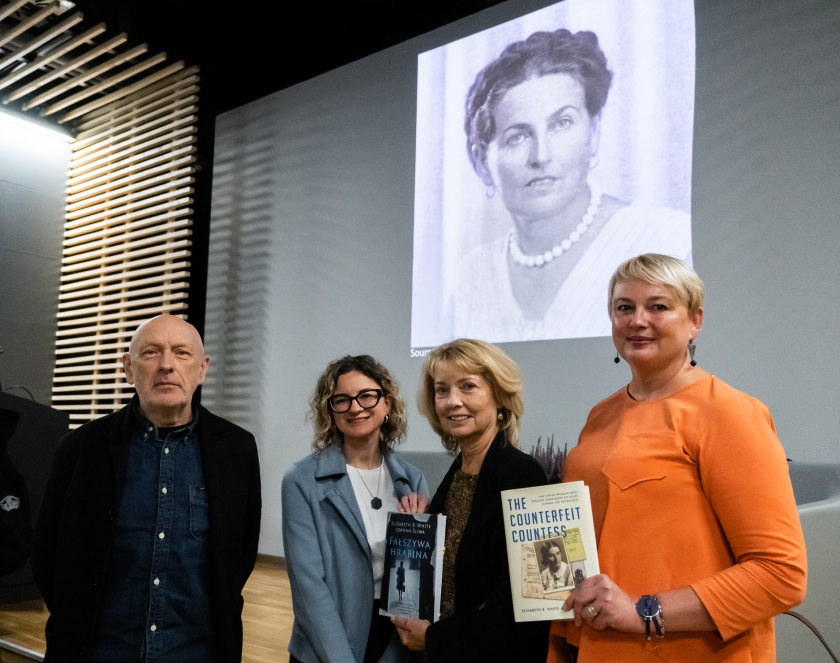
Three women and a bald man against the background of a presentation with a black and white photo of a woman with her hair tied up.
On 28 October, two events were held dedicated to an extraordinary figure – Janina Spinner Mehlberg.

The first event was aimed at young people and took place at the museum's Visitor Centre. Students from Stanisław Staszic High School No. 1 in Lublin participated in a discussion with the authors of the book ‘The False Countess’, Joanna Śliwa and Elizabeth ‘Berry’ White, as well as Marta Grudzińska from the Majdanek Museum. They also had the opportunity to view archival photographs and original documents and artefacts related to the assistance provided to prisoners of KL Lublin by the residents of Lublin and charitable organisations. After the meeting, they visited the site of the former German concentration camp at Majdanek.
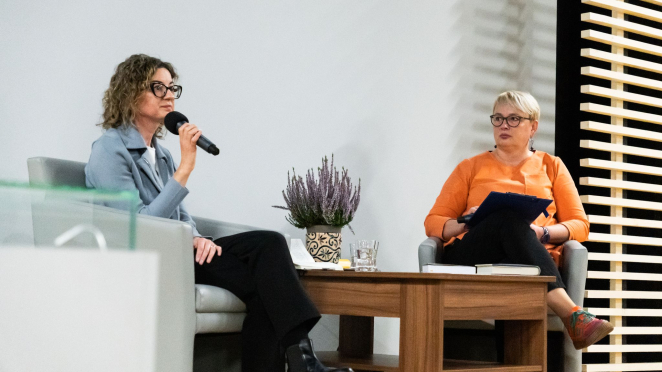
Two women on stage, the woman with curly hair speaking into the microphone.

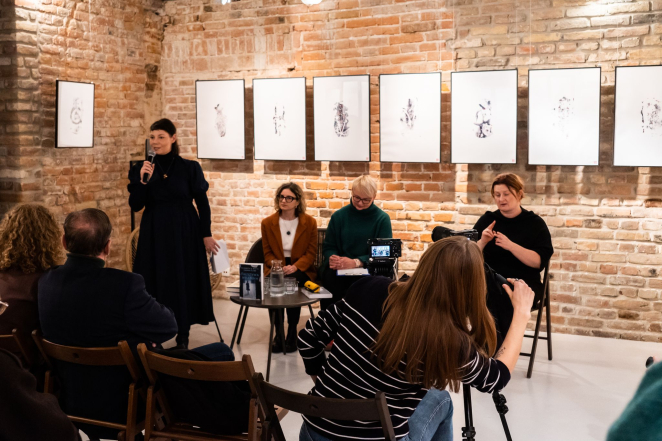
The second event, which we prepared together with the Grodzka Gate – NN Theatre Centre, was aimed at the residents of Lublin. A conversation led by Teresa Klimowicz with Joanna Śliwa and Marta Grudzińska shed light on the fate of Janina Spinner Mehlberg, who, during the occupation, helped prisoners of Majdanek under the false name of Suchodolska. It was also an opportunity to recall the history of Majdanek prisoners and talk about the background to the work on the book Counterfeit Countess. The meeting took place in the Dom Słów centre of culture.

Four women in the room, a woman in a black dress speaking into the microphone, the woman on the left - a PJM interpreter
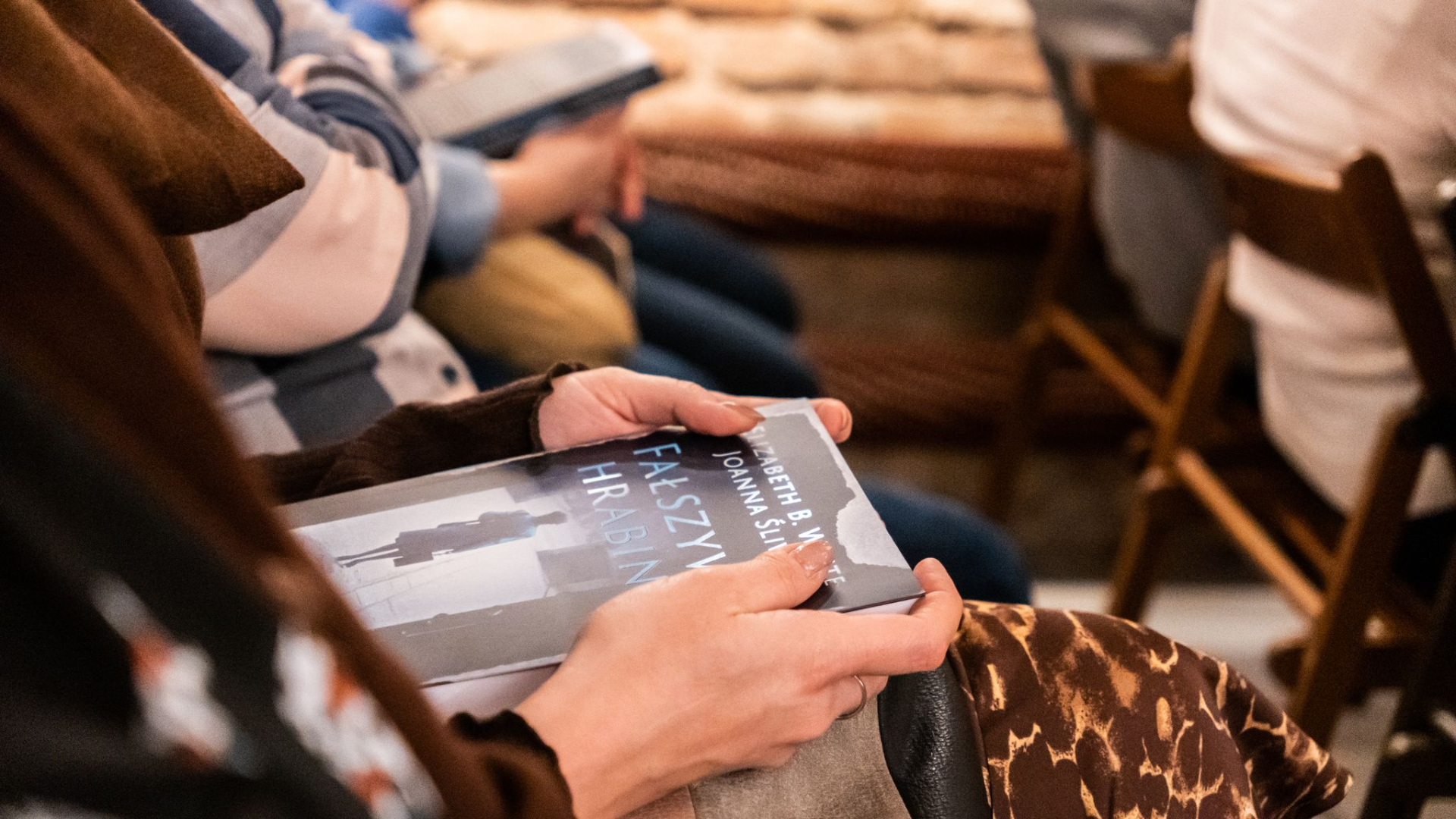
A woman's hands are holding a book. The cover bears the inscription: The False Countess.

"Counterfeir Countess" by Elizabeth B. White, Joanny Śliwy

Fragment:

Janina never wanted to be defined or limited by stereotypes: she was a mathematician, a field dominated by men; she was also a patriot who faced discrimination due to her gender and Jewish heritage; a Jew who risked her life to save non-Jewish victims of the Nazis during the Holocaust; an anti-communist (...) She saw herself as a person connected to other people regardless of their misogyny, racism and ideology. (...) Her story deserves to be told. The world needs this story."