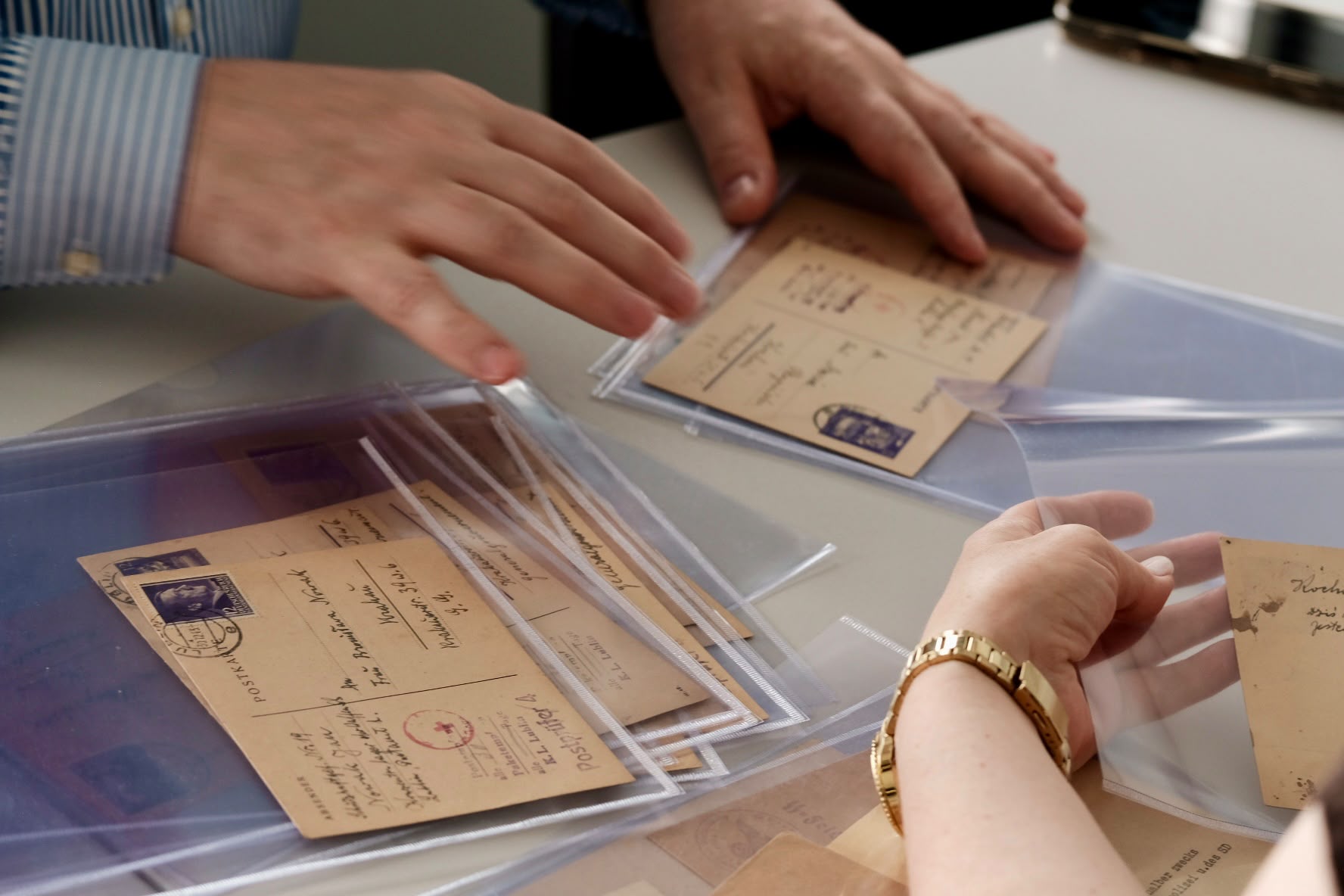
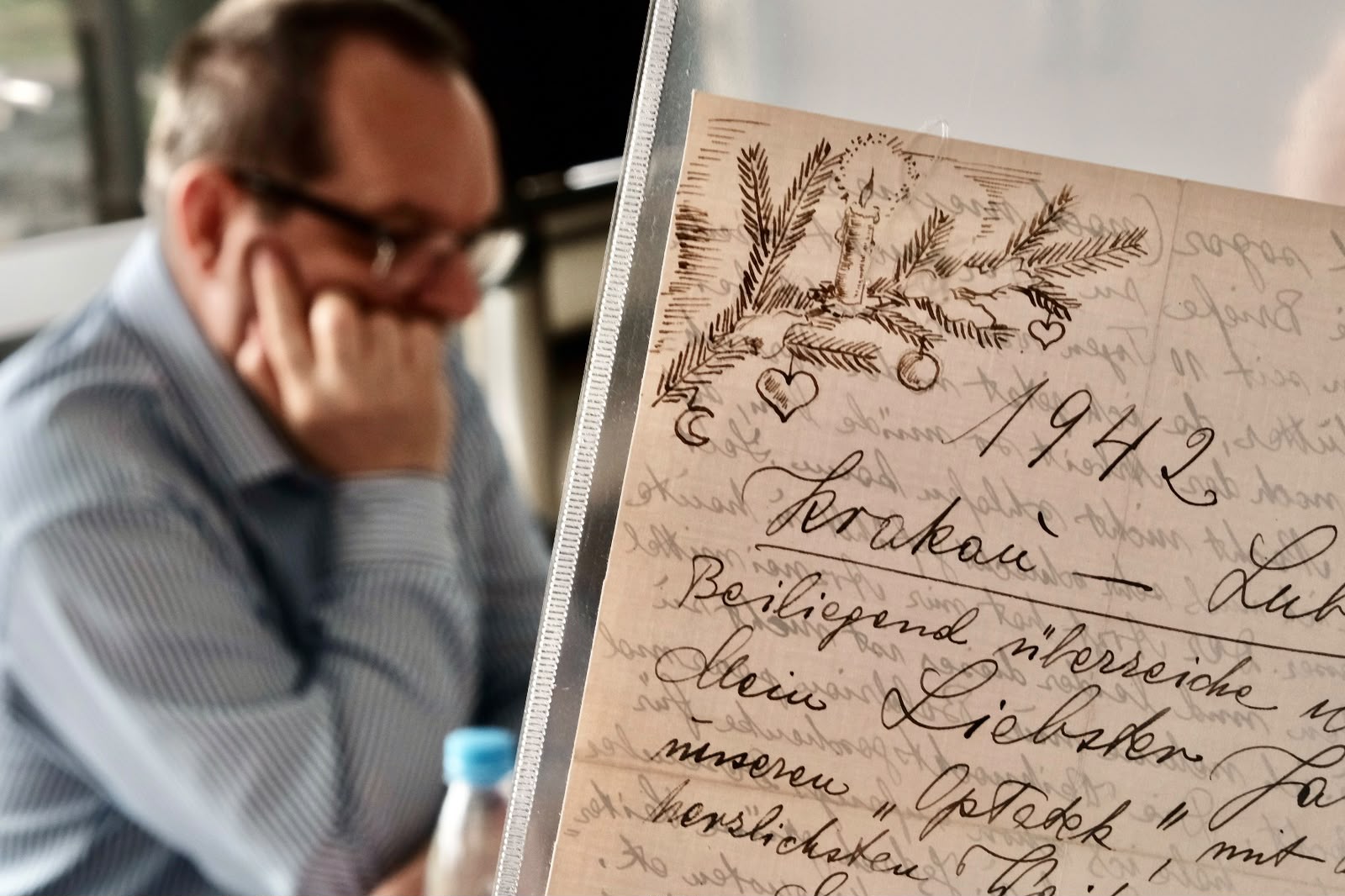
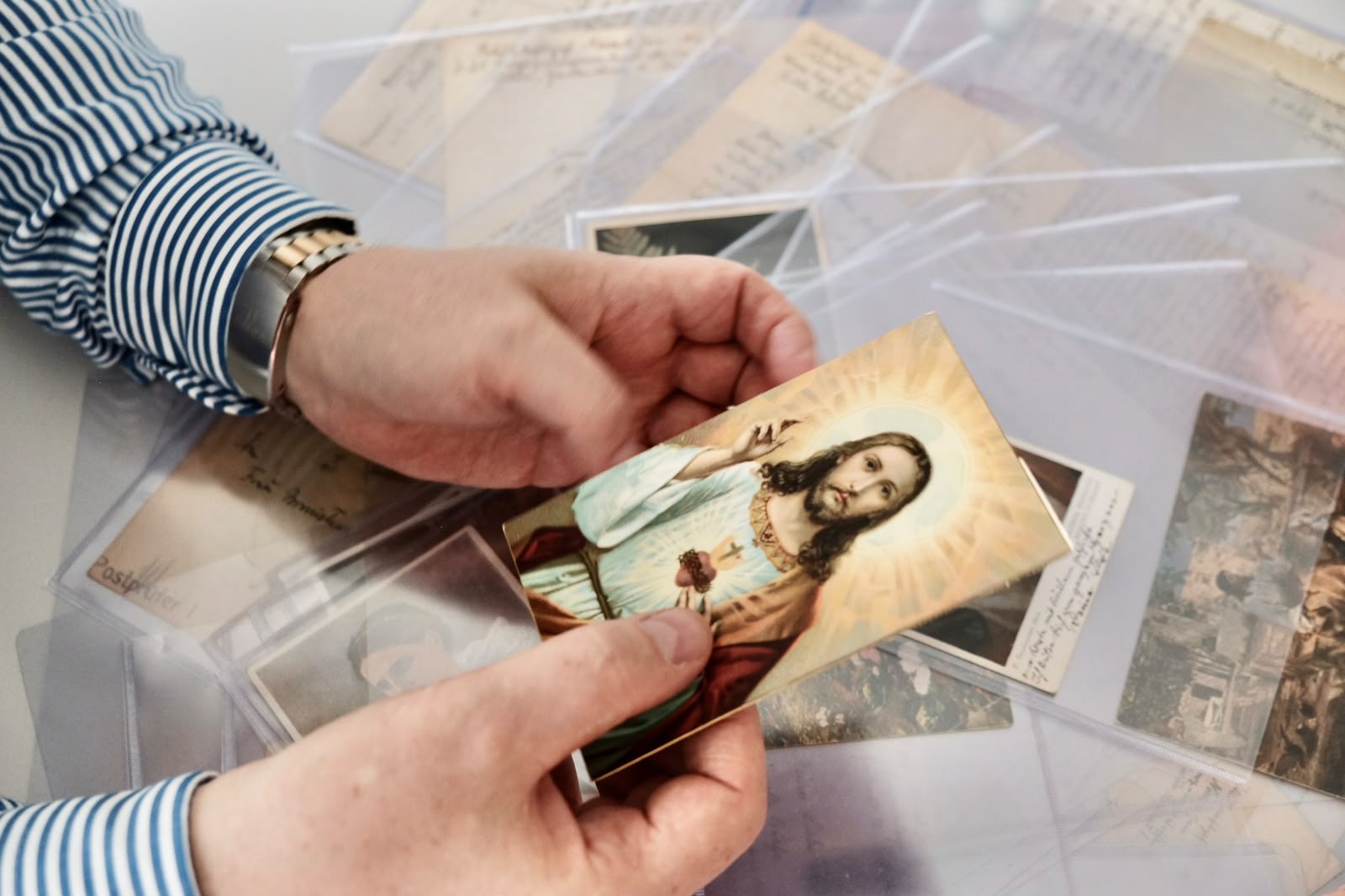
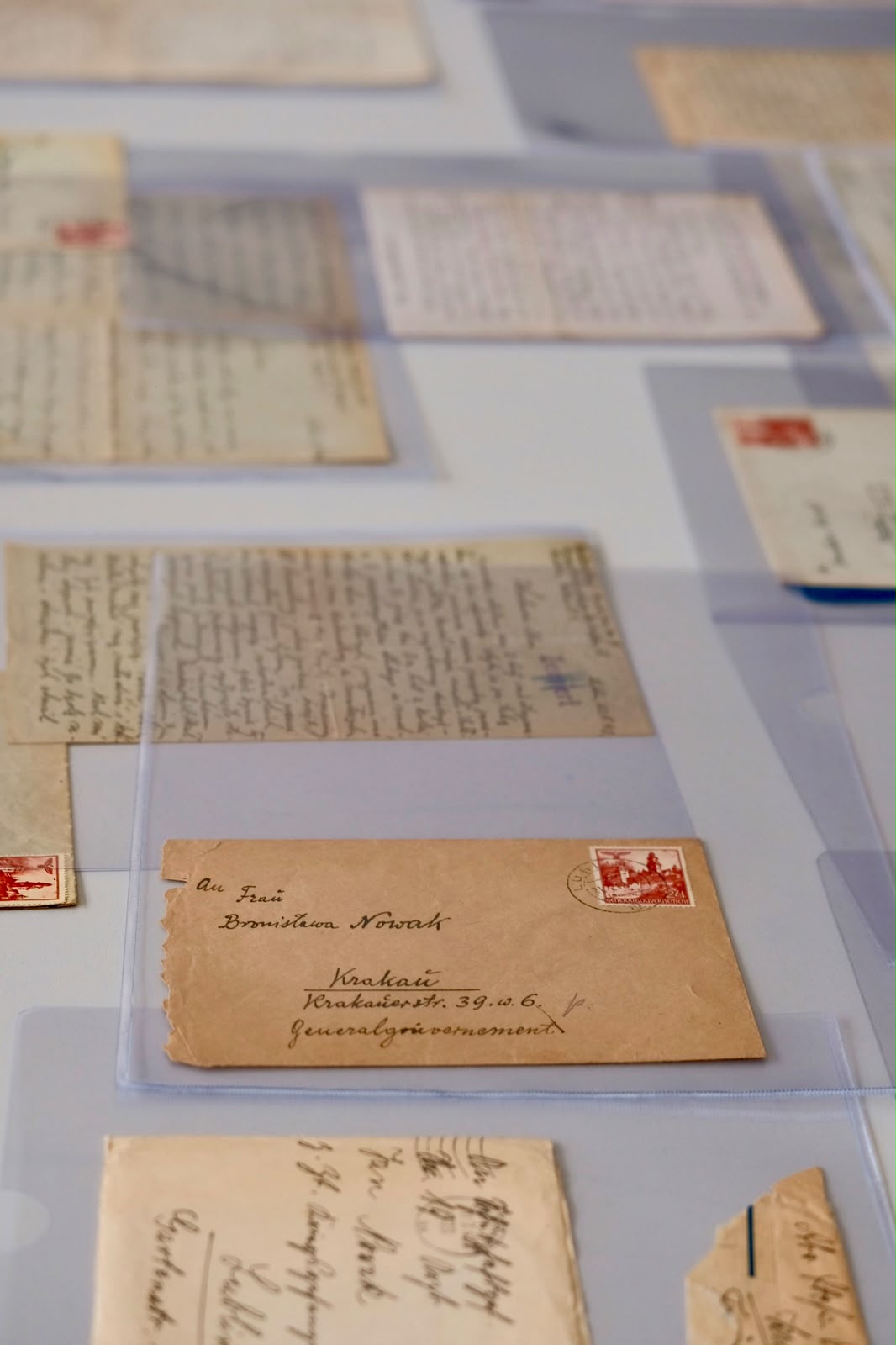
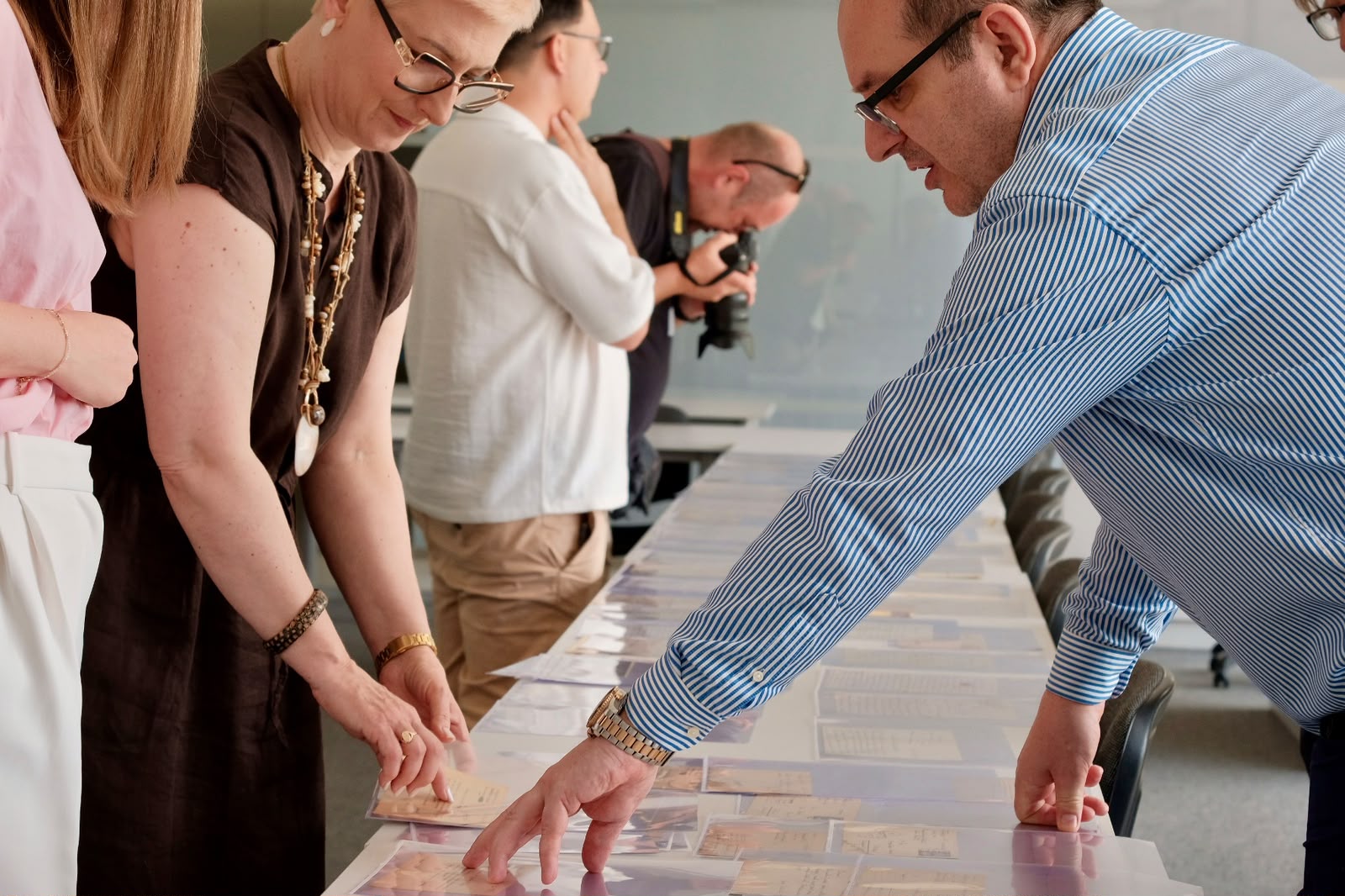
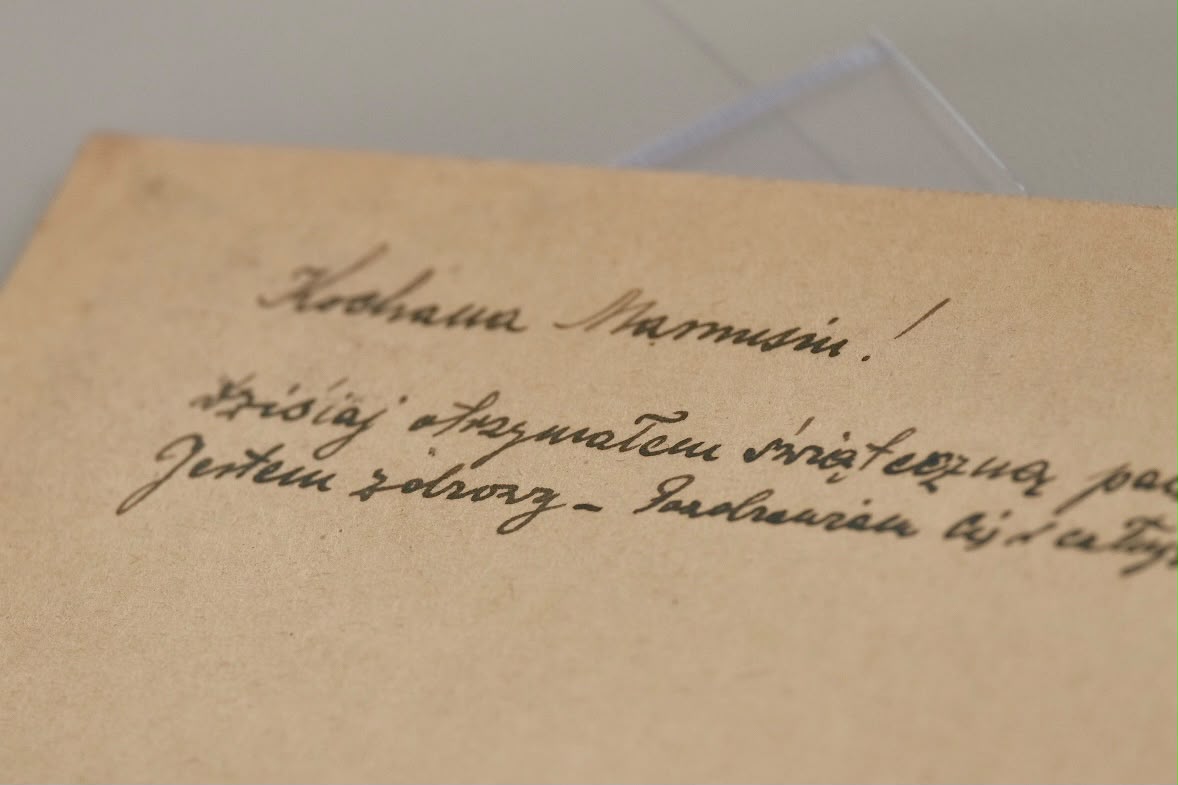
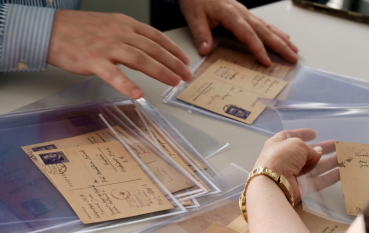
The collection, donated to the Museum by Marek Trybulski, owner of the Kraków Numismatic Salon, includes letters, postcards, and picture postcards sent to Jan Nowak, primarily by his mother, between 18 February 1942 and 6 April 1944, while he was imprisoned in KL Lublin. The collection also contains receipts confirming the delivery of parcels. This preserved correspondence provides a remarkable testimony to everyday life in the camp, the care and concern of loved ones, and their efforts to maintain contact despite the realities of war and the restrictions imposed by camp censorship.
Unique Collection of Documents Donated to the Museum
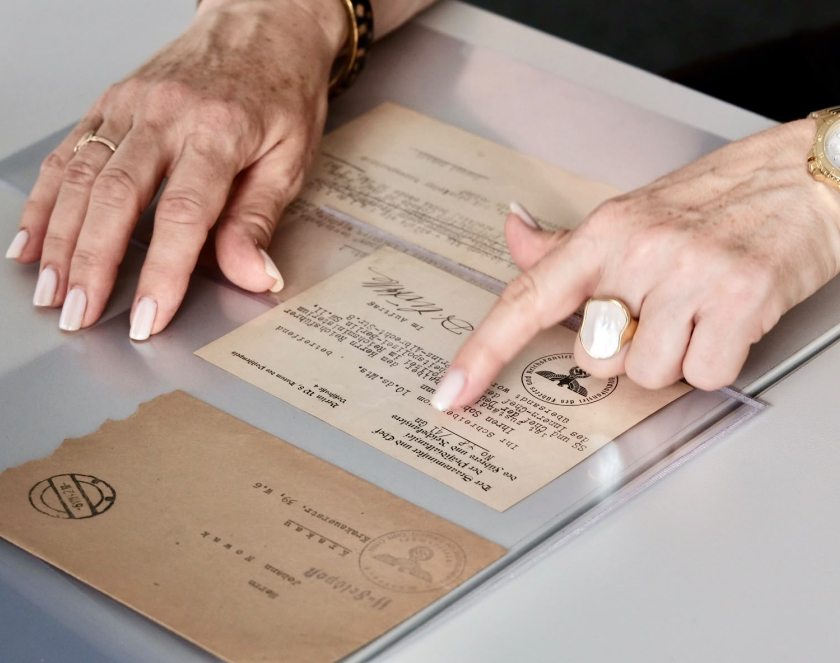
Our collections have been enriched with more than 80 letters, postcards, and picture postcards sent to Dr Jan Nowak by his closest family members while he was imprisoned in the German Nazi concentration camp at Majdanek. The correspondence documents both the fate of the prisoner and the strength of family bonds during the period of Nazi occupation.
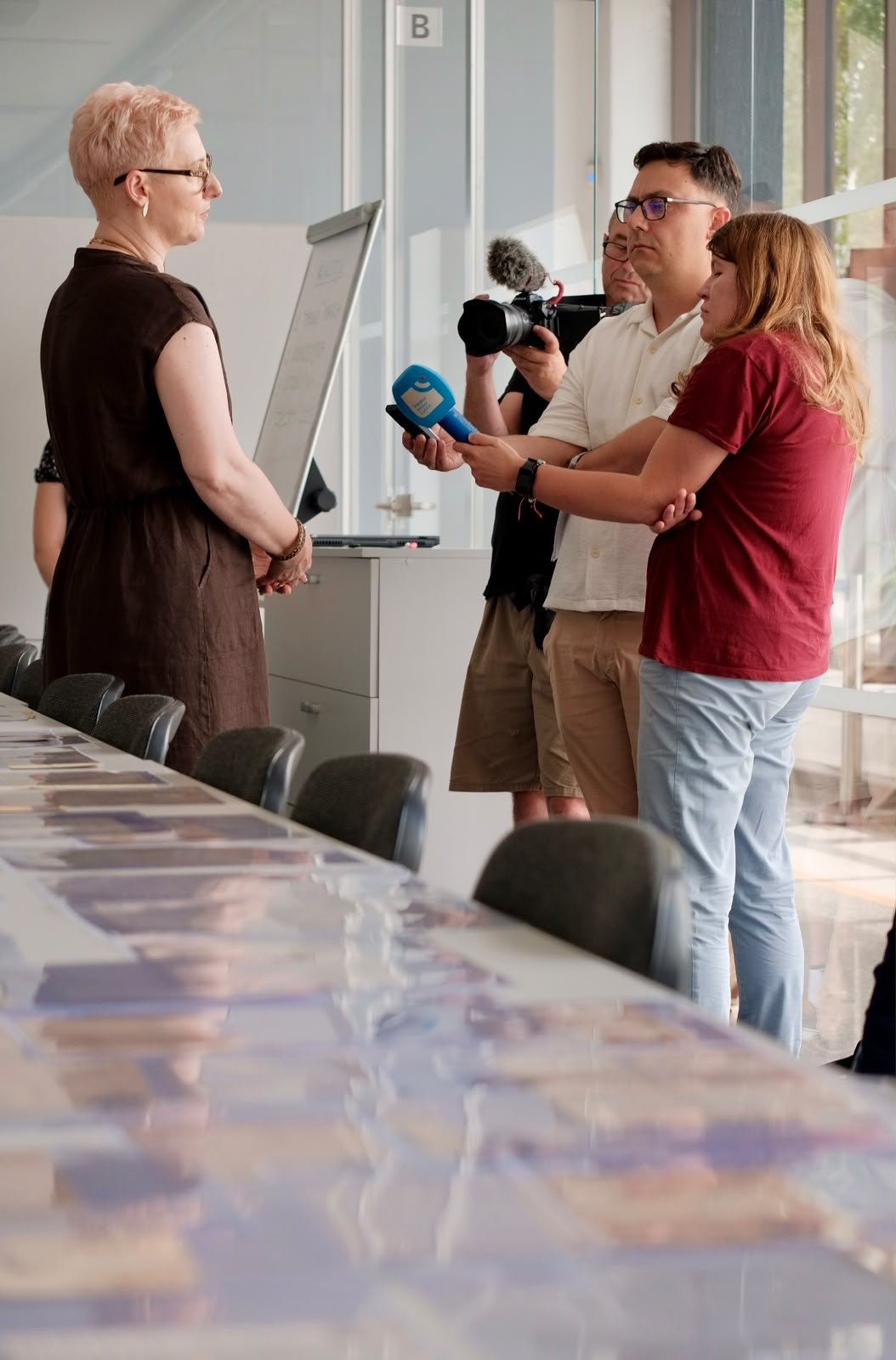
"This is a remarkably extensive collection. It allows us to reconstruct a chronological narrative of Jan Nowak’s imprisonment at Majdanek. The documents reveal deep emotions, concern for loved ones, and the strong support he received from his family. The collection is a moving testimony to courage, solidarity, and humanity that endured even within the realities of the German concentration camp system,” says Anna Wójcik, Head of the Archives at the State Museum at Majdanek.
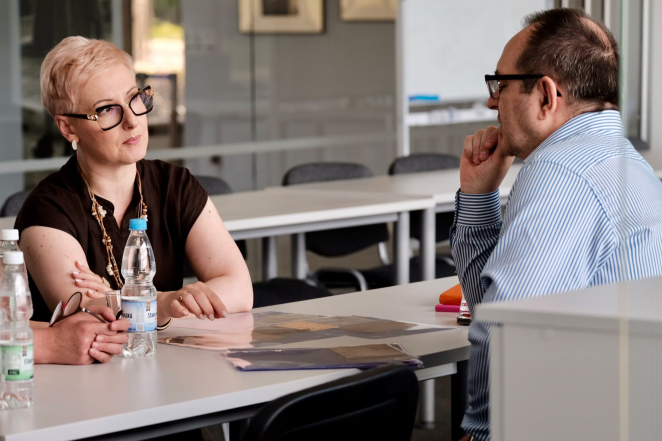
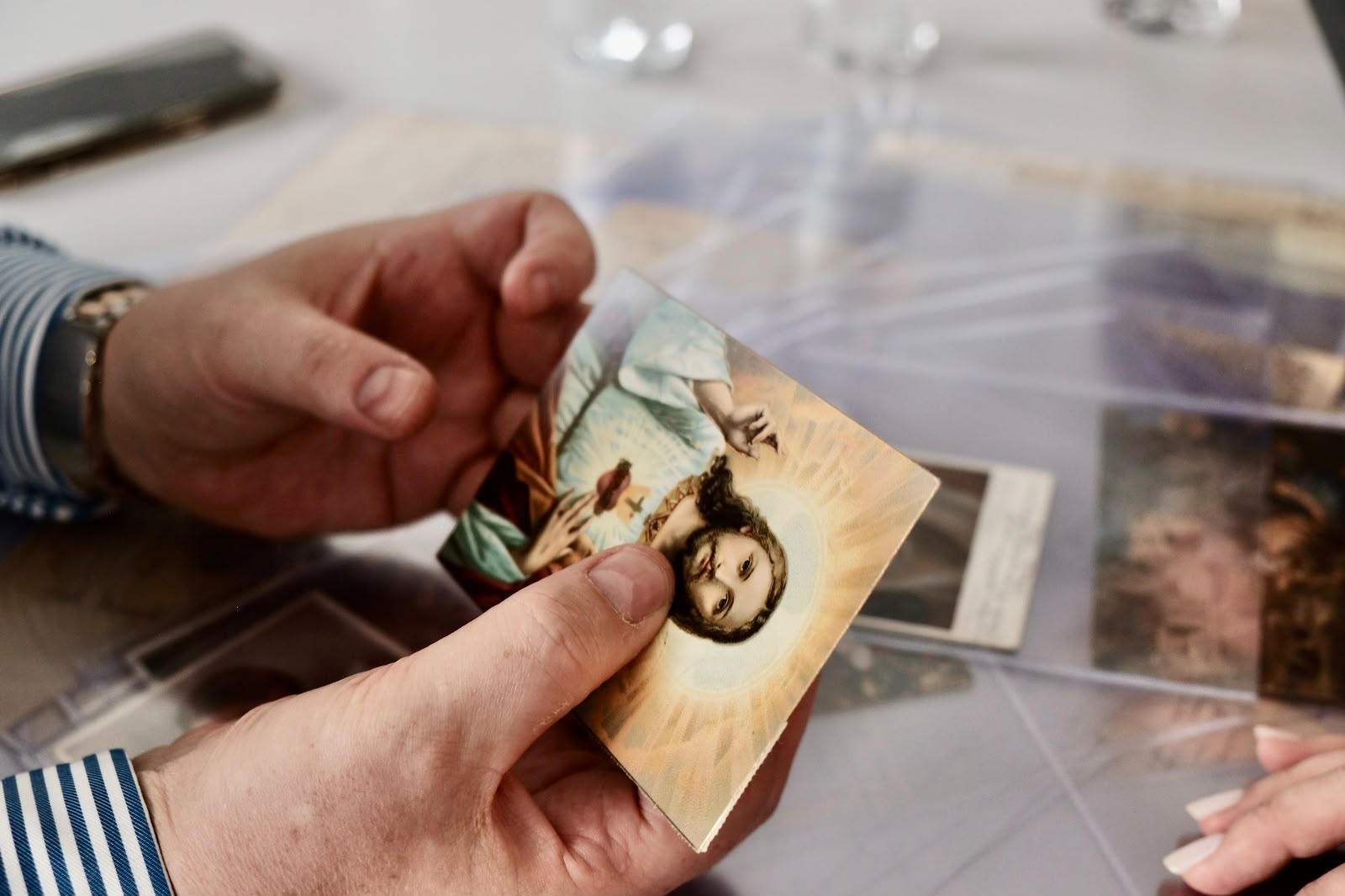
In one of the letters donated to the Museum, Jan Nowak’s mother describes the roses that adorned the altar during a Mass celebrated for his intention. A fragment of one of the rose petals has survived to this day and remains enclosed with the letter.
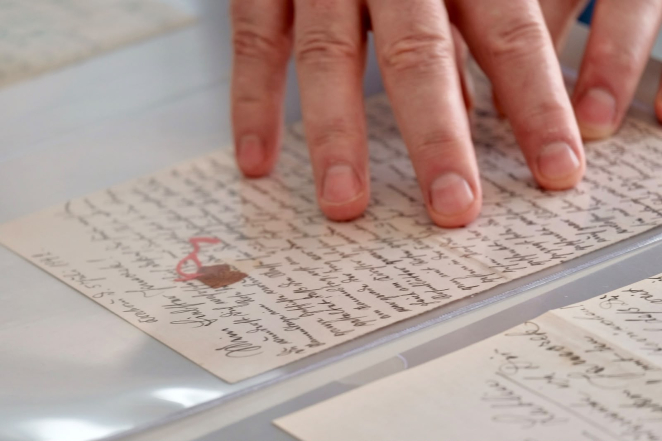
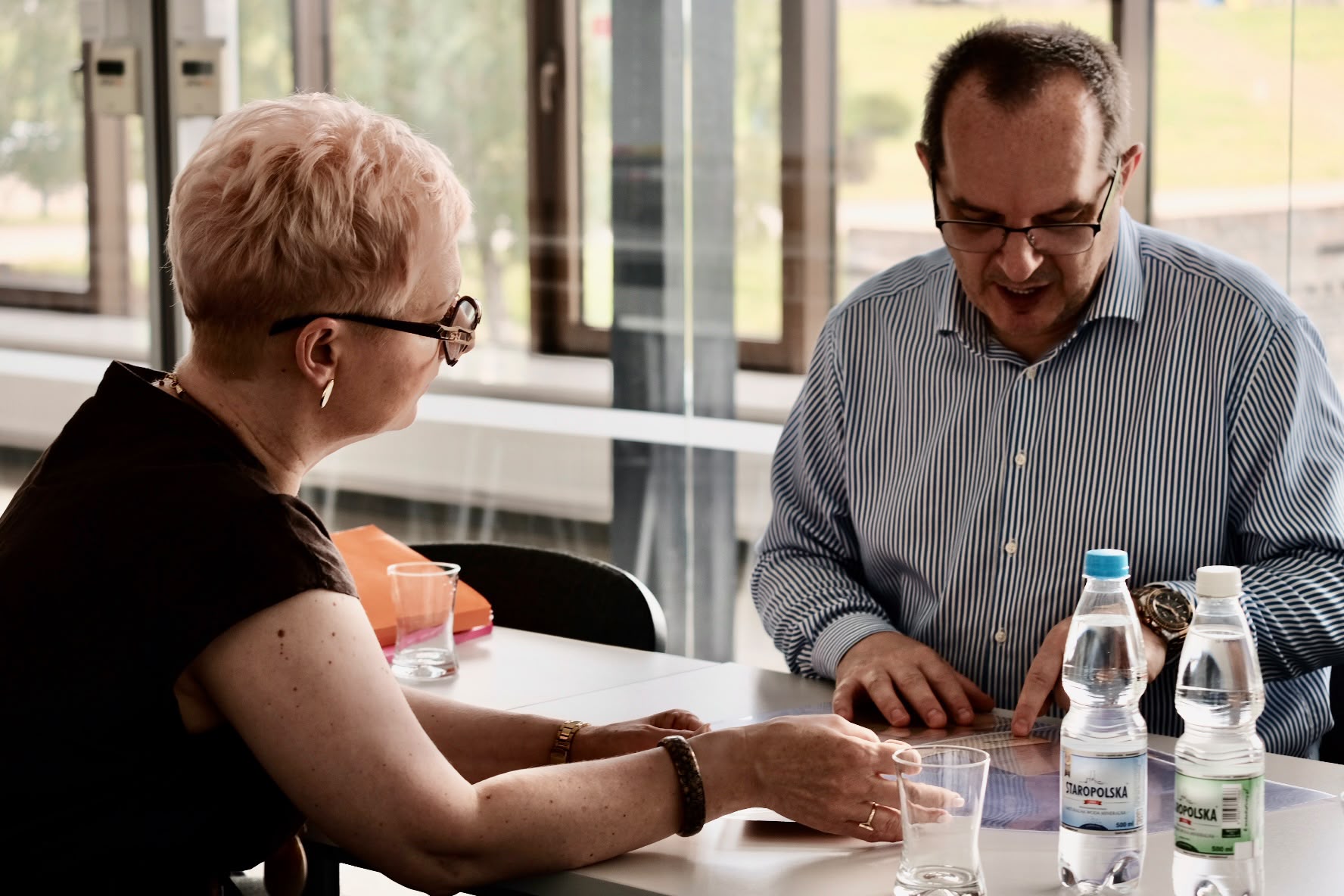
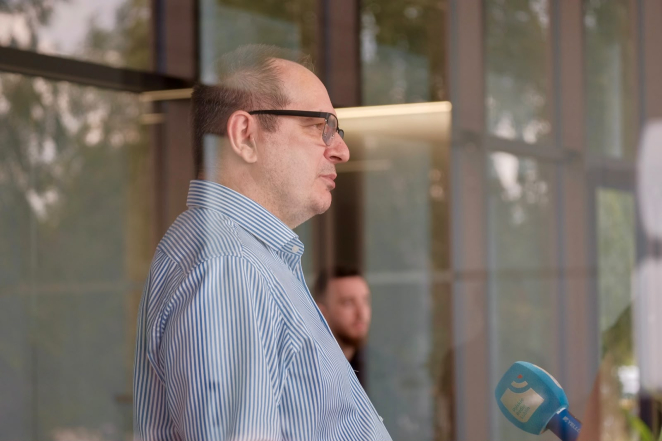
“I came across these items quite by chance. A woman who visited me to sell a collection of coins mentioned that she also had a letter from a concentration camp. It turned out that she possessed around 90 documents belonging to Jan Nowak. They are in excellent condition. I suspect that Jan Nowak himself preserved them under ideal conditions. To me, they seem to have been cherished as precious relics,” explains Marek Trybulski.
Jan Nowak (1908–1990) was arrested by the Germans in Kraków in May 1941. After being held in the Montelupich Prison, he was deported to KL Auschwitz and, in February 1942, transferred to Majdanek. Together with other physicians, he helped establish the camp hospital. Despite the appalling conditions and the severe shortage of medicines and medical supplies, Dr Nowak devoted himself to treating fellow prisoners, protecting many of them from selections and death. Taking advantage of his family's ability to send parcels, he shared their contents with sick inmates and obtained medicines for the camp infirmary.
His dedication was recalled by fellow prisoner Stanisław Ruciński: “The crisis eventually passed. I received excellent care. The doctor practically emptied the pharmacy. He went from block to block collecting the best medicines—and that was not all. There were days when he would skip his own lunch and bring it to my bedside, saying that he had no appetite or simply was not hungry. From the parcels he received, he always chose the best items to give to me.”
Following the evacuation of Majdanek in April 1944, Jan Nowak was transferred to KL Gross-Rosen and subsequently to Leitmeritz, a subcamp of KL Flossenbürg, where he remained until liberation. After the war, he worked as a physician in Warsaw.
Unique Collection of Documents Donated to the Museum 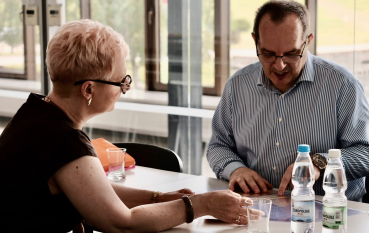
Unique Collection of Documents Donated to the Museum 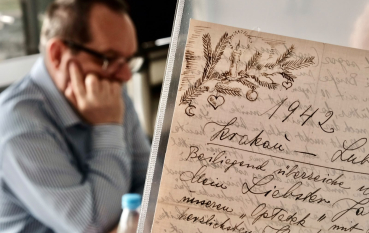
Unique Collection of Documents Donated to the Museum 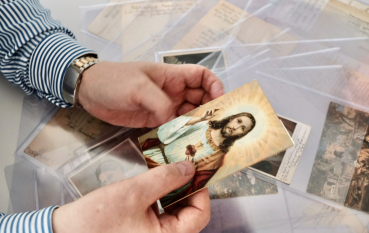
Unique Collection of Documents Donated to the Museum 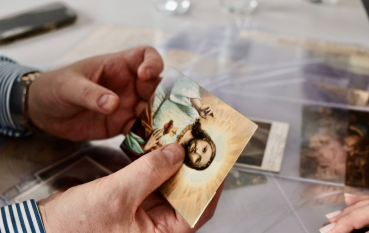
Unique Collection of Documents Donated to the Museum 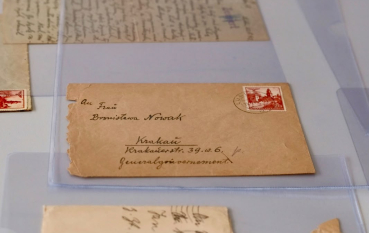
Unique Collection of Documents Donated to the Museum 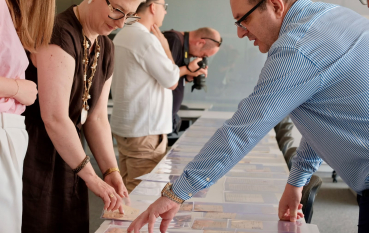
Unique Collection of Documents Donated to the Museum 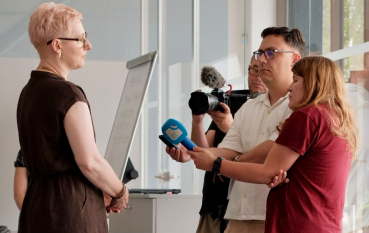
Unique Collection of Documents Donated to the Museum 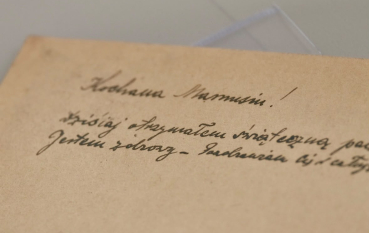
Unique Collection of Documents Donated to the Museum