Counterfeit Countess

The Remarkable History of Janina Spinner Mehlberg

Counterfeit Countess

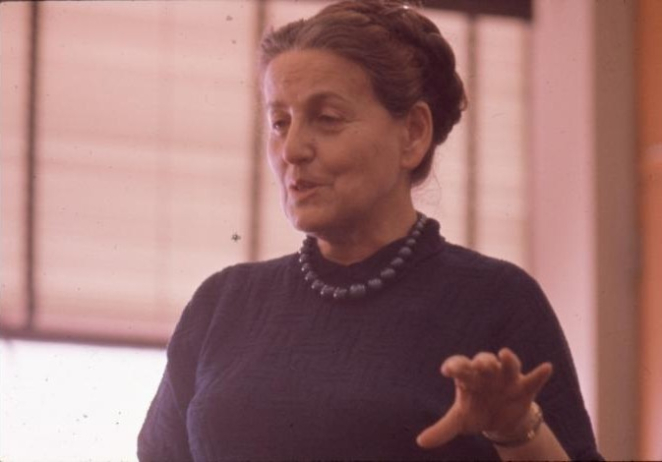
Janina Spinner Mehlberg was born on 1 May 1915 in Żurawno (now in Ukraine). In 1933, she married Henryk Mehlberg, a student of Romance languages and later of philosophy. They lived in Lviv. They were assimilated Jews. Janina was a maths teacher by profession. In 1941, following the German occupation of Lviv, she and her husband moved to Lublin, where, under the false name of Janina Suchodolska and posing as a Polish woman, she was regarded as a countess. She was active in the Home Army (AK) and worked for the Central Welfare Council (RGO).

In early 1943, after the transports from the Gestapo prison at Pawiak in Warsaw arrived at Majdanek, which included RGO staff, she undertook negotiations with the camp commandant regarding the provision of food for the prisoners. Once permission had been granted, it was able to deliver food to the camp twice a week, along with postcards bearing a pre-printed message regarding the prisoners’ state of health and a confirmation of receipt, which the prisoners sent to their families. The parcels usually contained: bread, butter or other fat, onions, a few sugar cubes and cigarettes. Due to the typhus epidemic raging at Majdanek, the camp commander also agreed to the delivery of 4,000 typhus vaccines to Majdanek. Over time, the RGO also began delivering soup for the sick in the infirmaries in Fields I and V. Secretly, at the risk of her own life, Suchodolska smuggled in additional food, letters, medicines, medical equipment and books. From her account, we learn how the residents of Lublin, including the Gryga family, who ran a bakery, were involved in selflessly helping the camp prisoners. In her memoirs, Suchodolska also describes moments of great significance for camp life, including the situation and atmosphere at Majdanek following the massacre on 3 November 1943 of around 18,000 Jews: men, women and children. She recounts what the grounds of KL Lublin looked like immediately after the camp’s final liquidation.
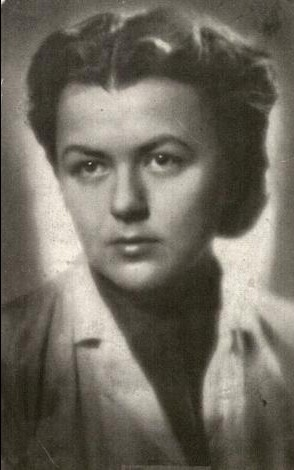
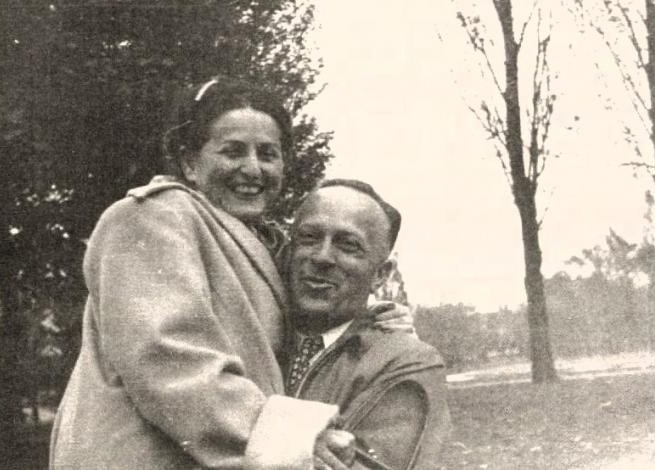
After the war, Suchodolska emigrated with her husband to Chicago, where she taught mathematics at the Illinois Institute of Technology, whilst her husband lectured in philosophy at the local university. She wrote her memoirs shortly before her death. She died on 26 May 1969.

The archives of the State Museum at Majdanek contain documents confirming the assistance that Majdanek prisoners received from the RGO. Suchodolska’s name appears, amongst other places, in the accounts of former prisoners. In all of them, she is described as a heroine. Maria Gancarz testified that, thanks to Suchodolska’s help, her husband, who was suffering from typhus, received the food he had asked for in a secret note.

Maria Gancarz testified that, thanks to Suchodolska’s help, her husband, who was suffering from typhus, received the food he had asked for in a secret note. She describes her in the following way:

So I met Mrs Suchodolska. [She was] very kind. You could tell she was deeply moved by the whole situation, that she really cared, that I was in such despair, and she promised me she would deliver three parcels. And no one else was allowed to go [to the camp], only her, and her alone.

Dr Stefania Perzanowska, on the other hand, recalled that during meetings to receive parcels on the camp grounds, Suchodolska gathered information about the condition of the female prisoners in the women’s camp; she also handled the passing on of secret messages.

This woman impressed me. For whilst I, being a seasoned camp inmate, had already become desensitised to their [the SS men’s] shouting, which was understandable, she remained undaunted by their roar – that was admirable,’ she wrote years later.

In another part of her memoirs, we can read an account of their meeting just before Christmas 1943 and learn what impact Suchodolska’s work and dedication had on the prisoners:

And when, after sharing the Christmas wafer, our tear-stained faces touched, I felt in that moment that strong and unbreakable bond between us here in the camp and the rest of society out there, in freedom. And I felt ashamed that I could have thought and felt so alone when there were so many hearts beating so warmly all around us. This Christmas proved so powerfully and beautifully that we here, behind the barbed wire, are not alone and abandoned, that there is immense human warmth and such great concern for us. It was precisely this realisation that was the most precious part of our Christmas, something incomparable to anything else…

Furthermore, information on Suchodolska’s activities at Majdanek can be found in the RGO archives, which contain, amongst other things, correspondence, notes and reports concerning discussions with the German authorities (on assistance for prisoners and displaced persons) as well as reports on initiatives to provide food for prisoners. For example, in a memo dated 19 October 1943, we can read an account of Suchodolska’s intervention with the Majdanek authorities, which indicates that, as a result of her efforts, permission was granted to send Poles dry rations, plus 800 portions of soup with fat and 30 without fat for the sick, as well as to send correspondence to families twice a week, along with medicines.

The Museum Archives also contain a copy of her memoirs, written in English and comprising 155 pages (VII/M-655), as well as the transcript of her testimony as a witness to German crimes, given on 2 December 1946 in Warsaw (VII-135/104).