Everyday Life

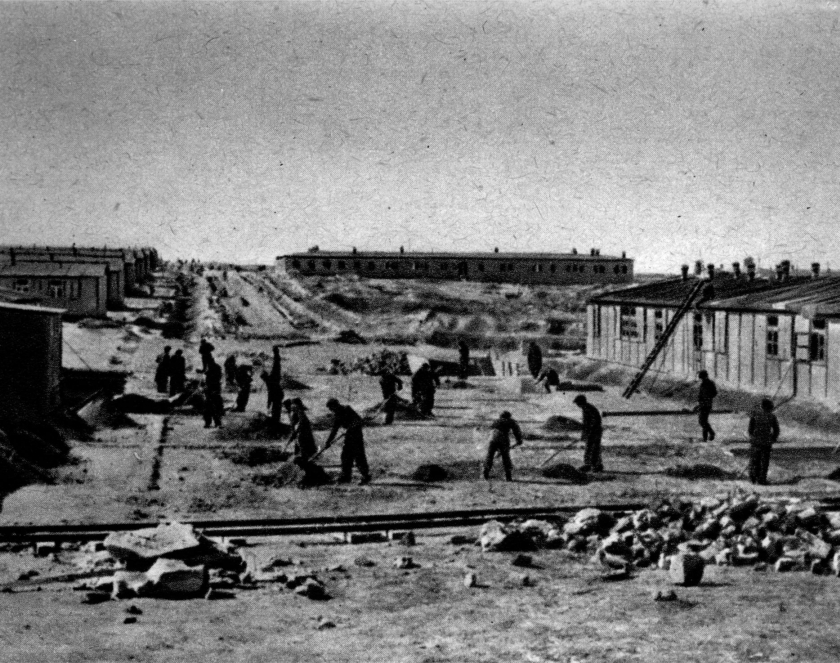
A group of several men with tools at work. Barracks on the sides.
Majdanek was considered one of the most primitive camps. The prisoners were constantly accompanied by hunger, fear, exhausting labour, and diseases. They experienced brutal punishments and harassments for any violations – committed or alleged. Their lives were in constant danger.

Living Conditions

Wooden barracks, especially the stable type ones, provided almost no shelter from the weather conditions. In winters, two small stoves were placed in the barracks, though they did not provide enough heating for such huge and not properly insulated spaces. Even in early 1943 the prisoners were placed in unfinished barracks without windows and the most basic equipment. The inmates had to sleep on the floors until bunkbeds were set up and bedticks distributed. The barracks – intended for keeping 250 persons – were used to quarter a lot more prisoners. In the peak of crowdedness at Majdanek, the number of inmates per barracks reached even 1,000 people.

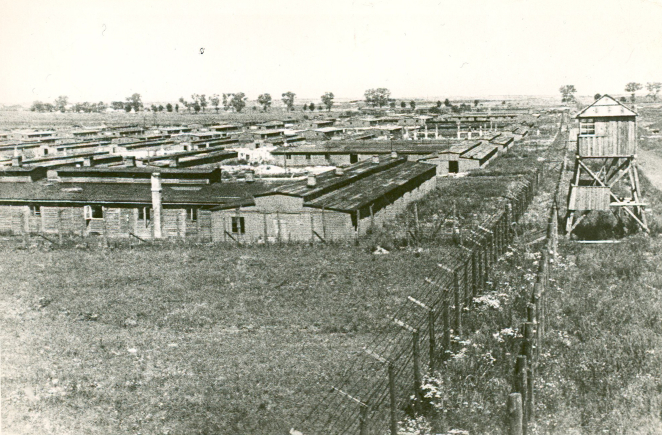
Wooden single-story barracks with windows. On the right, a double wire fence, and behind it a wooden guard tower.
Barracks at prisoner field IV.

Until the spring of 1943, the barracks had no sanitary equipment. There were no sewers prior to autumn of 1943, and the lack of access to water combined with strict prohibition to possess any cleaning products made it impossible to maintain any hygiene. During the day, the inmates were forced to use open uncovered pits as lavatories, and during the night – when leaving barracks was strictly forbidden – they had to use large wooden boxes. Those were often overfilled and extremely stinky, which was all the more burdensome since all windows were always closed, even during heatwaves. The prisoners were plagued with insects that were spreading germs.

A black-and-white photograph showing the interior of a prison barracks, with rows of bunk beds on the left and right.
Interior of a barracks at field III.

Daily Schedule

The prisoners’ day began very early. Usually even before dawn, an alarm was rung calling the inmates to get up. They had to dress up and make their bunkbeds rapidly, and then they had a surrogate breakfast. These usually comprised either of dark, unsweetened grain coffee, some weed brew, or very thin soup thickened with wholemeal flour. The a routine roll-call was held, during which the number of prisoners was verified against the camp records. The presence of all inmates was mandatory – dead or alive – so the bodies of those that had died during the night had to be dragged onto the roll-call square. If the numbers were correct, labour groups were formed and left for work, which (besides a brief break to eat lunch soups) lasted until dusk. They day ended with another roll-call, though usually much longer than the morning one, because this time all punishments were inflicted. The most common among them, was the whipping on a specially designed table. Then, dinner was distributed, and the prisoners had some free time unless the camp authorities ruled otherwise. The daily life on the prisoner fields resolved with mandatory lights-out for the night. From then, leaving the barracks for completely forbidden and those who wandered around the fields were shot without any warning.

Punishments

The terror within the prisoner fields was the cornerstone of the camp regime. The SS authorities and functionaries punished the prisoners severely for even the slightest violations. Whipping was the most common method, executed during the evening roll-call. Inmates were also forced to do penalty exercises, to stand still for hours between the rows of electrified barber wires, were deprived of food or sentenced to the “post”, to which they were tied with hands twisted behind their backs. The SS-men and functionaries beat the prisoners constantly during work and on every other occasion. They dunked and drowned them in fire pools or cesspools. Aggressive dogs were also set on the inmates. Capital punishment was issued for major violations, especially for escape attempts for which the caught fugitives were notoriously hanged.

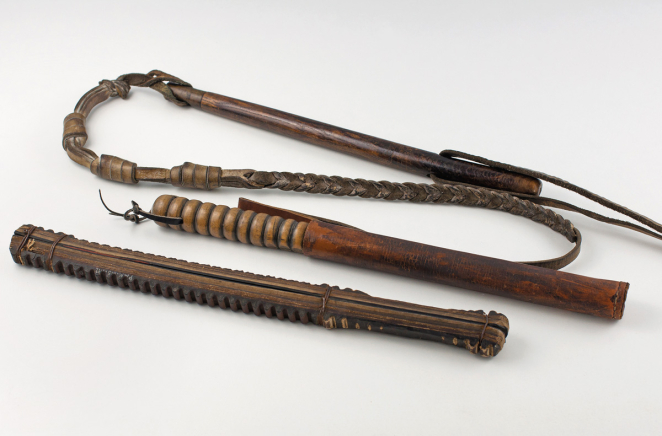
Two sticks made of grooved wood and a leather whip on a neutral background
Clubs and whips – the instruments of camp functionaries used to execute punishments.