Topography

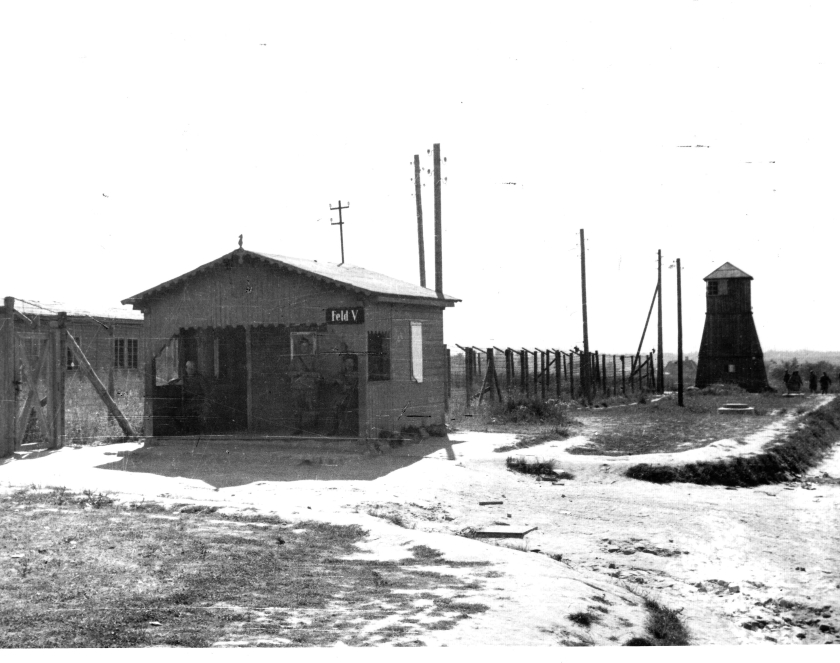
A single-story guard booth with a roofed porch. Behind it is a guard tower.
The camp was established on the south-eastern outskirts of Lublin, partially within the city’s borders, and partially on the grounds of the Dziesiąta, Kalinówka and Abramowice villages; near the road leading to Zamość and Lviv. It covered the area of 270 hectares (ca. 667 acres) and consisted of three main parts: the SS sector, the economic sector, and the prisoner camp (Schutzhaftlager).

SS Sector

In the first stage of Majdanek’s functioning, the quarters of the SS officers and garrison members were located in the city. The camp commandant’s offices were established in a building at 12 Ogrodowa Street, and the sentry garrison were quartered in the former Vetter school in Bernardyńska Street. Some high-ranking officers lived in confiscated houses in the vicinity of the camp.


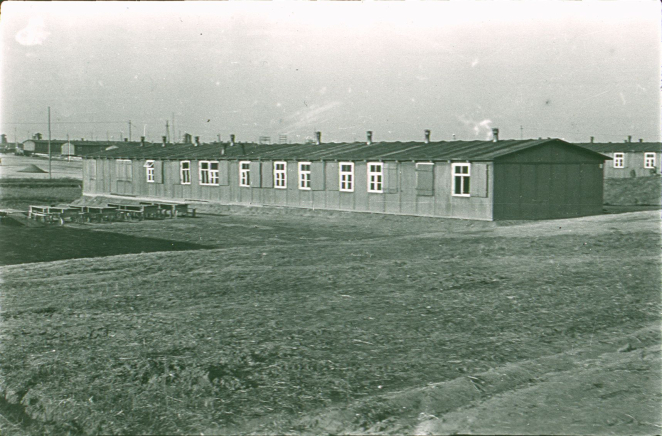
The sections with barracks for the SS quarters and offices at Majdanek was erected between July 1942 and spring 1943. Its primary part was located in the area between the main route from Lublin and the prisoner camp. 37 barracks were built, housing not only accommodation, but also administrative offices, military equipment warehouses, bathhouse, barber’s workshop, hospital, canteen, casino, garages, and a petrol station for the SS vehicle fleet.
Parterowa budka strażnicza z zadaszoną werandą. Za nią znajduje się wieża strażnicza.
Barracks in the SS sector, 1944.

The SS sector also formally contained structures located closer to other parts of the camp: barracks no. 38 was adjust to serve as quarters for the female overseers and the women’s camp records office, while barracks no. 39 housed the offices and records of the prisoner camp.

The pre-war building known as the “little white house”, was inhabited by various persons throughout the camp functioning: SS officers, chief SS physician, and the prisoners from the labour group that cleaned the garrison quarters.

The commandant lived in the direct vicinity of the camp, in a house near the then-Chełmska Street (today the Road of the Martyrs of Majdanek).

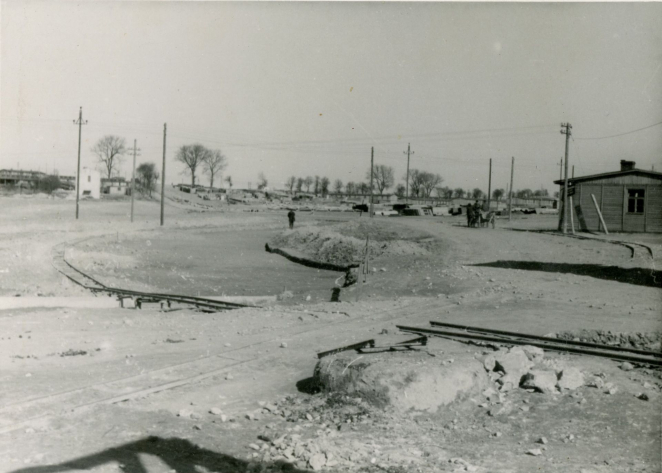
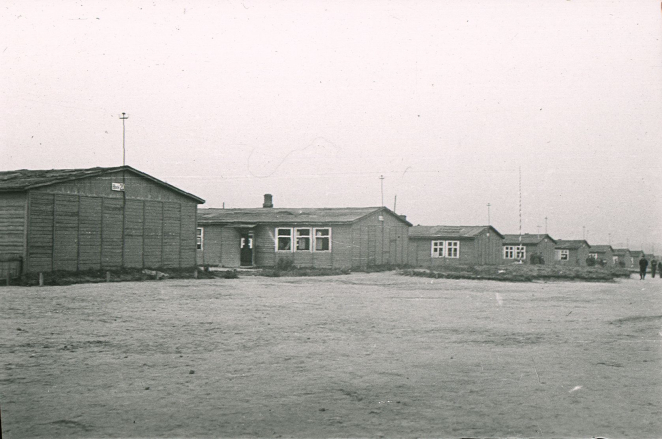
Compacted earth with rails lying on it. Silhouettes of individuals in the background. On the right, a fragment of a single-story barrack.
Camp area in 1943. Barracks no. 39 is visible on the right, the “little white house” is visible in the far left, and the barracks quarter barracks in the far right.
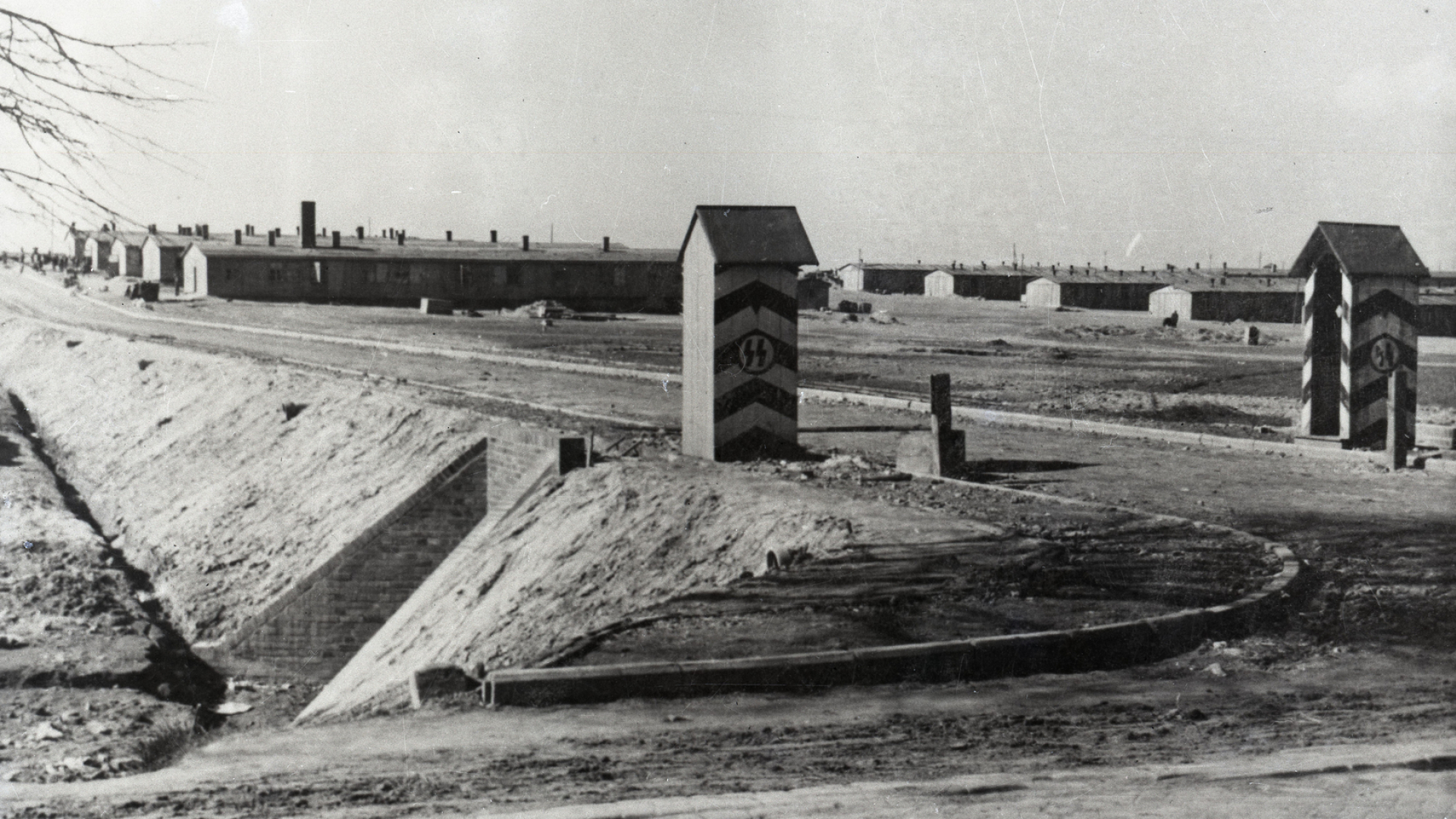
A black-and-white photograph showing a road, with guard posts bearing Nazi symbols on either side, and prison barracks in the background.
Unfinished entrance gate into the camp located within the SS sector, and the garrison quarters barracks, 1943.

Economic Sector

The economic sector contained mainly the camp workshops and warehouses, where some prisoners would work. Additionally, bathhouse barracks for men and women, disinfection facilities, and gas chambers were erected there. Among the objects created within that part of the camp in the years 1942-1943 there were:

Barracks nos. 41-42 – bathhouses for men and women,

Barracks nos. 43-44 – warehouses for prisoners’ possessions

Barracks no. 45 – stables

Barracks nos. 46-47 – food warehouses

Barracks nos. 48-50 – prisoner clothing warehouses

Barracks nos. 51-52 – warehouses for tools and cleaning equipment

Barracks no. 53 – carpenter’s workshop, timber warehouse

Barracks no. 54 – forge and ironworks workshop

Barracks no. 55 – electrical workshop

Barracks no. 62 – shoemakers’ workshop

Barracks no. 63 – sewing workshop

Barracks no. 64 – canteen for sentry guards.

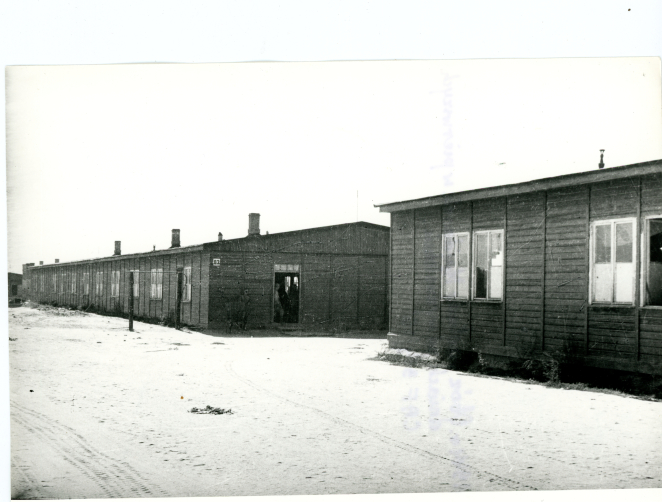
Dwa baraki z oknami.
Barracks nos. 63 and 62, 1944.

Prisoner Camp

The Germans established the prisoner camp within the area of 30,6 hectares. It comprised five prisoner fields with 108 barracks, and two areas called mid-fields. Field VI was also created, but it happened relatively late and it was never inhabited by the inmates. However, a couple of its barracks were used as warehouses for the shoes stolen from the victims of Majdanek and operation “Reinhardt” camps.

Besides the prisoner barracks, each field had two L-shaped barracks intended for kitchens and washrooms, as well as a roll-call square. Sentry towers were placed in every corner of each field. The entire prisoner camp was enclosed with barbed wire fences connected to electricity.

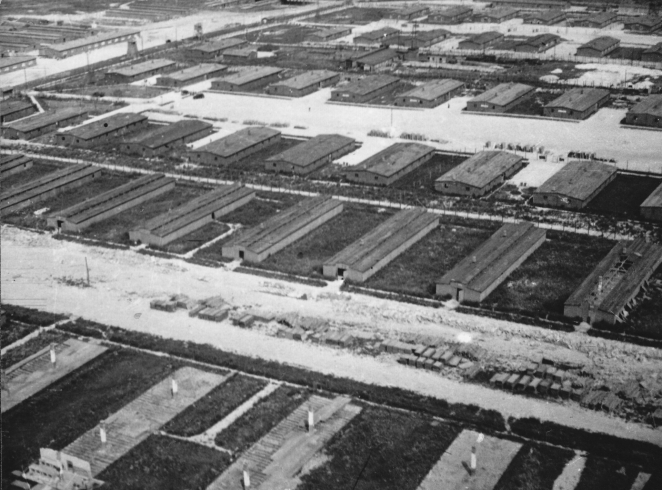
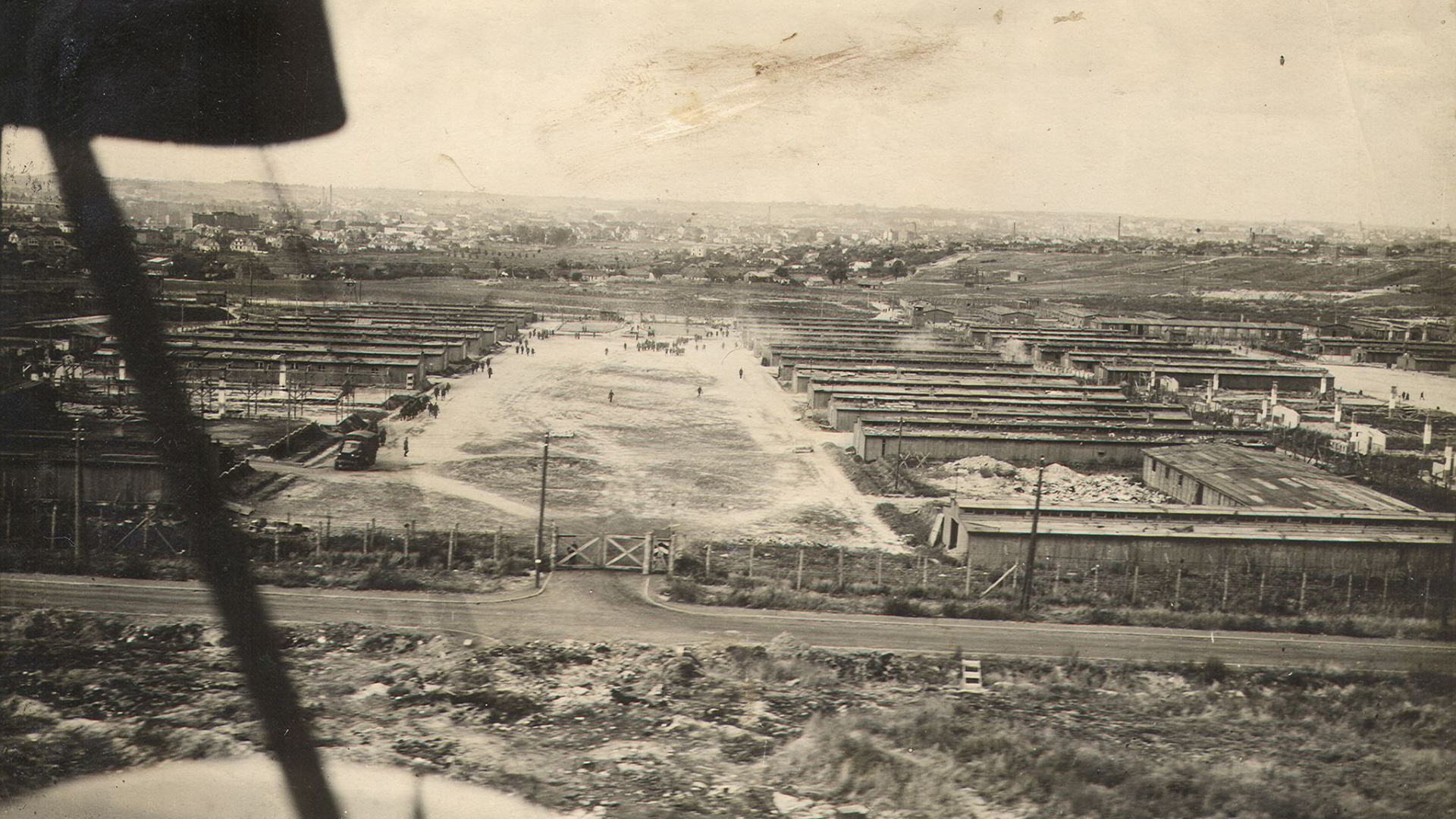
Zdjęcie lotnicze pokazujące rzędy dachów budynków
Photograph of Majdanek taken from a Soviet reconnaissance plane in August 1944.

Field I

Field I housed 20 living barracks for prisoners. They were erected between the autumn of 1941 and early 1942. Initially, Soviet POWs were detained there, and later civilians as well. From late 1941 the camp infirmary functioned there, which already in 1942 encompassed the entire norther row of barracks (nos. 1-10). In September 1943, the men’s infirmary was moved to field V, and field V was inhabited by female prisoners. Upon women’s evacuation to other concentration camps in April 1944, this section was again filled with male inmates.

Rows of wooden multi-story barracks. Silhouettes of people visible on the right.
Barracks at field I, 1944.
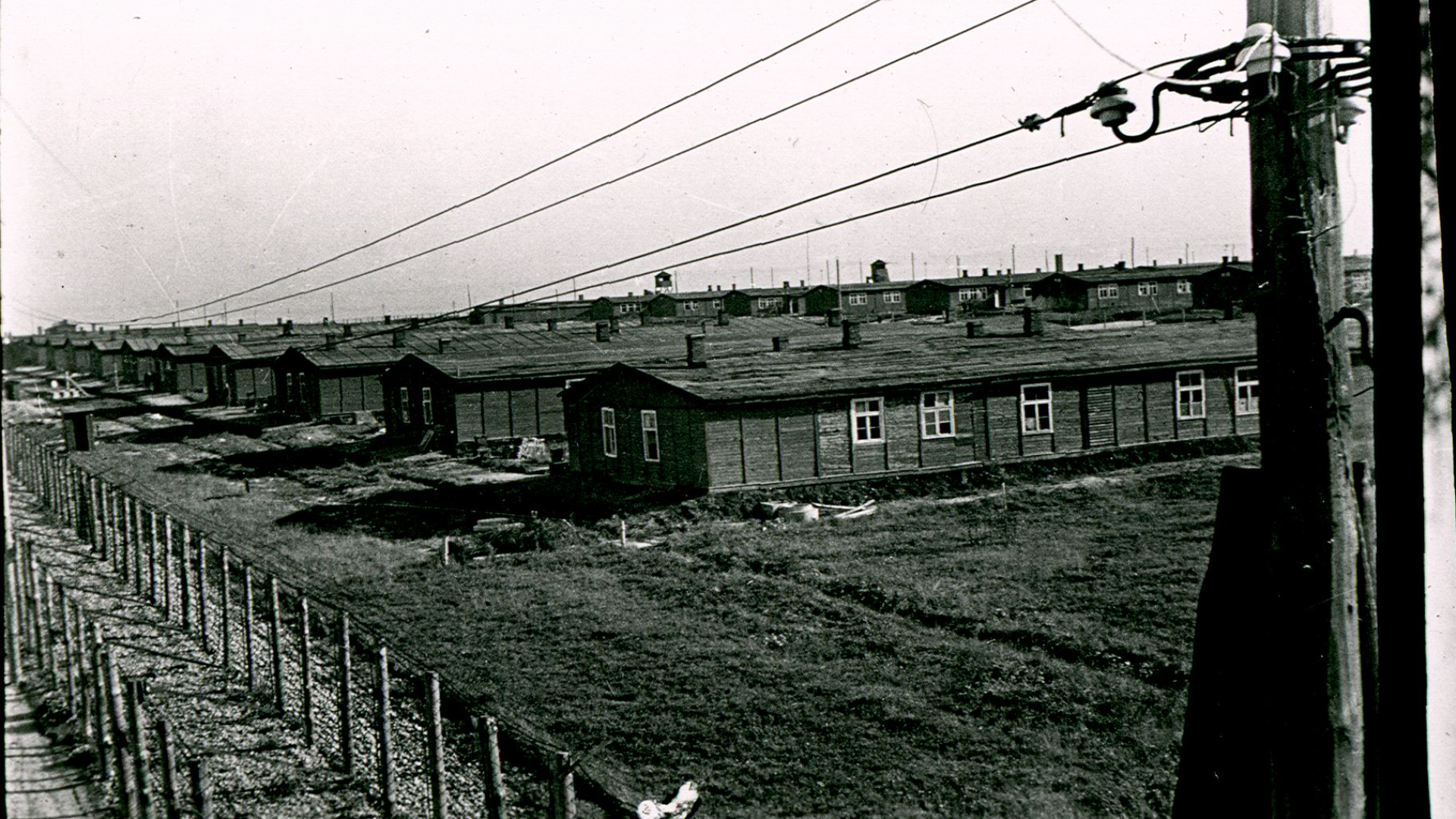
A black-and-white photograph showing rows of prison barracks, with a double barbed-wire fence in the foreground.
Barracks at field I, 1944.

Mid-field I

The area between prisoner field I and II contained the laundry and drying barracks. A crematorium with two oil-fuelled ovens and a morgue were also located there.

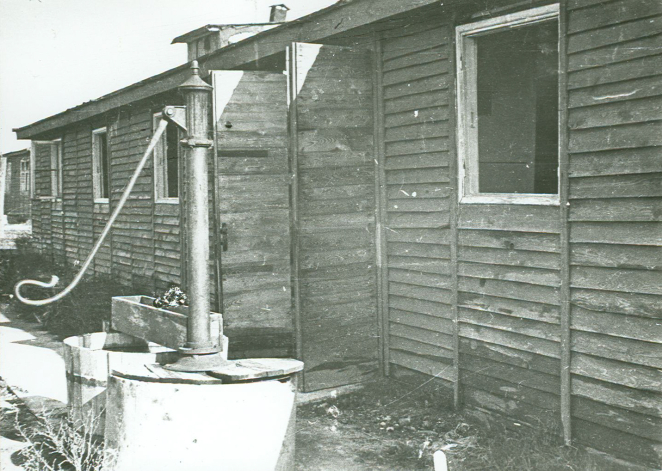
A wooden building with an open door. In front of it, there is a well with a metal pump
Camp laundry barracks, 1944.

Field II

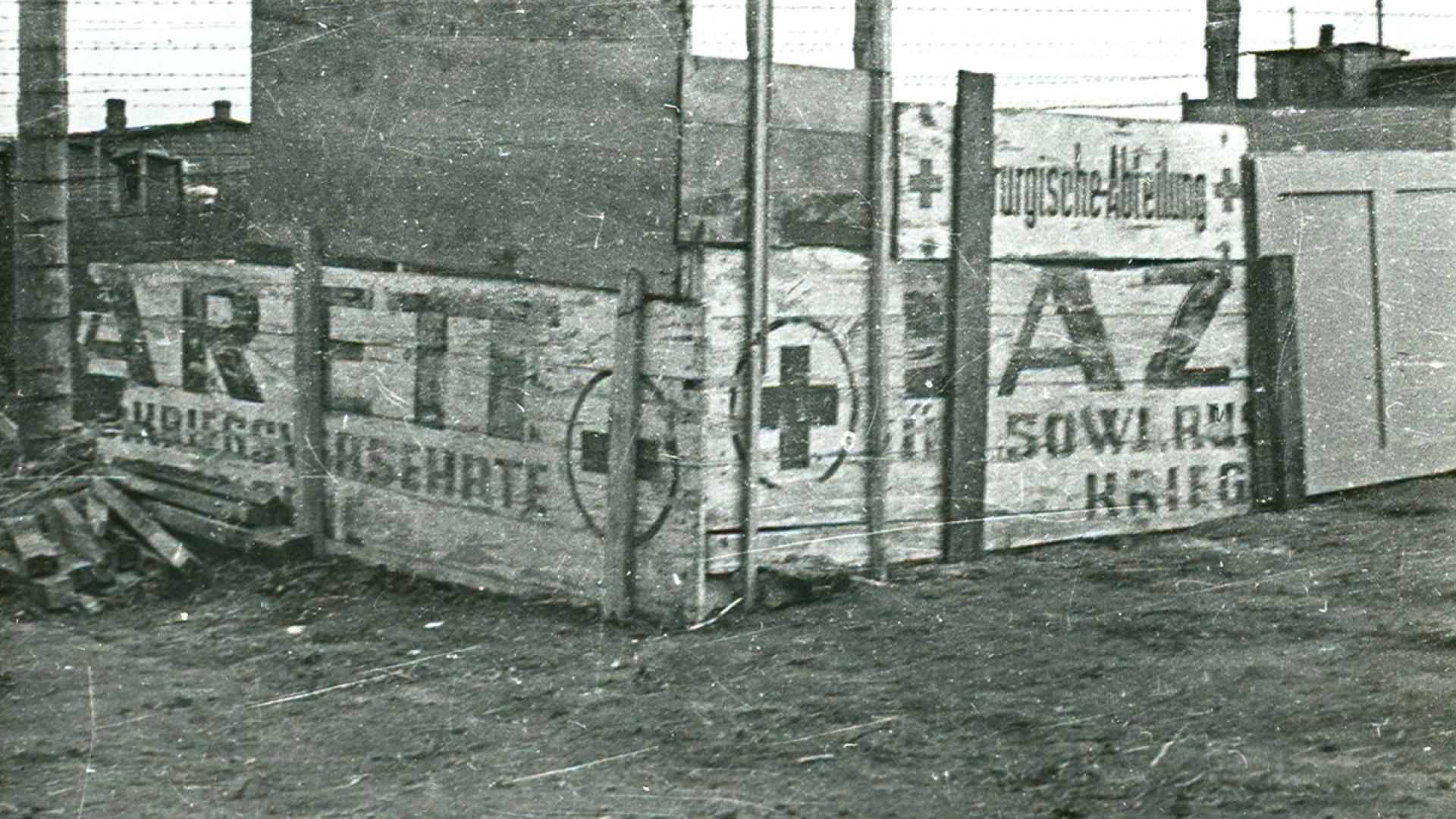
Field II functioned from the spring of 1942. It contained 22 living barracks, where initially Polish and foreign Jews, Poles from the Lublin region, and Soviet POWs were quartered. A lazaret for Soviet invalids was established there in May 1943, which was outside the jurisdiction of the camp commandant.

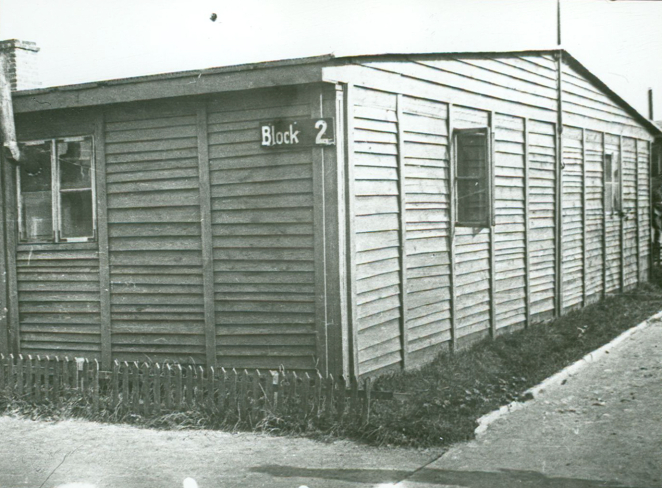
Corner of a barrack with open windows. In front, a sign with German writing: Block 2
Barracks no. 2 at field II, 1944.
A black-and-white photograph showing a fence made of panels bearing the German inscription (LAZ)ARETT and a cross within a circle.
Entrance gate to the lazaret at field II, 1944.

Field III

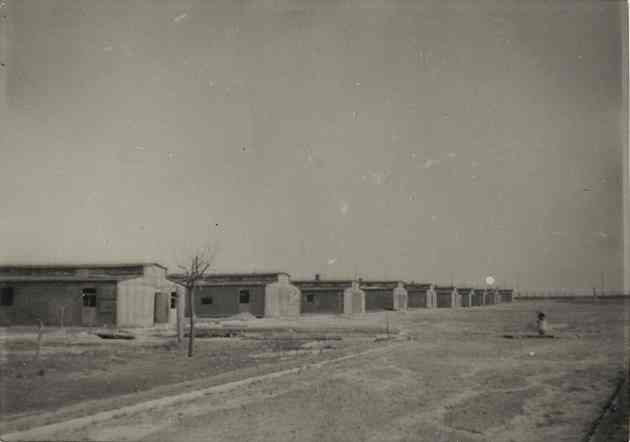
The prisoners detained at field III were quartered in the stable-type barracks. They had no windows besides small skylights located close the roof. Poles arrested as hostages were kept there from May 1942 and political prisoners of various nationalities from January 1943. The Germans also used field III to detain the families displaced from the Zamość region. Barracks nos. 1-2 housed car workshops. There, the Soviet NKVD locked the Polish soldiers of the Home Army and Peasants’ Battalions in August 1944.

On the left side of the photo, a row of barracks
Barracks at field III, 1944.

Field IV

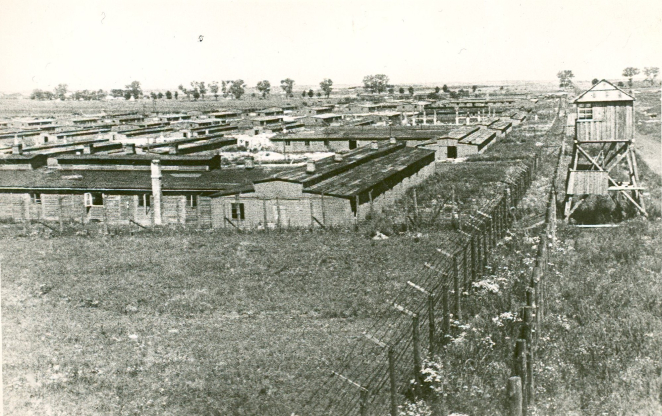
The infrastructure of field IV was erected in the summer of 1942. There, male prisoners were kept in stable-type barracks. Throughout 1943 and 1944, the additionally enclosed barracks on the right side of the field, were used as workshops producing munitions baskets and brushes. Yet another couple of barracks were converted into a special transit camp (Auffanglager der Ordnungspolizei) under the command of the German Security Police in Lublin, where hostages from the Lublin region were imprisoned.

On the left side of the photo are barracks, on the right is a guard tower.
Field IV, the kitchen barracks is visible in the foreground.
A photograph taken from a flying aeroplane in Septia, showing an area fenced off with barbed wire, with a threshing floor in the centre and rows of wooden barracks all around
Field IV, the photograph was taken from a Soviet reconnaissance plane, August 1944.

Mid-field II

It functioned from July 1942 between fields IV and V. Mid-field II housed a coke and timber depot, which was used to keep Jews deported from various ghettos between May and August 1943. There, they were also subjected to selections. In the later part of Majdanek’s functioning, one barracks was erected there, which served as a quarter for members of Sonderkommando.

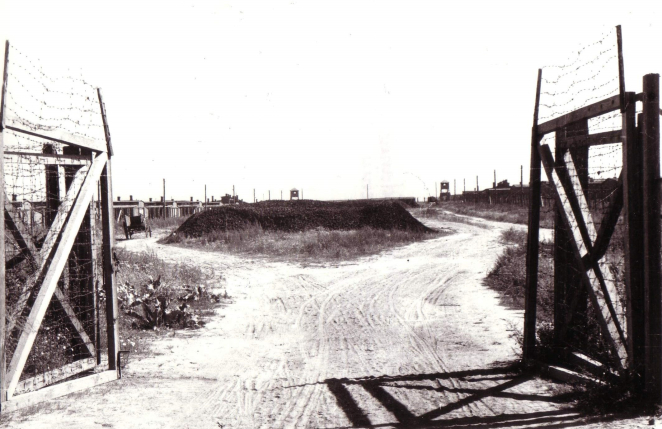
An open gate made of wood and barbed wire. Behind it, an earth embankment. On either side of it, low wooden buildings.
Coke depot at mid-field II, 1944.

Field V

Construction of the living barracks at field V lasted until September 1942. The women’s section operated there from October 1942, though from March 1943 also children were imprisoned at that field. In September 1943 women were transferred to field I, while field V was converted into a men’s infirmary where a dispensary barracks was created. Following the evacuation of Majdanek’s prisoners, a Wehrmacht labour camp functioned at field V between May and July 1944.

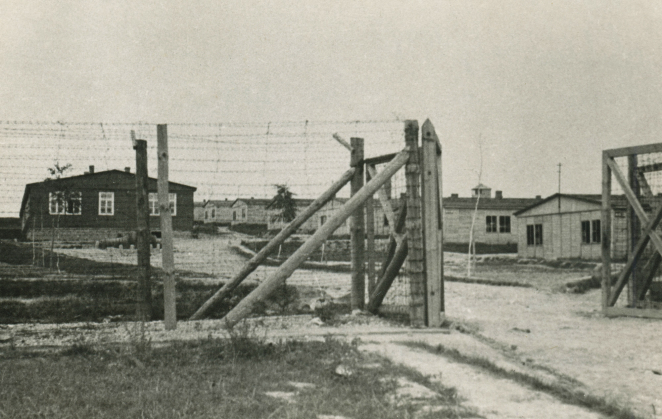
Barbed wire fence with an open gate. Behind it, rows of single-story wooden buildings.
Barracks at field V, 1944.

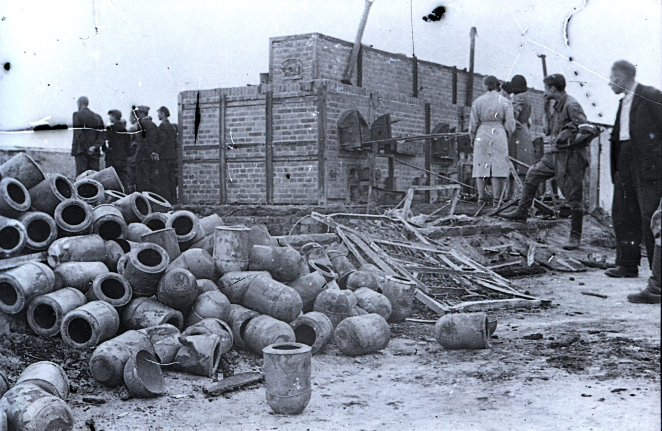
The so-called new crematorium was erected near field V, which became operational at the turn of 1943 and 1944. The SS garrison set the building on fire during their final evacuation from Majdanek on 22 July 1944. Within the overall camp grounds there were also numerous stakes and pits for burning bodies in the open air, bunkers, air shelters, execution ditches, a training rifle range for the SS, and many other objects.

Brick ovens. In front of them, a pile of urns. All around, people looking at the remains of the crematorium.
The residents of Lublin inspect the ruins of the burned-down crematorium, July 1944.