Never Again? / Ніколи знову?

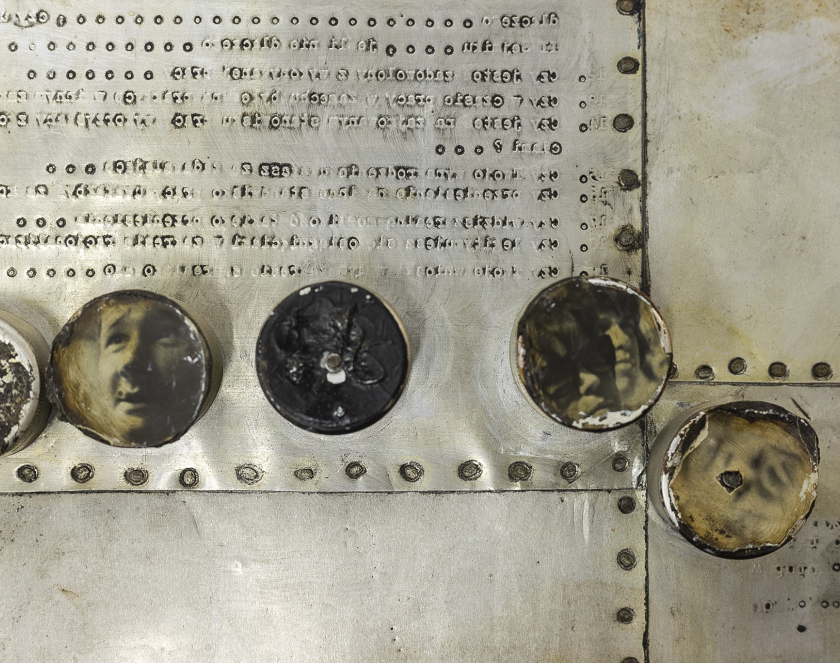
metal plates connected with metal rivets, four metal tondos visible with blurred photographs, one showing an enlarged face of a man
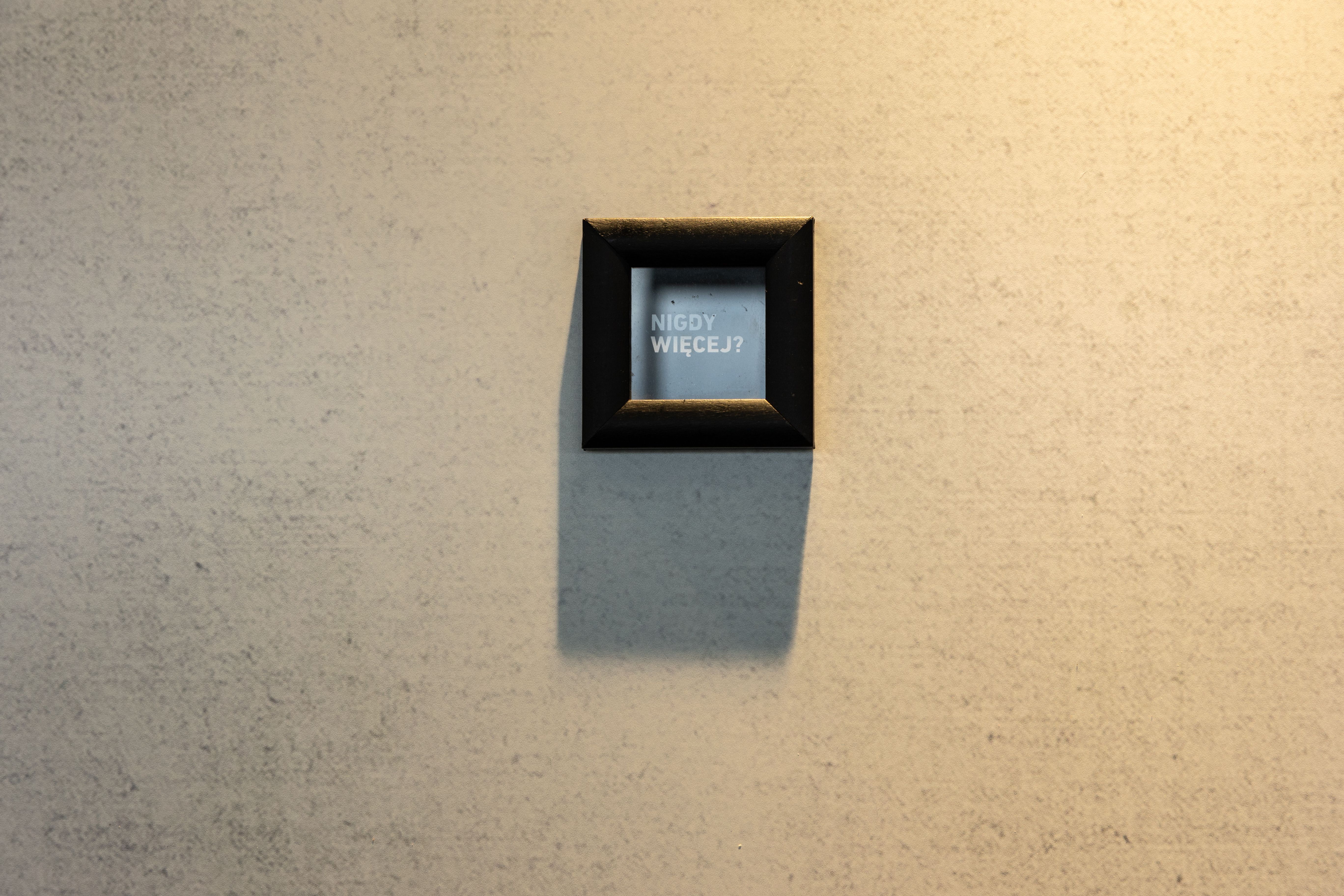
The phrase “never again” frequently appears as a title to many exhibitions and other events – usually referring to the Second World War II – with an anti-war message. “Never again?”, the phrase posed as a question takes on a completely different and painful meaning. It confronts this already timeworn postulate with reality, exposes its lack of meaning and deprives us of hope for fulfilment of those words. The last 80 years have not been free from war even for a moment. In fact, we are still witnessing ongoing armed conflicts, and – thanks to the immediate flow of global news – the coverage reaches us instantly, consequently affecting our psyche by embedding haunting imagery of war in our minds.

Important information

Temporary exhibitionArchival
  • Exhibition date:23.04.2022 - 30.09.2022
  • Place:State Museum at Majdanek
  • Curator:Aleksandra Skrabek
  • Translation:Łukasz Mrozik (EN), Halyna Lystvak (UA)
  • Language version:Polish, English, Ukrainian

Artists Participating in the Exhibition

Erna Rosenstein, Józef Szajna, Marian Bogusz, Paweł Warchoł, Monika Pietsch, Teresa Pągowska, Tomasz Malec, Otto Sander, Cezary Klimaszewski, Tomasz Kawiak, Anna Jelonek-Socha, Stefan Gierowski, Neil Owen, Jiri Anderle, Paivi Merilainen
The Evolution of Anti-war Art

The works presented in the exhibition come from the collections of the State Museum at Majdanek. Over the years, it has been expanded with works shown during the International Art Triennials. The first three editions were held under the subtitle “against the war”, which was later abandoned. Although the iconography presented in the early years of the collection depicted the horrors of war in a very literal way, it gradually took on a more universal character. This is largely because of the time that has passed, which detaches us from those experiences. Also, due to the geographical distance from contemporary armed conflicts, artists express their opposition with an emotional reserve. The war in Ukraine has significantly reduced this distance. When war became a reality rather than a distant threat, it changed our perception of security and sense of community, and made us realise that political structures and democracy cannot be taken for granted.

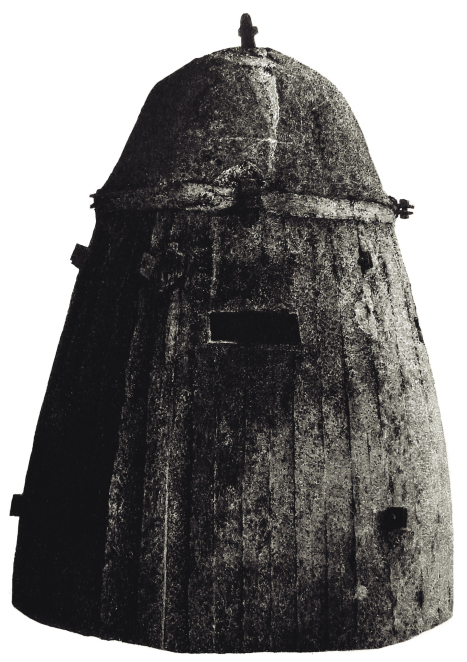
Elongated metal dome
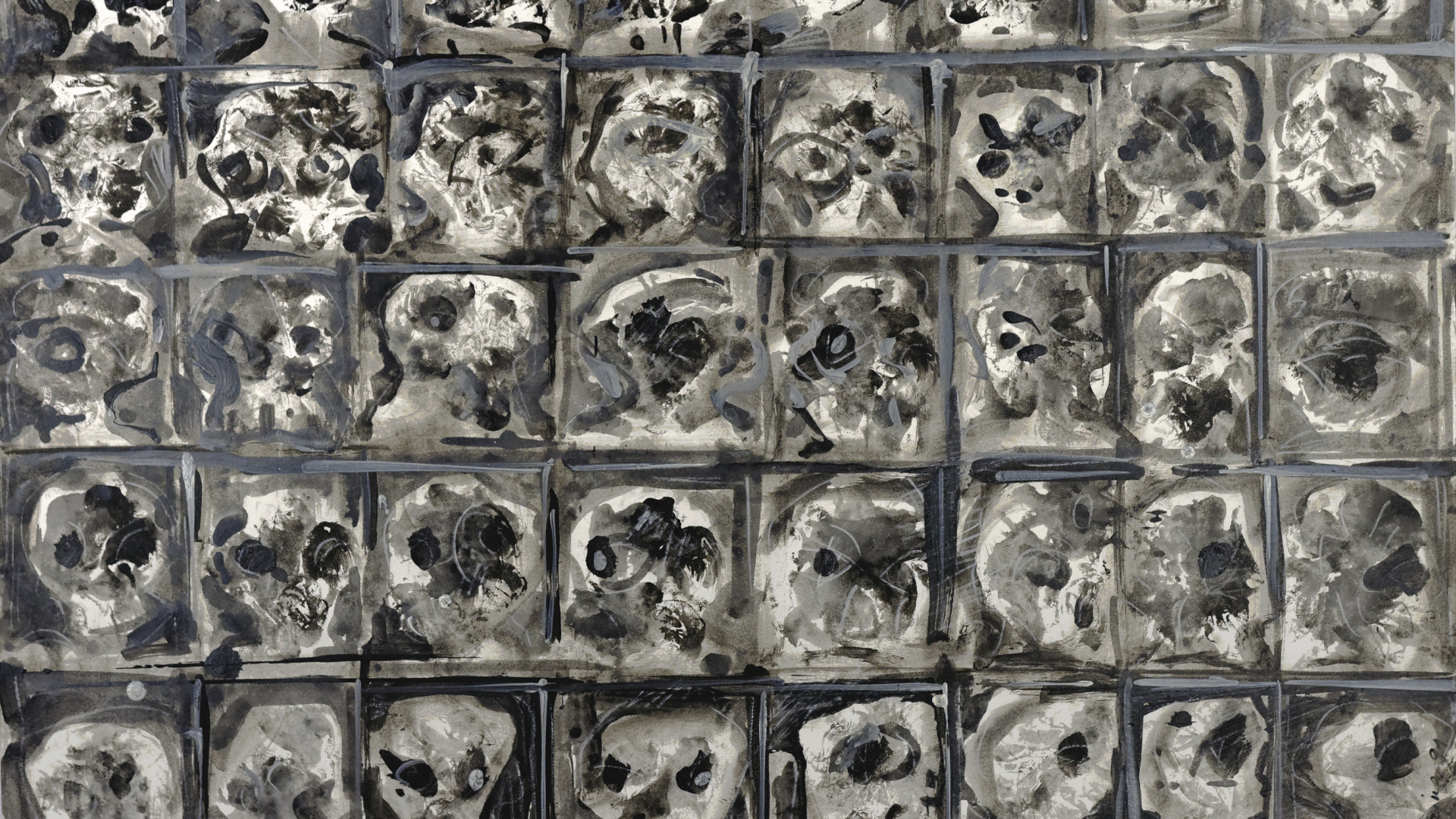
Paweł Warchoł, Bunker 7, 1998, drawing, ink
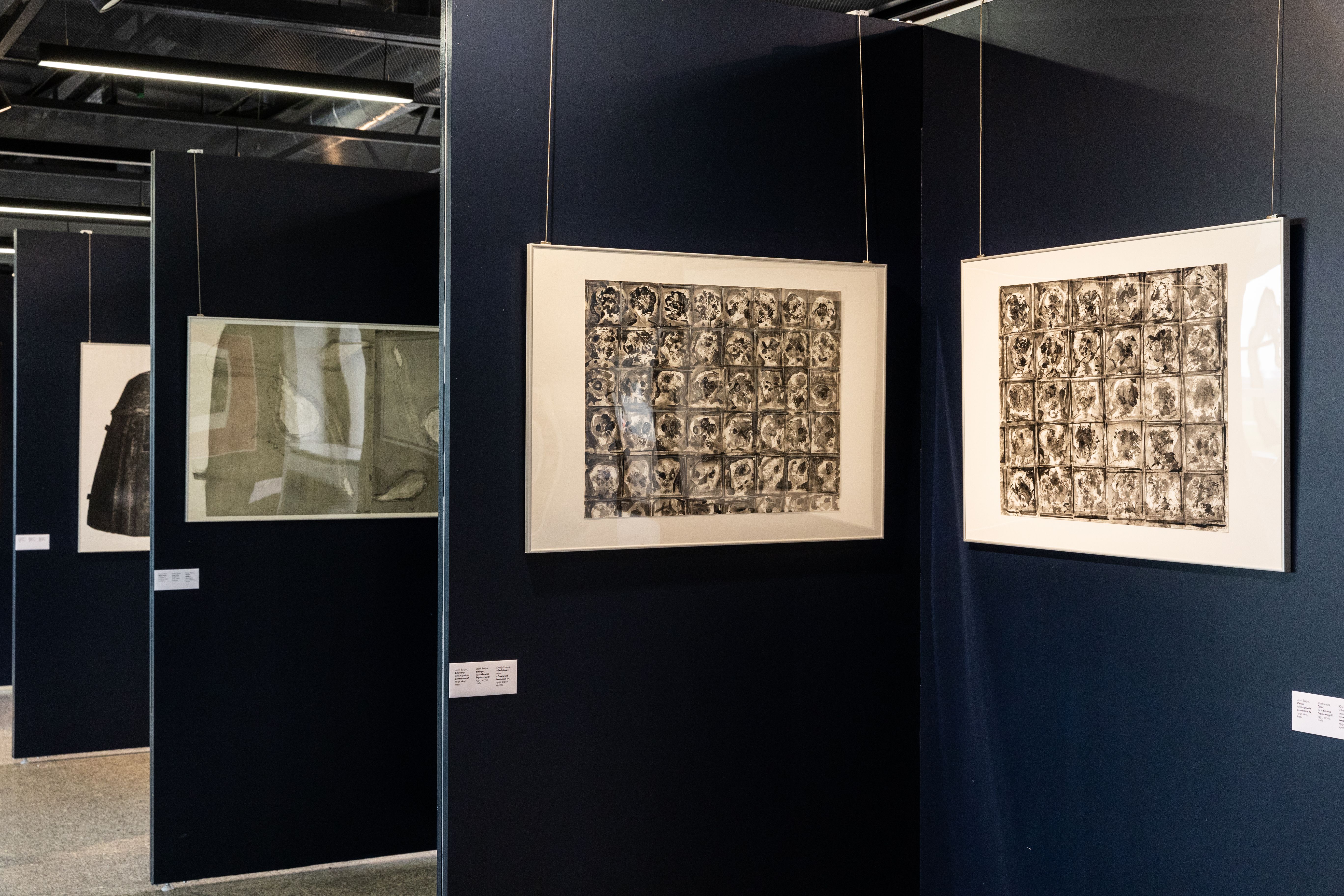
A drawing in black paint on paper; the sheet is divided into small squares, each containing an abstract form, some of which resemble a vague face
Józef Szajna, Embryos, Genetic Engineering II cycle, 1991, acrylic, chalk

Expressions of Protest

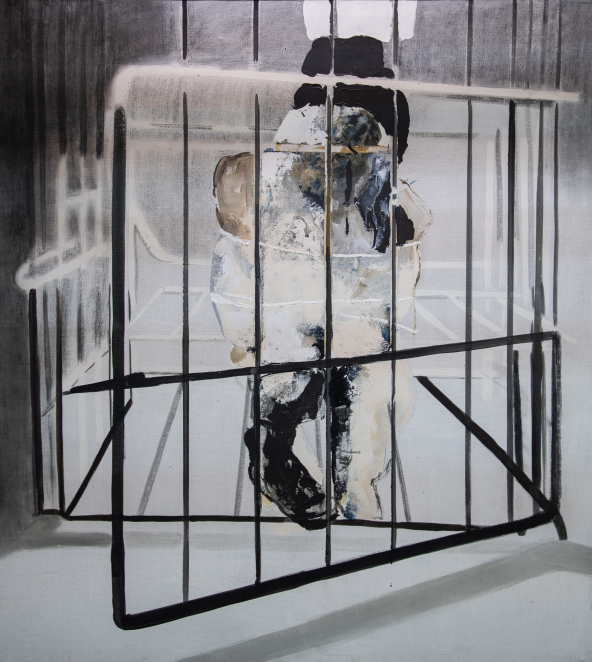
The 17 works presented at the exhibition address the theme of war, showing different perspectives on this subject. A 1980 piece by Otton Sander – So you Think That Russians Want War – and its title are particularly significant in the current circumstances. Other works depict, e.g. a city destroyed by bombardment (Neil Owen, Steel City, 2001), some elements of wartime infrastructure (Paweł Warchoł, Bunkers 7 and 8, 1998), fists raised to express opposition towards aggression (Erna Rosenstein, The Calling, 1984), and the victims of war (Paivi Merilainen, Why Must so Many Children Leave Their Home? IV, 1966, and Teresa Pągowska, Cage, 1973), to name just a few.

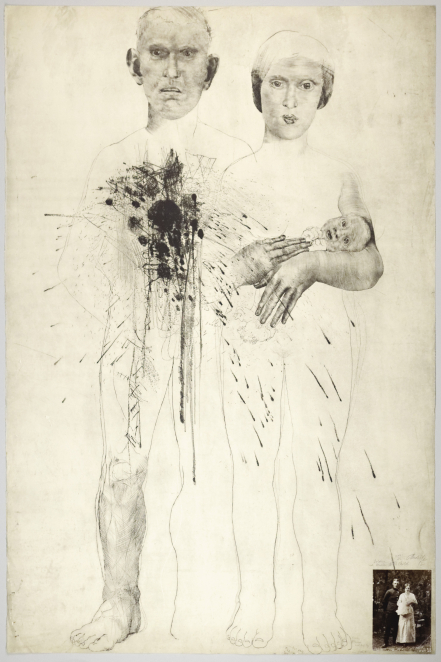
Portrait of a couple with a baby, clearly defined faces, body sketched, many smudged black spots at the height of the man's heart
Jiří Anderle, Soldier with Mother and Child, 1981, mezzotint
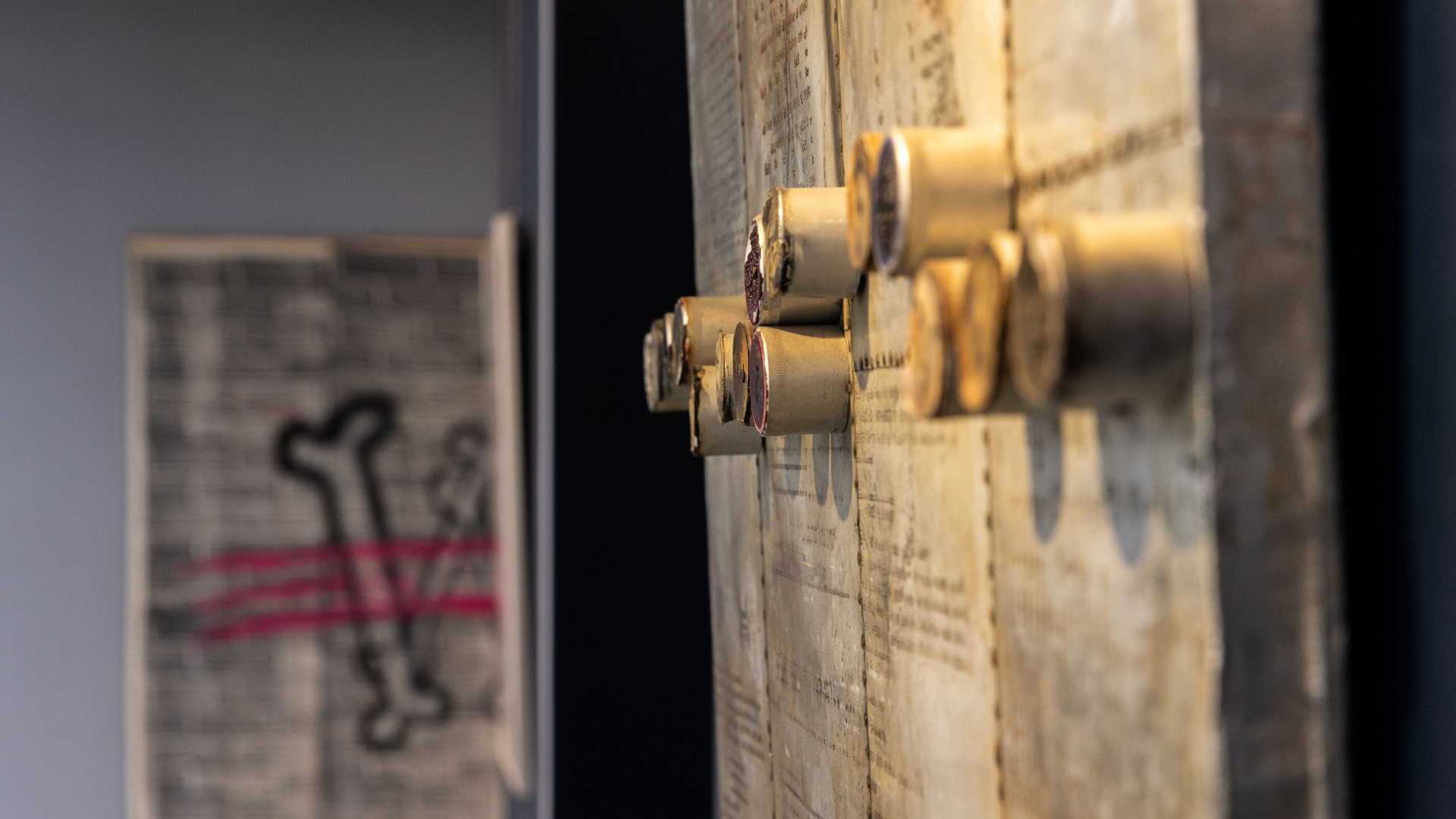
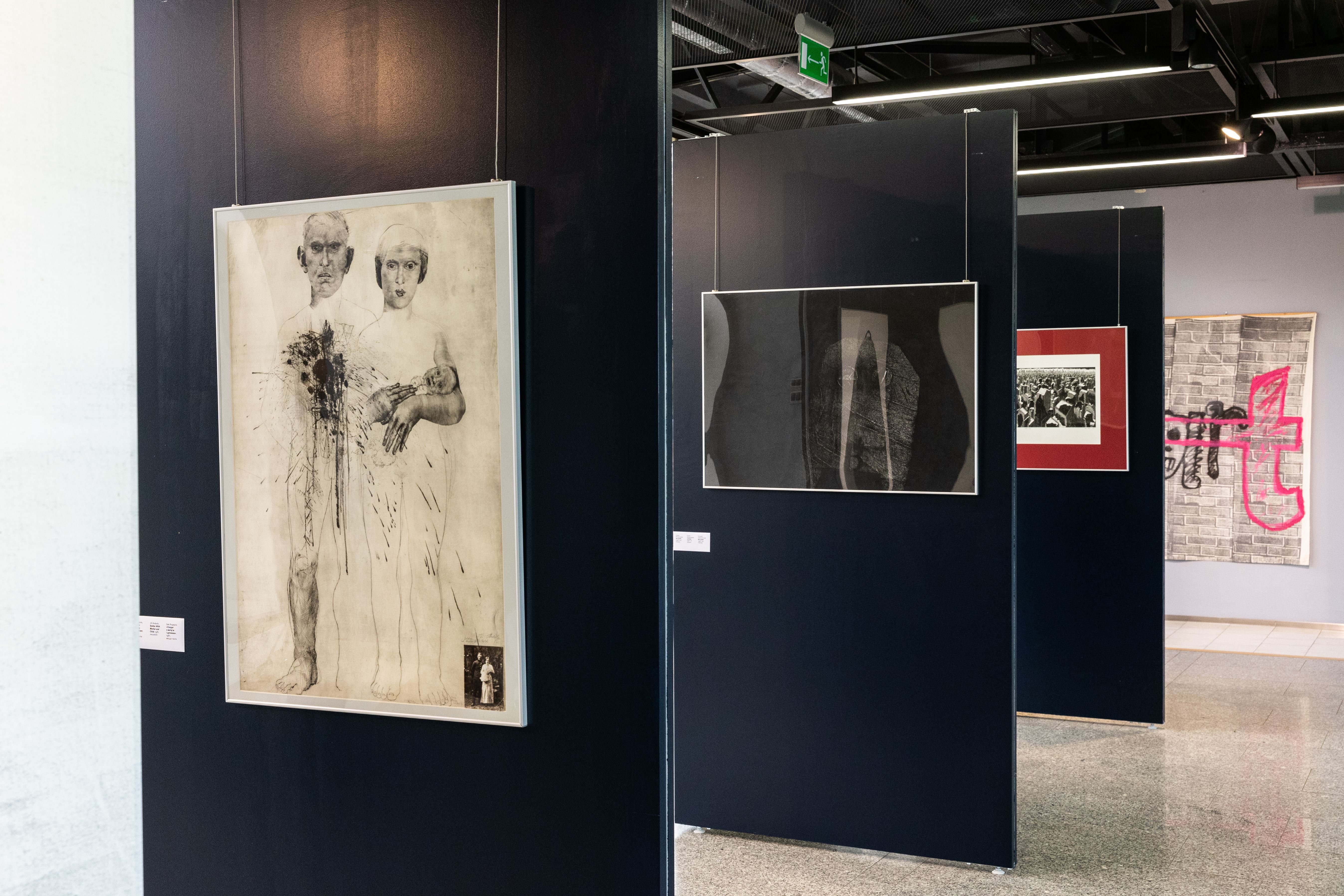
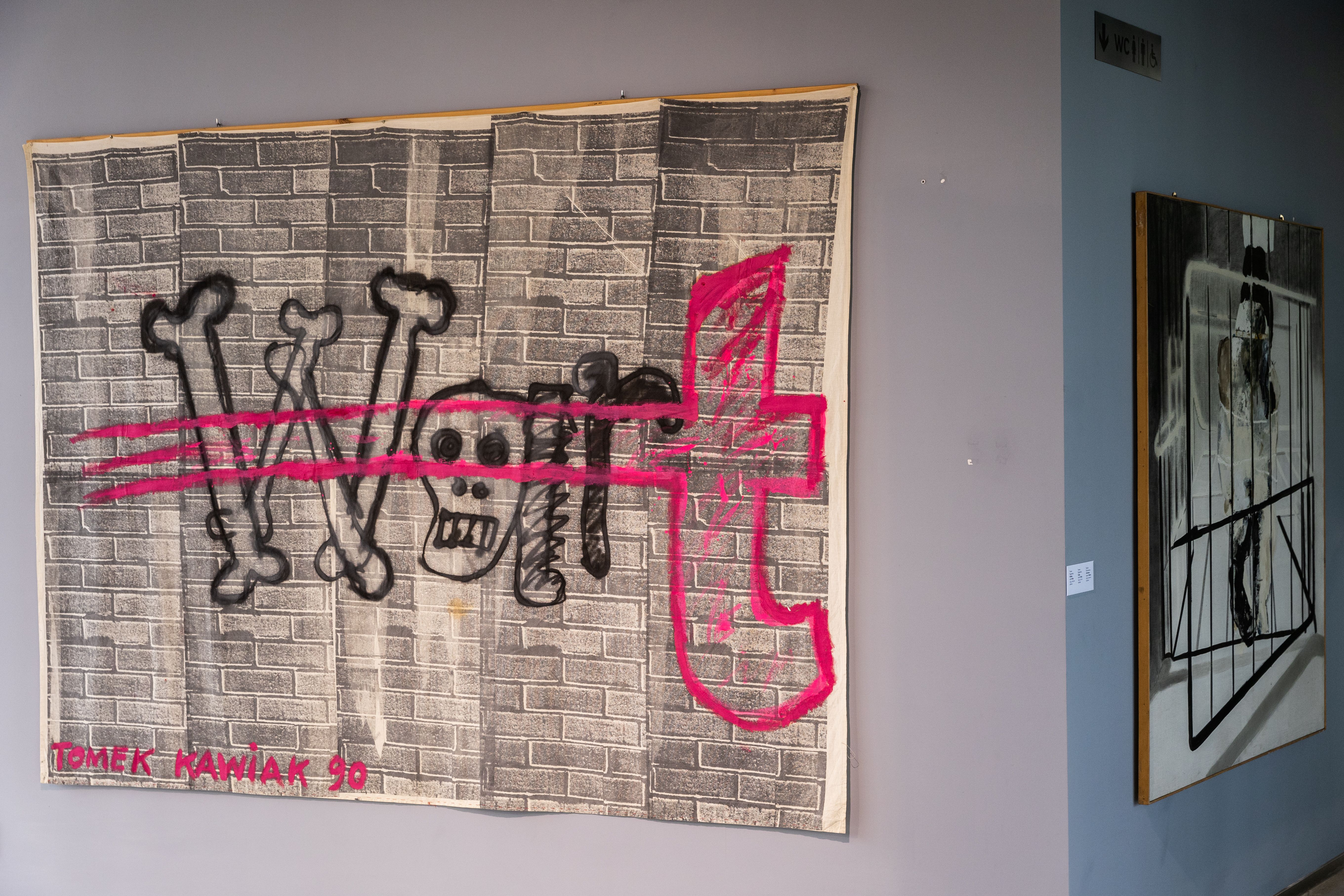
A view of the exhibition; on the right, a close-up of a work by Marian Bogusz in the form of a metal plate; in the background, a fragment of a work by Tomek Kawiak, showing the letter W made of tibia bones crossed out with pink paint

The Relevance of Anti-war Art

How has our perception of these pieces changed, since we also experience war even today? The exhibition arose from reflection on the relevance of the anti-war art, but also from the need to once again manifest this relentless protest, even though its postulates, are apparently so difficult to fulfill.

A cage, inside which there is an undefined silhouette resembling a human figure.
Teresa Pągowska, Cage, Chile cycle, 1973, oil on canvas