The Extermination of Jews in the German Operation “Reinhardt”

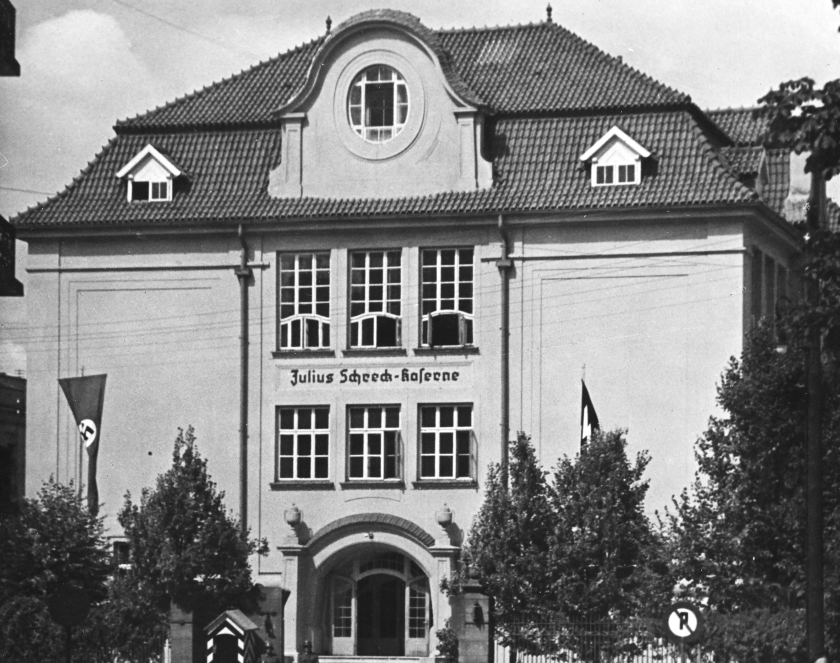
Black-and-white photograph of a building with a distinctive bay window; an elliptically shaped window topped with a semicircular canopy, supported by two plinths.
The exhibition sheds light on the mass extermination of Jews in the General Government executed by the Third Reich in 1942-1943.

Important information

Permanent exhibition
  • Exhibition start date:04.01.2024
  • Place:State Museum at Majdanek
  • Scenario:Dariusz Libionka
  • Artistic design:Ewelina Kruszewska
  • Coordination:Aleksandra Skrabek

"Einsatz Reinhardt”

Such codename was assigned to the programme of exterminating Jews in the General Government, which was part of genocide that the Third Reich implemented and referred to as the “Final Solution to the Jewish Question” in Europe. It was preceded by other measures: executions perpetrated by the SS and police firing squads (Einsatzgruppen) from the summer of 1941, and deportations to the Kulmhof death camp in Chełmno on Ner in Warthegau that began in December.

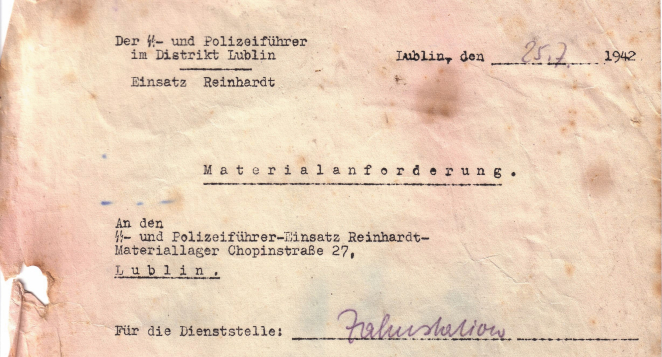
Document in the German language; a yellowed sheet of paper with numerous creases; near the lower left corner: a tear.
German document from 25 July 1942, bearing the full codename of operation “Reinhardt”.
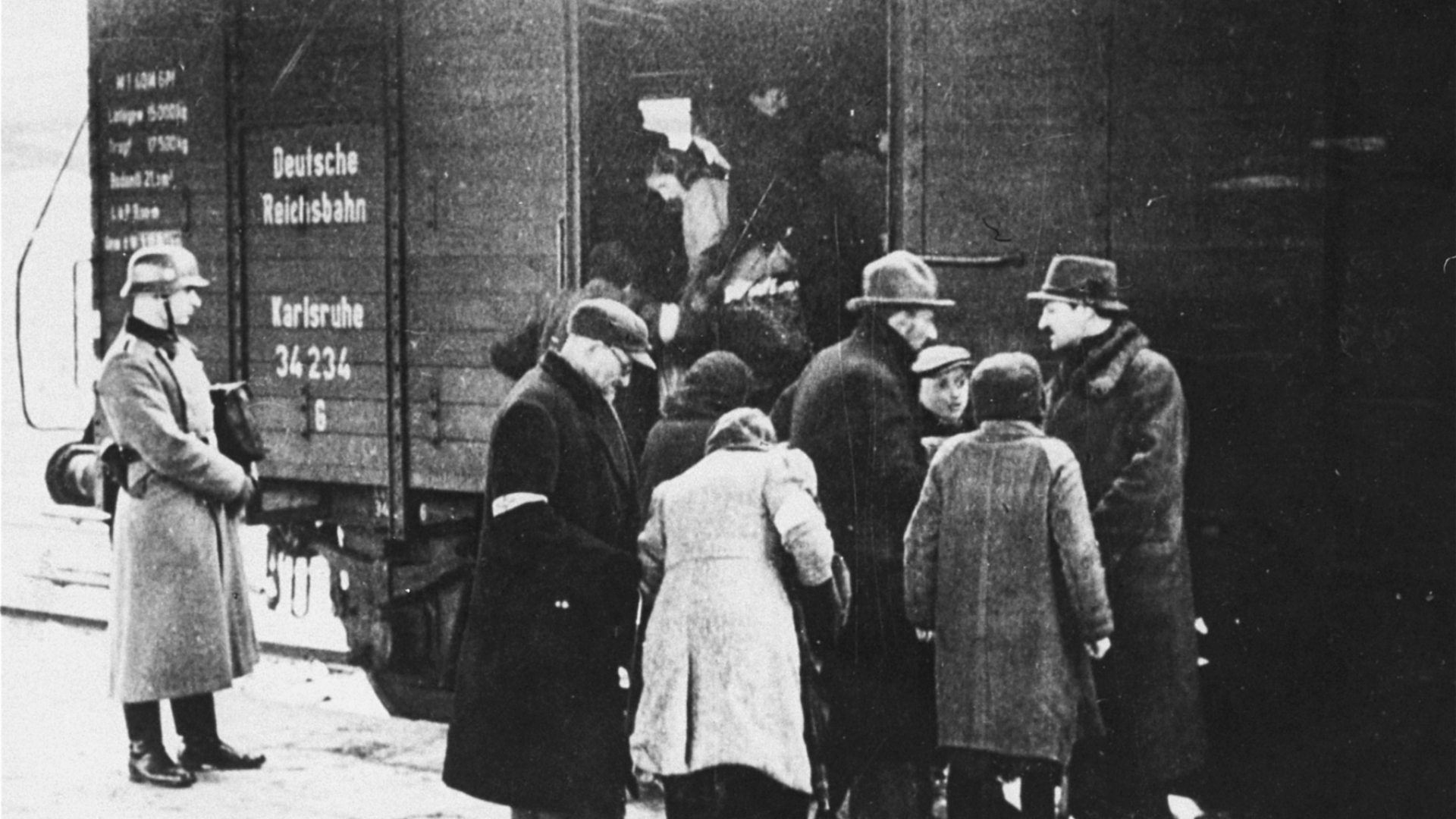
A black-and-white historical photograph. A group of people standing next to a train car. A man in a dark coat with an armband. On the left stands a soldier in a coat and helmet. Other people can be seen through the slightly ajar door of the train car.
Deportation of Jews from the ghetto in Kraków to the extermination camp in Bełżec, 1942.

Zygielbojm’s Appeal

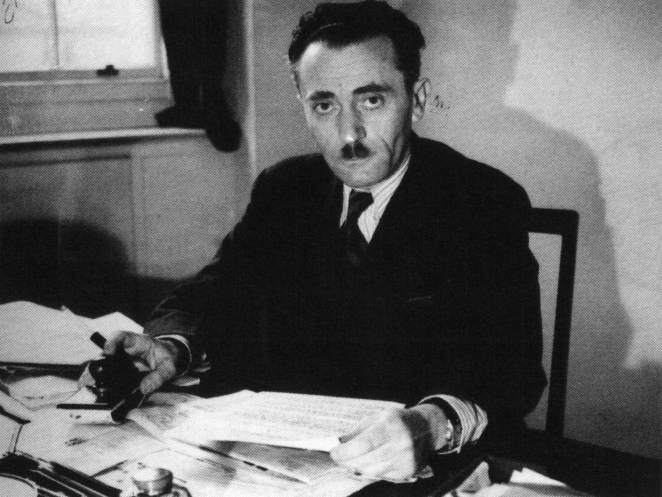
On 12 May 1943, head of the central committee of the Bund and a member of the Polish National Council in London, Szmul Zygielbojm, committed suicide as a form of protest against the world’s indifference to the fate of Jewish people. In his letter to Władysław Raczkiewicz, the President of Poland, he wrote:

“I cannot stay quiet anymore. I cannot live while the very last Jewish people in Poland are being annihilated. And it is me who represents them. My comrades in the Warsaw Ghetto died with weapons in their arms during the last heroic battle. My destination was not to die like them or with them. But I belong to them and to their mass graves. By my death, I wish to express the strongest protest against the passiveness in the world, with which it looks on and allows the genocide of the Jewish people to continue.”

Black-and-white photograph: a middle-aged man with black hair and a toothbrush-style mustache is holding a document in his hands.
Szmul Zygielbojm

Locations

The mass murder began on 16 March 1942. It started with the deportation of some Jewish people, from the ghettos in Lublin and Lviv to the extermination camp in Bełżec. The “resettlement staff” of the SS and Police Commander in Lublin, Odilo Globocnik, was at the helm of the operation. It took a few months for the German occupiers to also build death camps in Sobibór and Treblinka, meanwhile mass killings extended to all occupied Polish territories. According to German data, by the end of 1942, about 300,000 Jews remained in the General Government. However, most of them were murdered by early November 1943.

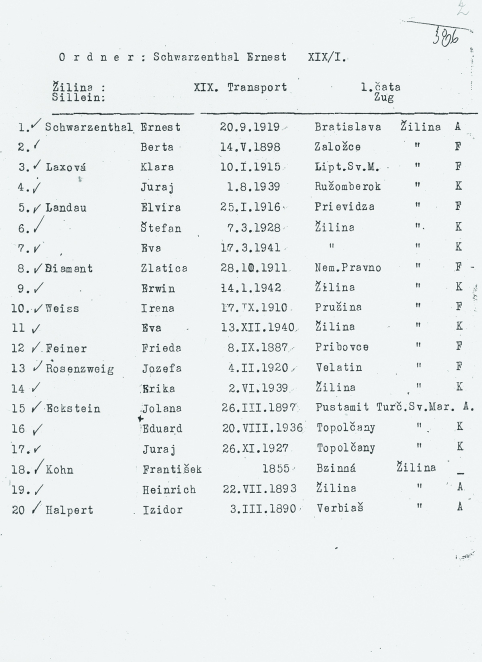
Document in the German language, white sheet of paper, typewritten text; 20 entries containing the first and last names of individuals.
A piece of the transport list from Žilina in Slovakia from 14 June 1942. The document contains the names of 1,001 people deported to the extermination camp in Sobibór.

Victims

More than 1.5 million men, women and children were murdered in the death camps of operation “Reinhardt” and in KL Lublin. Among the victims, apart from Polish Jews who were the majority, there were also the citizens of Germany, Austria, Czechoslovakia, the Netherlands, France, Greece, and other countries. Several hundred thousand Jews perished in ghettos, mass executions and “resettlement actions”, labour camps, concentration camps, street round-ups or were murdered while trying to hide.

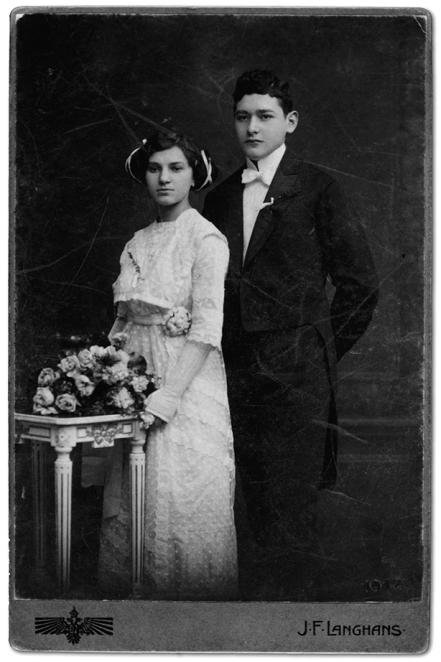
Black-and-white wedding photograph: a woman dressed in a white lace wedding gown with black hair styled high; a man dressed in a black suit and white shirt with a white bow tie; in front of the bride and groom, a small table with a bouquet of light-colored flowers arranged on it.
A picture of a married couple from Prague that was found at Majdanek after the war.
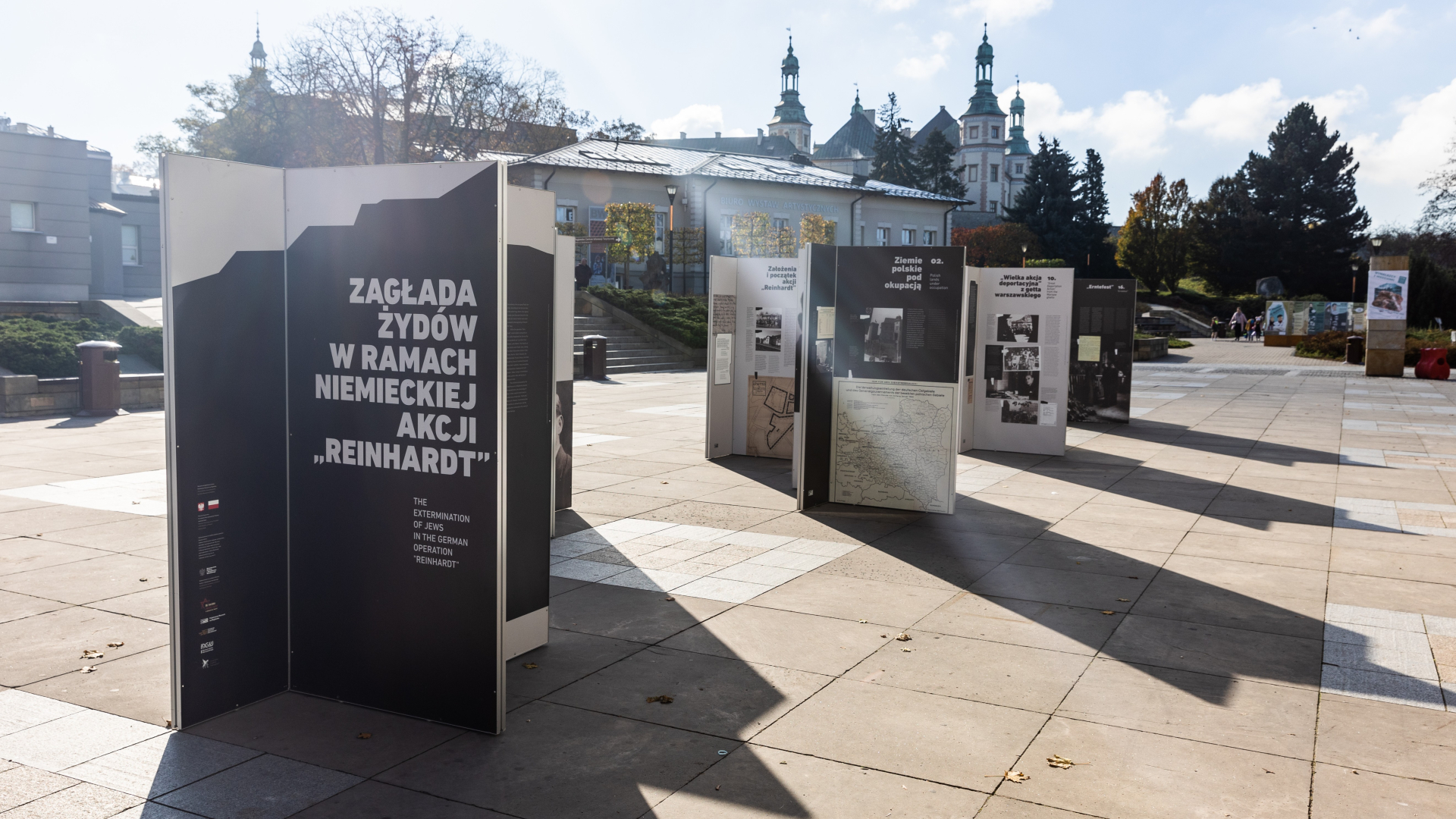
A contemporary photo: an outdoor exhibition is set up in the square. Buildings are visible in the background.
Exhibition shown in Kielce in October 2022.

About the Exhibition

The exhibition was created on the 80th anniversary of operation “Reinhardt”. It shows the perpetrators, the chronology of their crimes and the main places of extermination. The issues are divided into 20 sections. Historical texts are illustrated with photos, documents, maps and are supplemented with testimonies. Above all, the exhibition commemorates the victims of antisemitism and persecution conducted in the name of a racist ideology.

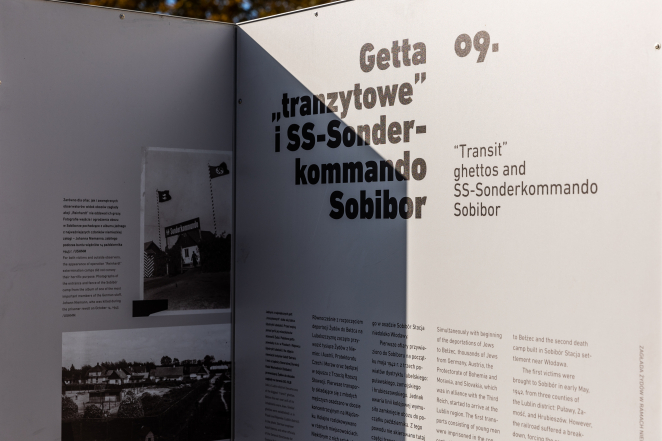
Exhibition panel in a monochromatic color scheme; inscription: Transit “ghettos” and SS-Sonderkommando Sobibor

Touring exhibition

The exhibition was created in cooperation with the Jewish Historical Institute, the Warsaw Ghetto Museum, and the Association for Educational Projects (Towarzystwo Projektów Edukacyjnych). It was displayed in Warsaw, Przemyśl, Kielce and Białystok in 2022. A year later, in 2023, it was shown in Poniatowa, as a part of a conference and educational campaign marking the 80th anniversary of the operation “Erntefest”. Currently, the exhibition is displayed at the Museum and Memorial in Sobibór. We also present its shortened version at the State Museum at Majdanek in barracks no. 55.

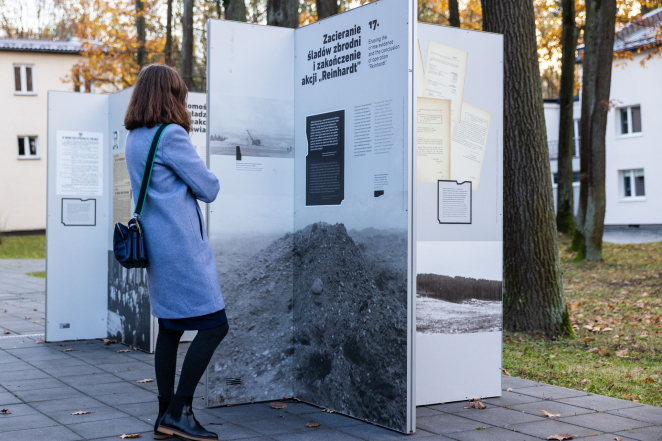
The vernissage of the exhibition in Poniatowa during the 80th anniversary of operation “Erntefest”.