THE PRISONERS OF MAJDANEK

Individual Stories

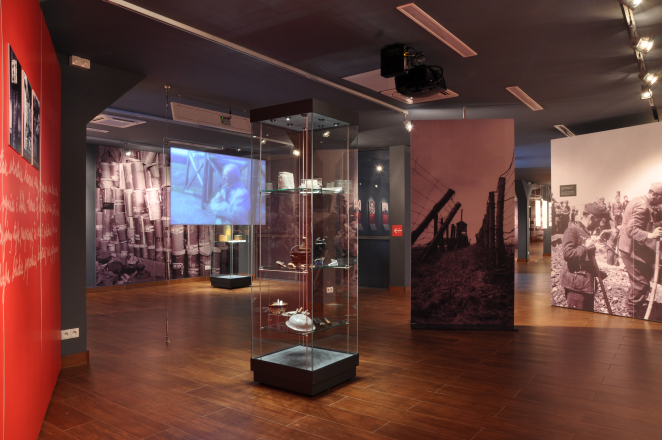
 An exhibition consisting of red panels and photos depicting portraits of women and men.
The exhibition, opened on the 70th anniversary of the liquidation of the concentration camp in Lublin, evokes the memory of its prisoners – victims of the Nazi policy of persecution and extermination. Its primary objective is to present the prisoner community of Majdanek and to characterise the conditions and phenomena that shaped it. The history of KL Lublin, serving as the background, is depicted through the prism of the fates, experiences, and observations of the inmates.

Important information

Permanent exhibition
  • Exhibition start date:22.07.2014
  • Place:State Museum at Majdanek
  • Curator:Krzysztof Banach
  • Scenario:Krzysztof Banach, Marta Grudzińska, Wojciech Lenarczyk
  • Language version:Polish, English
  • Artistic design:Izabela Tomasiewicz
  • Stylistic editing and proofreading of texts:Ewa Bąbol
  • Exhbibition concept and consultations:Tomasz Kranz

The exhibition guides the viewer through the stages of camp life. It illustrates where the Majdanek prisoners came from, the process of their admission to the camp, the daily routine, the punishments and harassment they were subjected to, and the methods by which they were murdered. It also presents the forms of self-defence adopted by the inmates and the fates of those who survived the camp.
Functions of Majdanek and Prisoner Nationalities

During the war, Majdanek served various functions. It was originally intended to be a camp for prisoners of war. Hence its initial name (KGL Lublin) and the nationality of the first inmates – Soviet POWs brought there from the autumn of 1941. In February 1943, following the influx of Poles arrested for their involvement in the resistance, the name was changed to the concentration camp in Lublin (KL Lublin).

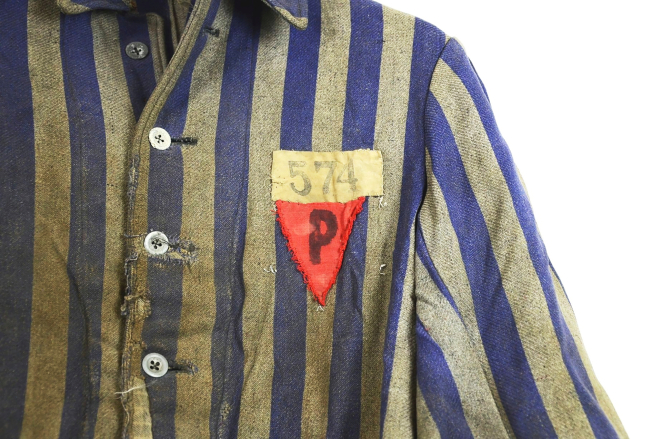
Fragment of a prisoner's jacket, striped uniform; fabric with blue and white stripes, on the left lapel a red triangle with the letter P and the number 574.

Polish prisoners constituted the second largest national group. For them, Majdanek functioned as a penal, concentration, and transit camp, as well as a place of execution. The most numerous group consisted of Jews brought from Poland and abroad. They were deported here for forced labour and for death. The third largest group comprised individuals brought from the territories of the Soviet Union, including Ukrainians and Belarusians. Relatively few citizens of Western European countries were imprisoned there.

From October 1941, the camp served as a place of imprisonment for men; a year later, for women, and from March 1943, for children as well. According to the latest research, approximately 130,000 people were deported to Majdanek.

Community

The authorities of Majdanek did everything in their power to transform the individuals deported to KL Lublin into tools subservient to their plans, stripped of their sense of humanity. This was achieved through a harsh regime and terror. Compared to other concentration camps, Majdanek was characterised by the extreme primitivity of its living conditions. Hunger, exhausting labour, terror, and the fear of beatings and death unleashed the lowest instincts in people. The Germans reinforced national and social antagonisms, creating conflicts between particular groups. Those assigned functions within the camp hierarchy often turned against their fellow inmates, using violence against them. Exploiting power over others for personal gain, they became a hated group of camp prominents.

However, the inmates sought to unite and support one another. Survival was facilitated by cooperation within groups, an example of which were the so-called camp families formed by Polish female prisoners. Sharing food, space on bunks, and additional clothing, caring for children regardless of their nation, organising medical aid, or hiding Jews were only some of the ways they fought to maintain their human dignity. Close relationships were forged, as evidenced by examples of clandestine correspondence between inmates in different fields, as well as the exchanging of ornaments and children’s toys crafted within the camp.

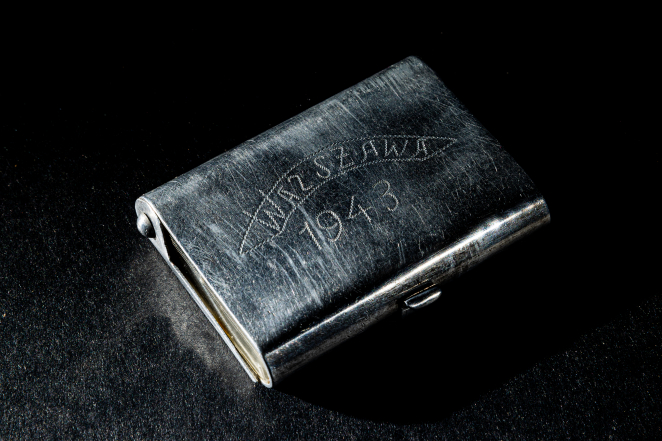
Rectangular metal box with engraving: Warsaw 1943
Engraved cigarette case gifted to Zofia Ludwiczak by another prisoner of Majdanek in 1944.

"Radio Majdanek"

Radio Majdanek, which functioned in the women's field from February to May 1943, was a unique initiative of this character. The "radio studio" was located on the third level of a barrack bunk, from where "broadcasts were transmitted" – announcements dedicated to events in camp life, as well as political and cultural news, were spoken aloud. The "radio" was conceived by Matylda Woliniewska, and the announcers included: Danuta Brzosko, Alina Pleszczyńska, Hanna Fularska, Wiesława Grzegorzewska, Romana Pawłowska, and Stefania Błońska. It constituted a form of entertainment that allowed the female prisoners a momentary respite from the hardships of camp life.

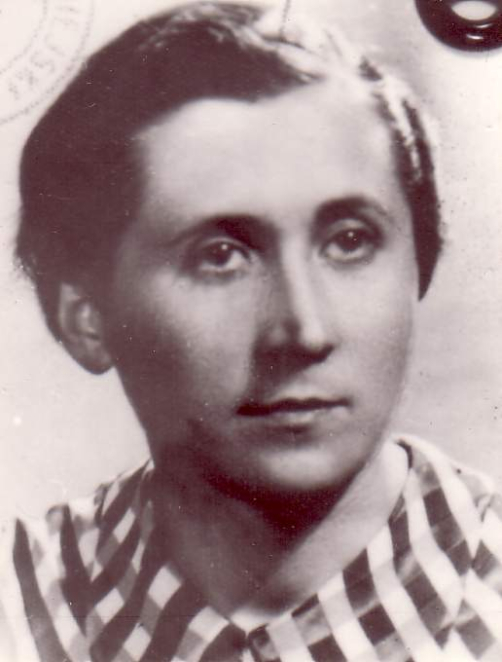
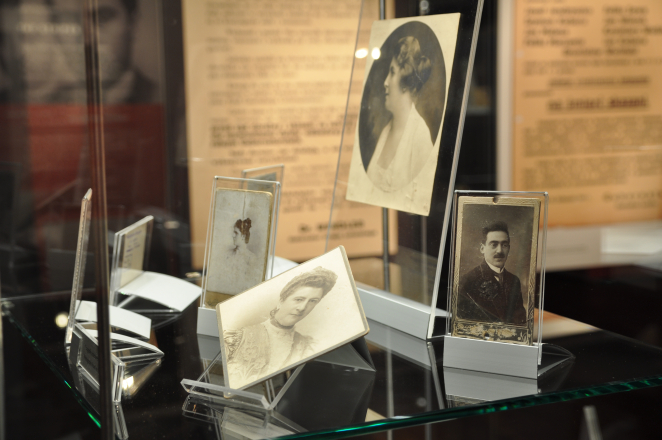
Sepia photo; portrait of a young woman wearing a checked blouse
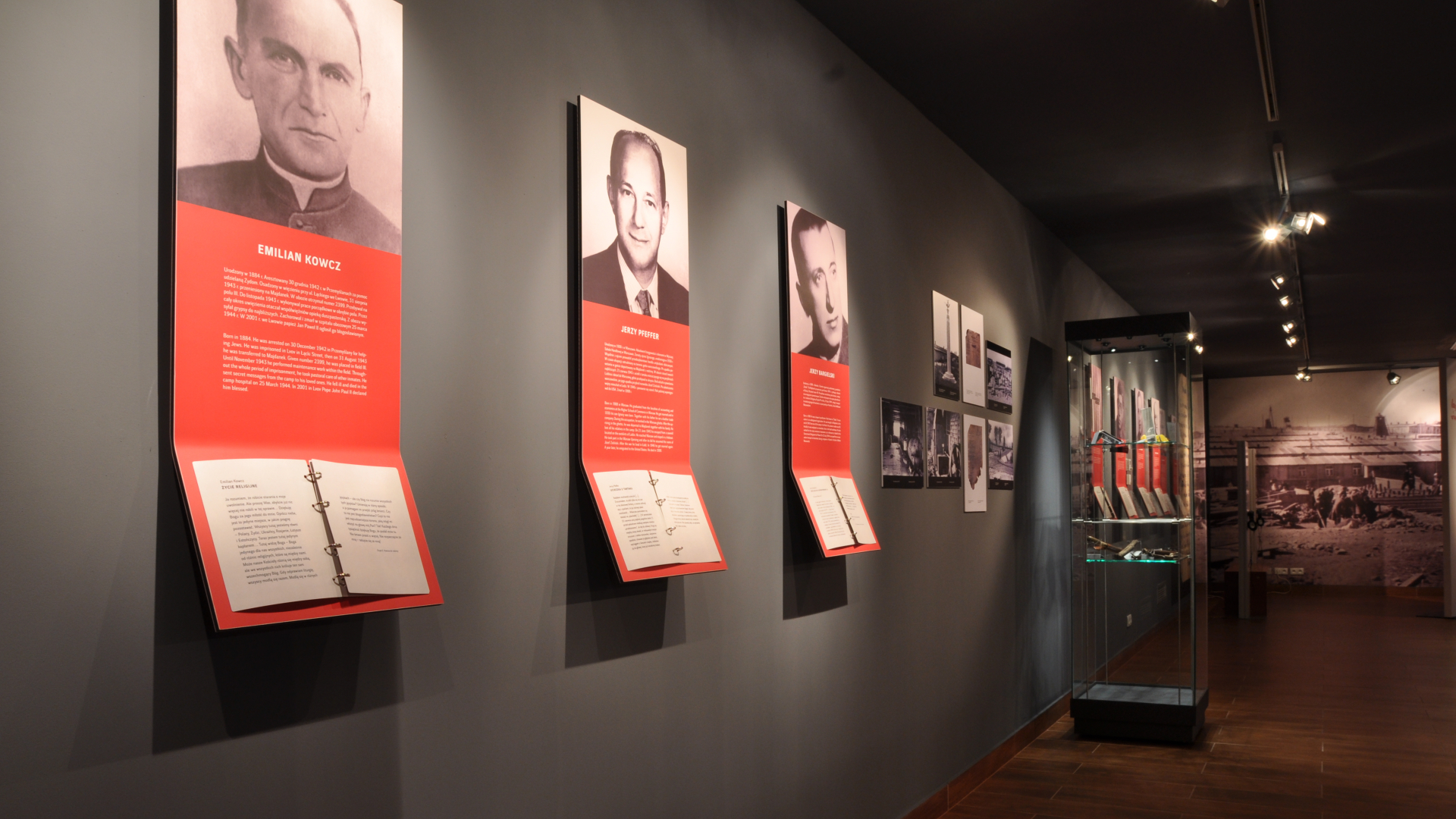
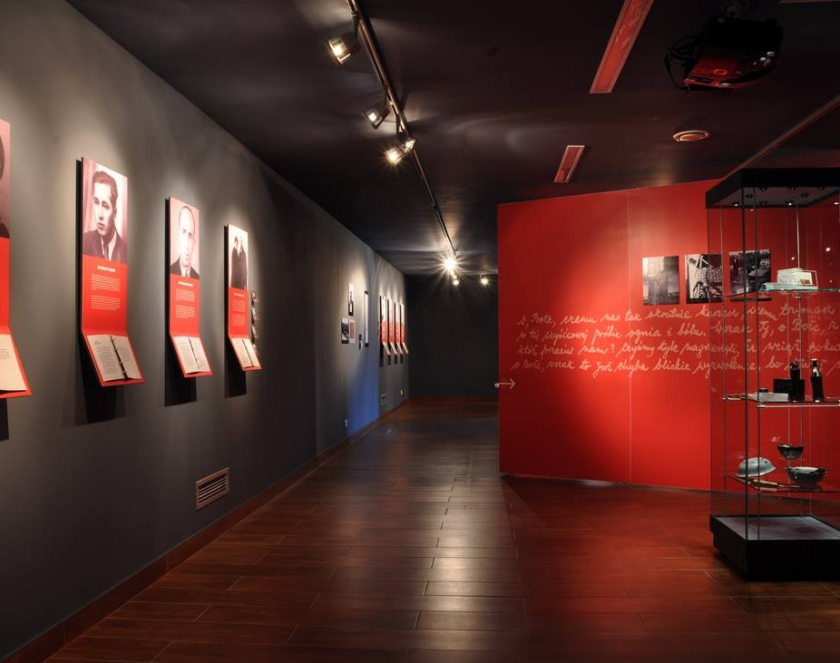
A view of part of the exhibition. Portraits of prisoners hang on the wall, with biographical information displayed on panels below. A display case can be seen in the distance.

Individual Fates of the Exhibition’s Figures

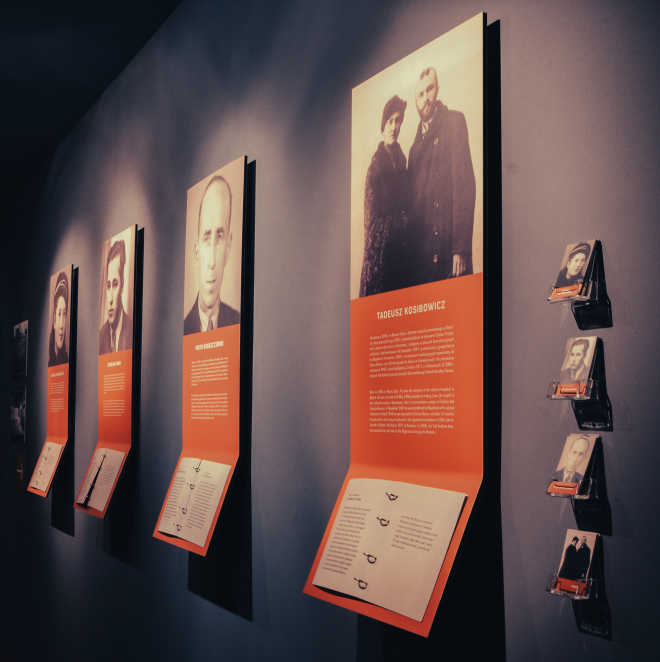
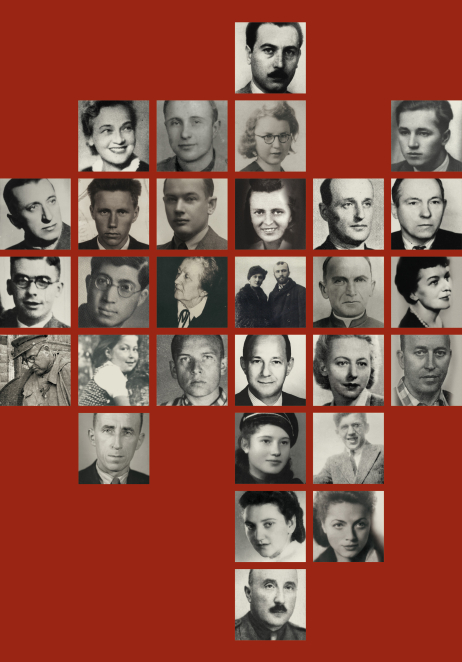
The starting point for the narrative is the individual fates of prisoners from various social groups, nationalities, and religions, who occupied diverse positions within the inmate community. Biographies and photographs of selected individuals, placed on special lecterns, are supplemented by movable cards featuring excerpts of testimonies. Visitors can access this content on the museum's website via QR codes. Thirty-three prisoner profiles, along with their life stories and memories, have been selected to reflect the diversity of the community and the inmates' reactions to various aspects of the camp reality.

Red exhibition panels combined with photos of men and women

Artefacts and Archival Sources

The display cases contain exhibits and archival material grouped by theme. Context is provided by proclamations, posters, orders, fragments of documents from the camp administration, clandestine correspondence, and large-format historical photographs. Documents, photographs, and personal items belonging to the prisoners are the remnants of their world, testimonies to their social and material status.

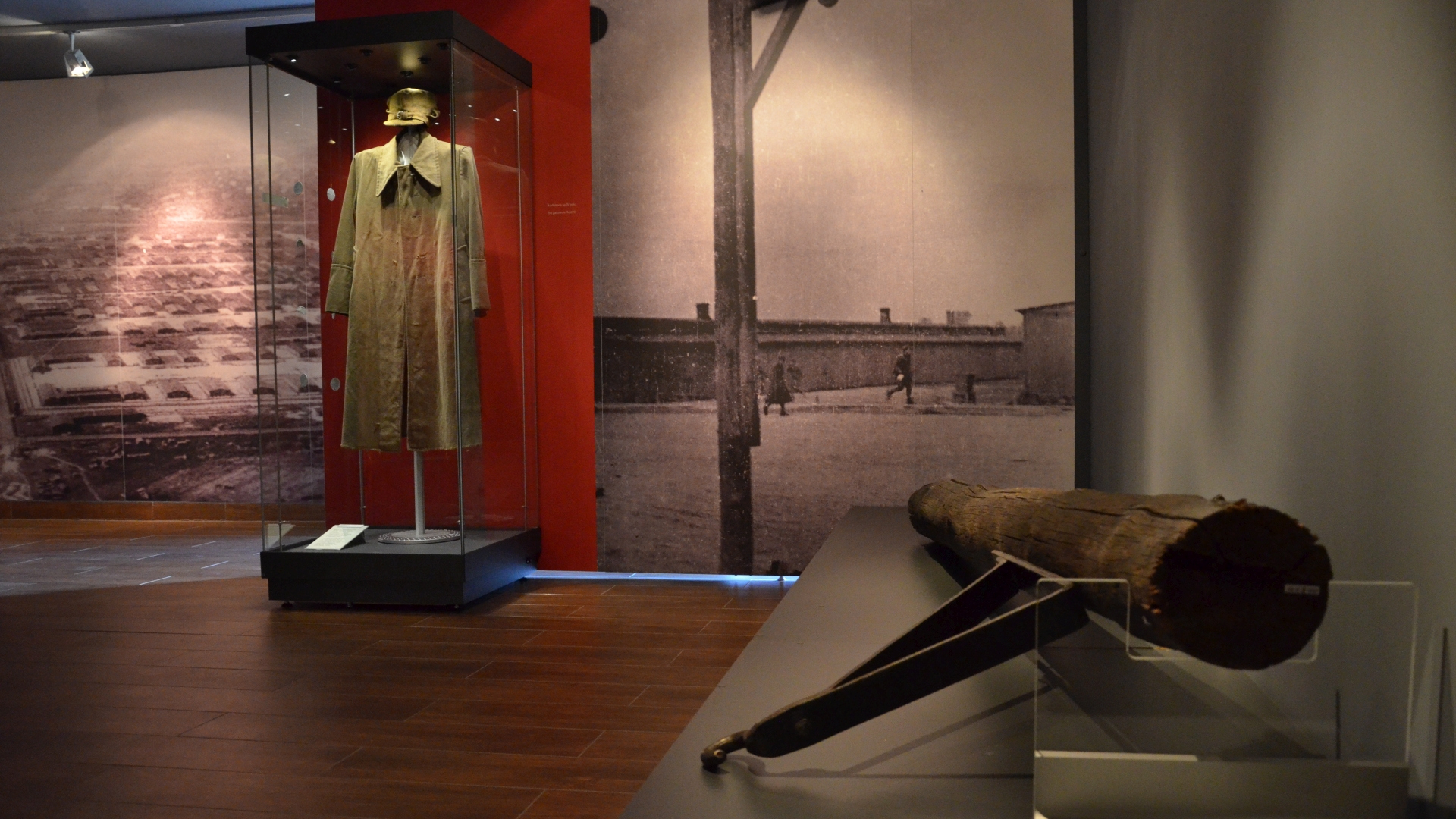
The realities of life behind the barbed wires are illustrated by everyday objects and elements of barracks equipment featured in the exhibition. The atmosphere of constant threat is conveyed by attributes of power, such as the armbands of prisoner-functionaries or whips used to administer punishment, as well as exhibits related to death in the camp: bullet casings, Zyklon B canisters, the gallows from prisoner field III, or the urn used to send the ashes of loved ones to their families for a fee.

A section of the exhibition: on the right, a bird’s-eye view of the camp on the wall, a display case with uniform items, and a photograph of the gallows

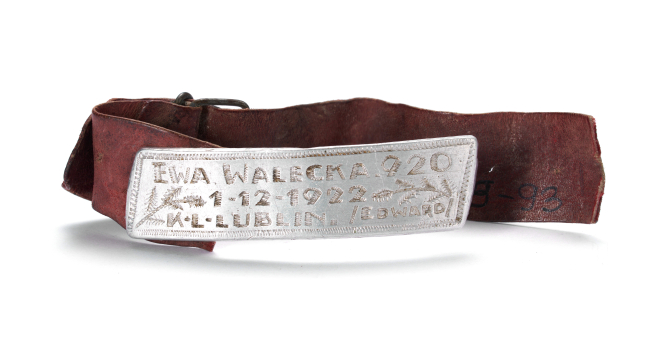
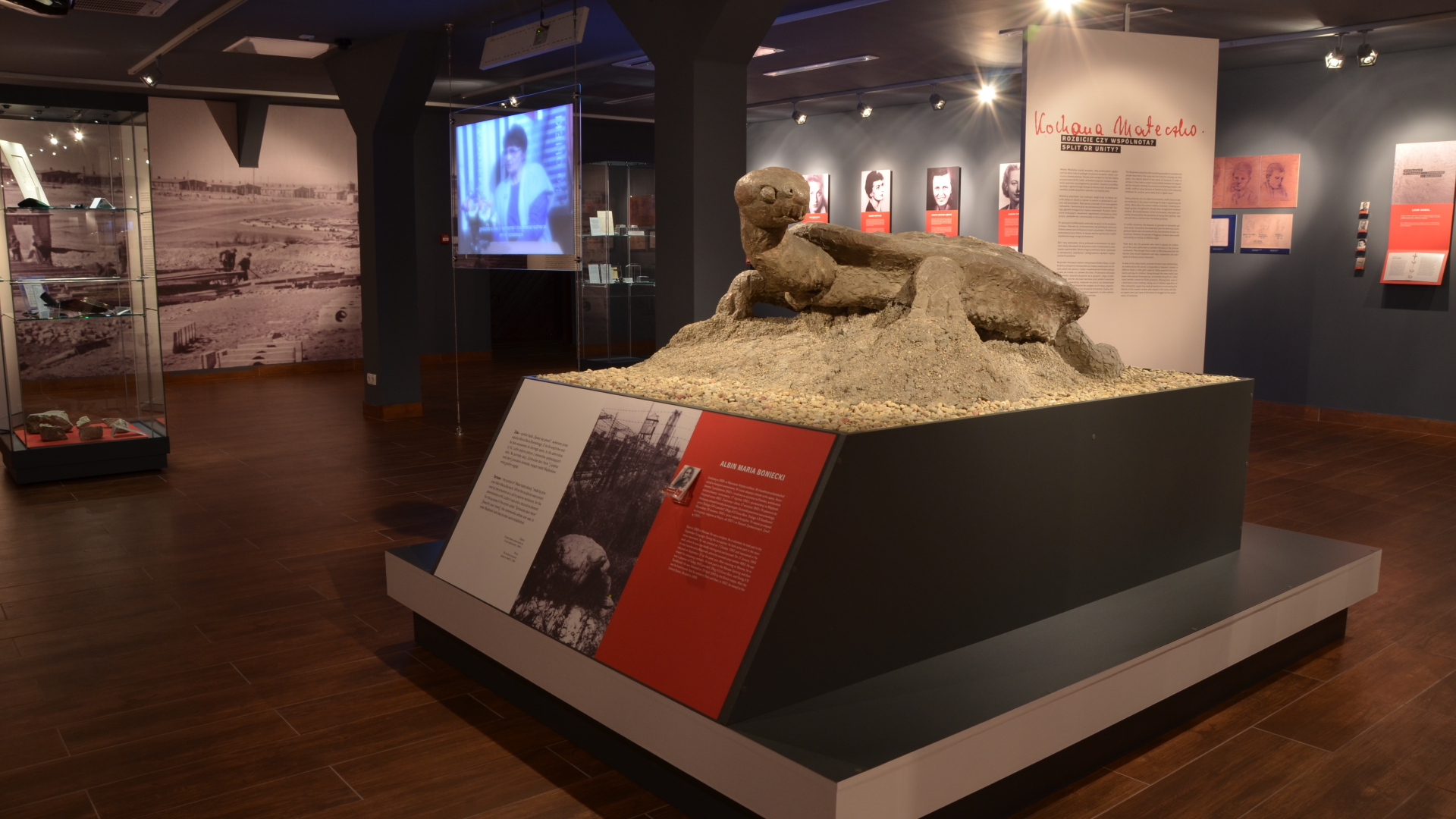
The individual perspective is shaped through personalised exhibits: for instance, a bracelet belonging to Ewa Walecka, made in the camp by Edward Laskus, or a commemorative cross given to Bronisława Korzeniowska by Amour Collin in exchange for a portion of bread. Art proved to be a way of survival and an attempt to defy the camp regime; prisoners drew and painted, and they crafted Christmas cards, keepsakes, artistic objects, and toys. One of the more prominently displayed works is the sculpture of a tortoise by Maria Albin Boniecki, moved here from field III.

A view of the exhibition, with a sculpture of a turtle on a pedestal in the foreground, monitors, photographs, and display panels on the walls in the background, and a display case on the left
The "Tortoise" created by Maria Albin Boniecki in 1943.

Multimedia

At the exhibition, visitors can watch excerpts from the movie Majdanek. The Cemetery of Europe by Aleksander Ford, which was filmed shortly after the liquidation of KL Lublin. Video testimonies of survivors are displayed on screens. The experiences of the former inmates did not end the moment they left the barbed wires behind, the camp burden and trauma remained with them for the rest of their lives.

Audio players allow visitors to listen to witnesses' testimonies in two languages and to learn about the history of "Radio Majdanek". The content is supplemented by annotated archival material located in a special panel with a document browser, as well as an interactive map of the Museum grounds, which includes descriptions and photographs of historical buildings.