Monument

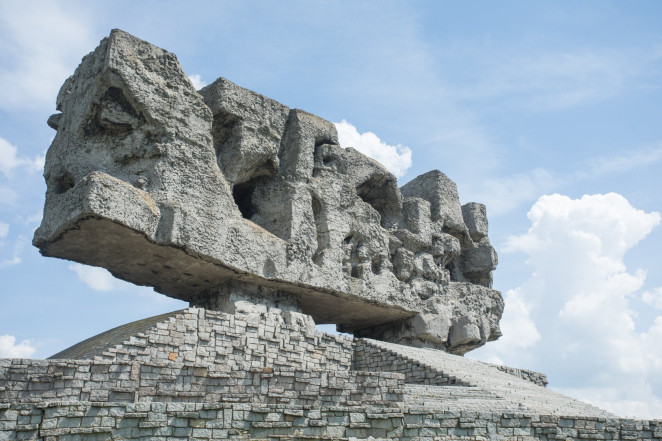
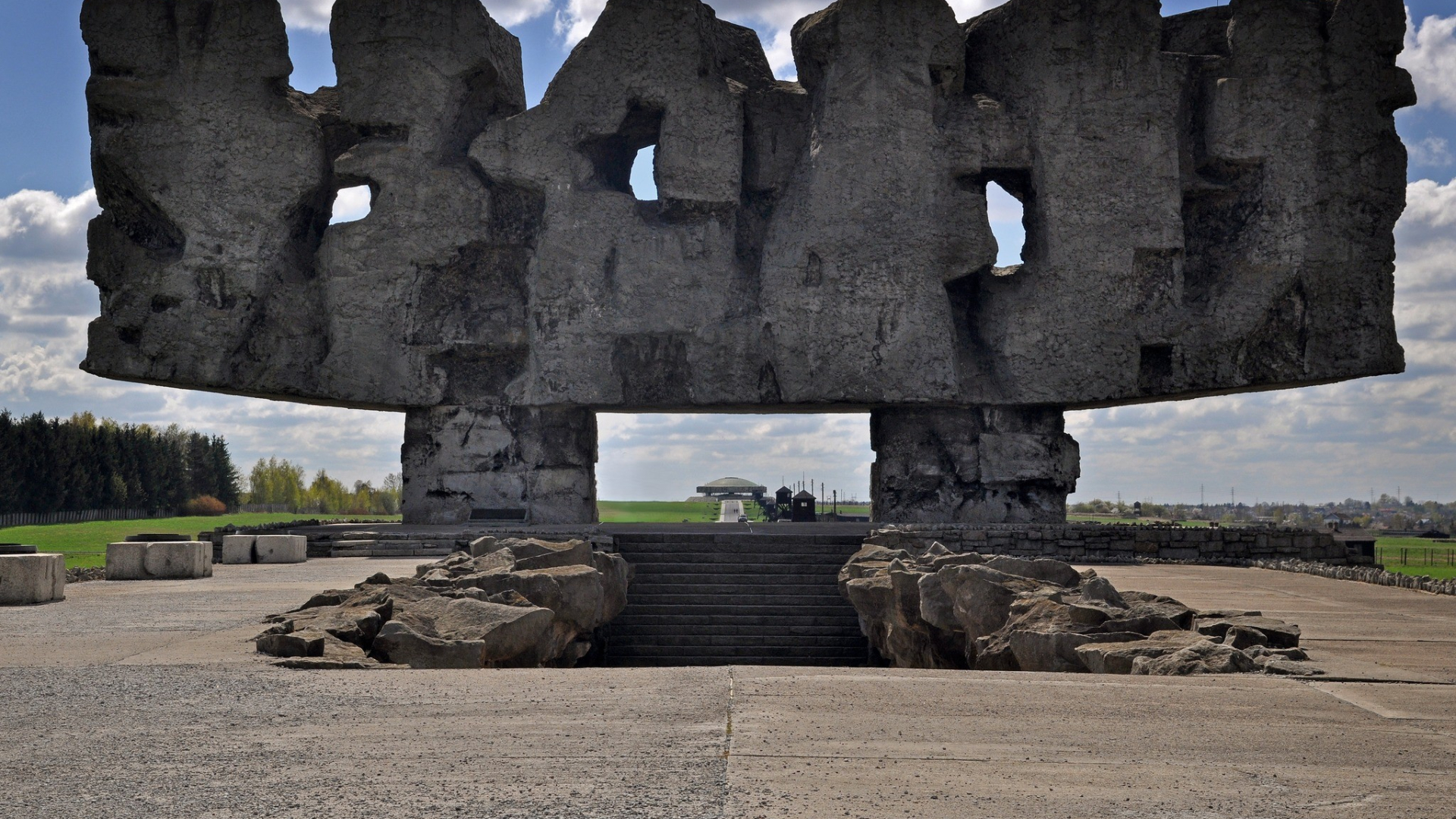
The Monument-Gate – a monumental, concrete, abstract structure in the shape of a rectangle supported by two pylons.

Construction

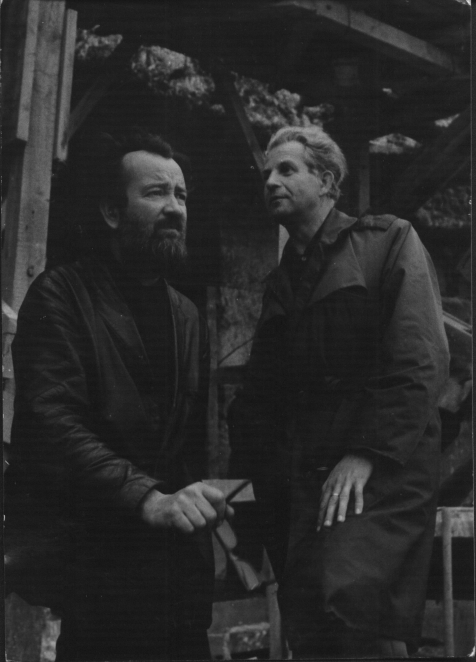
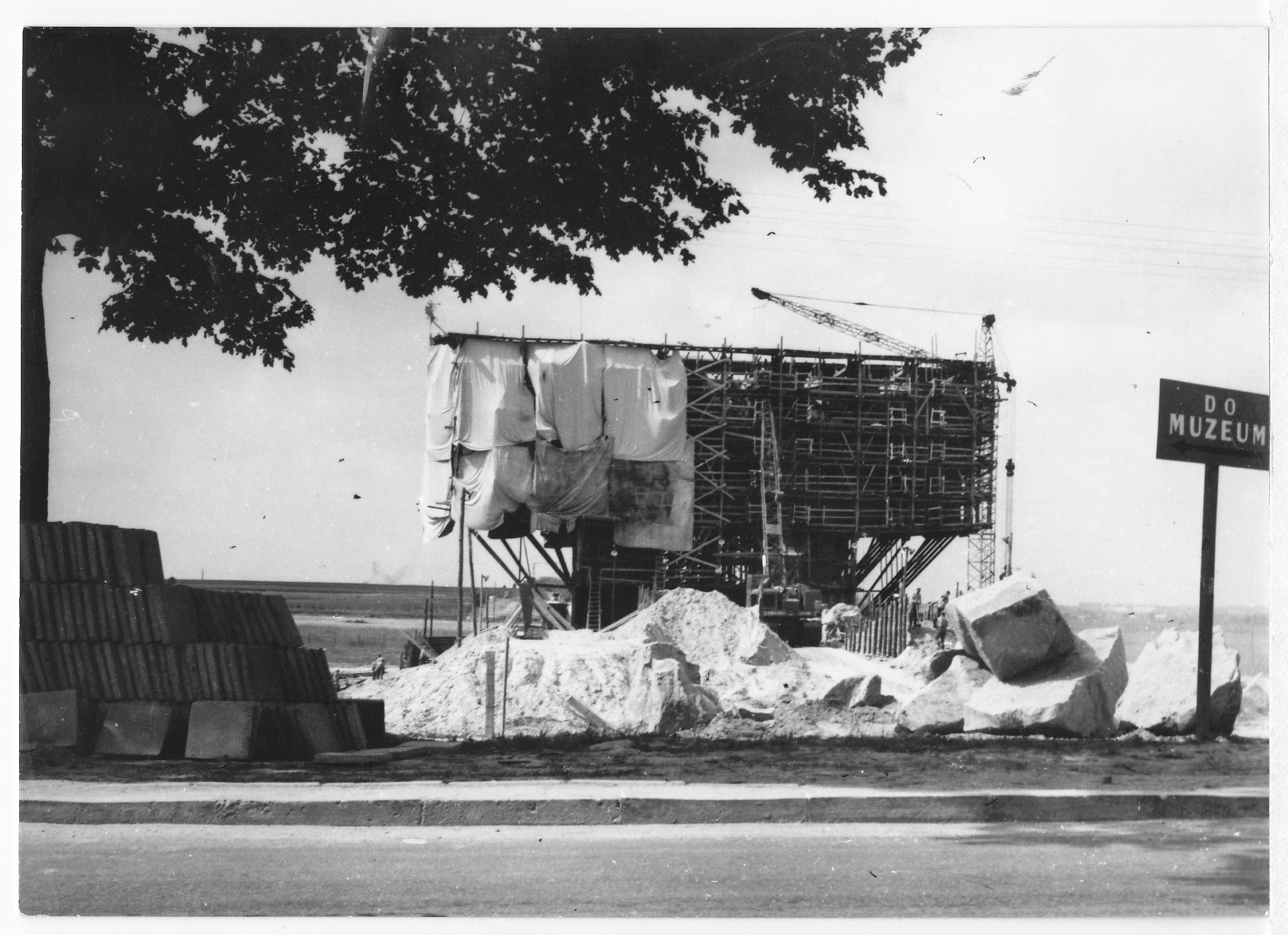
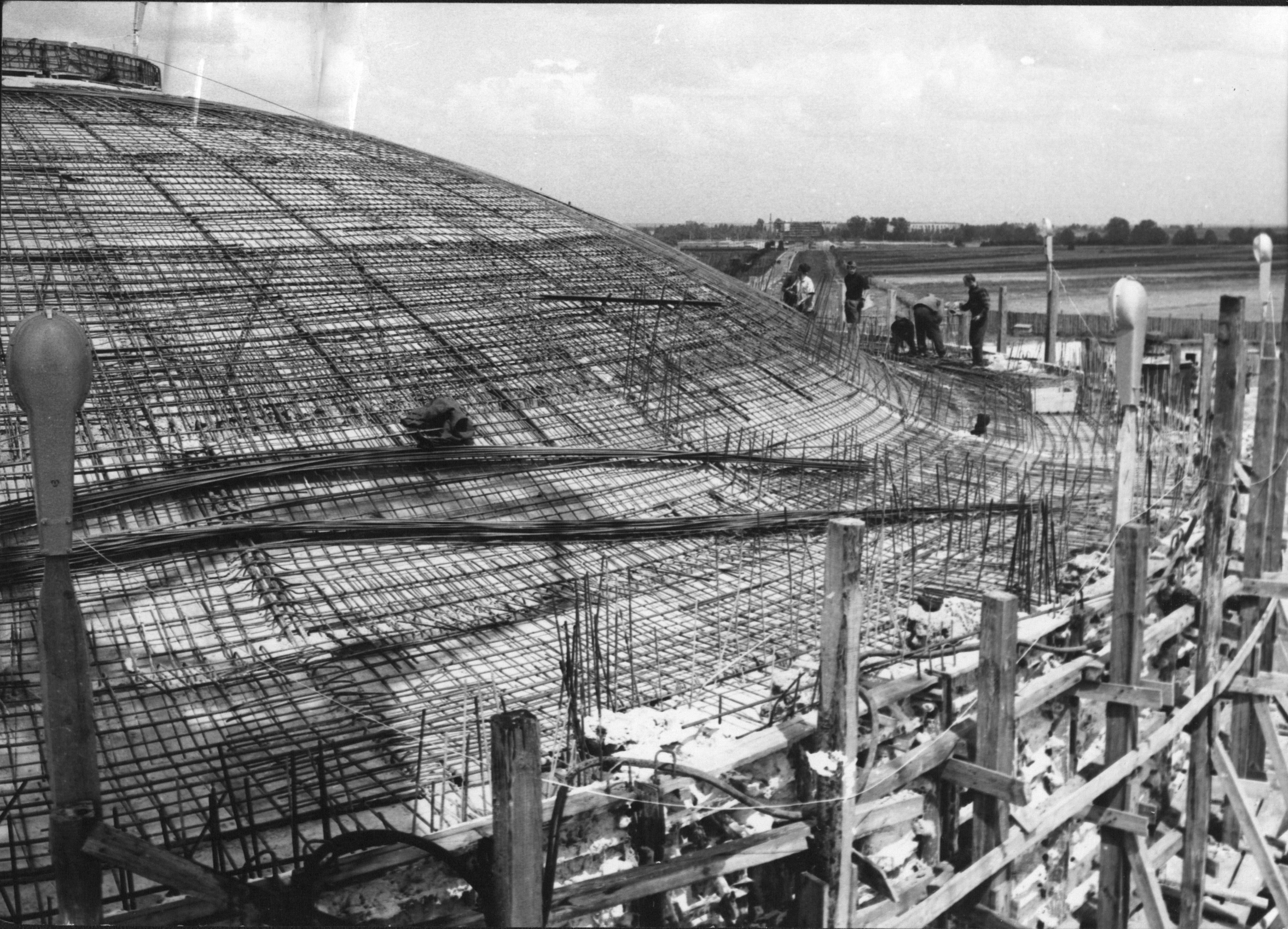
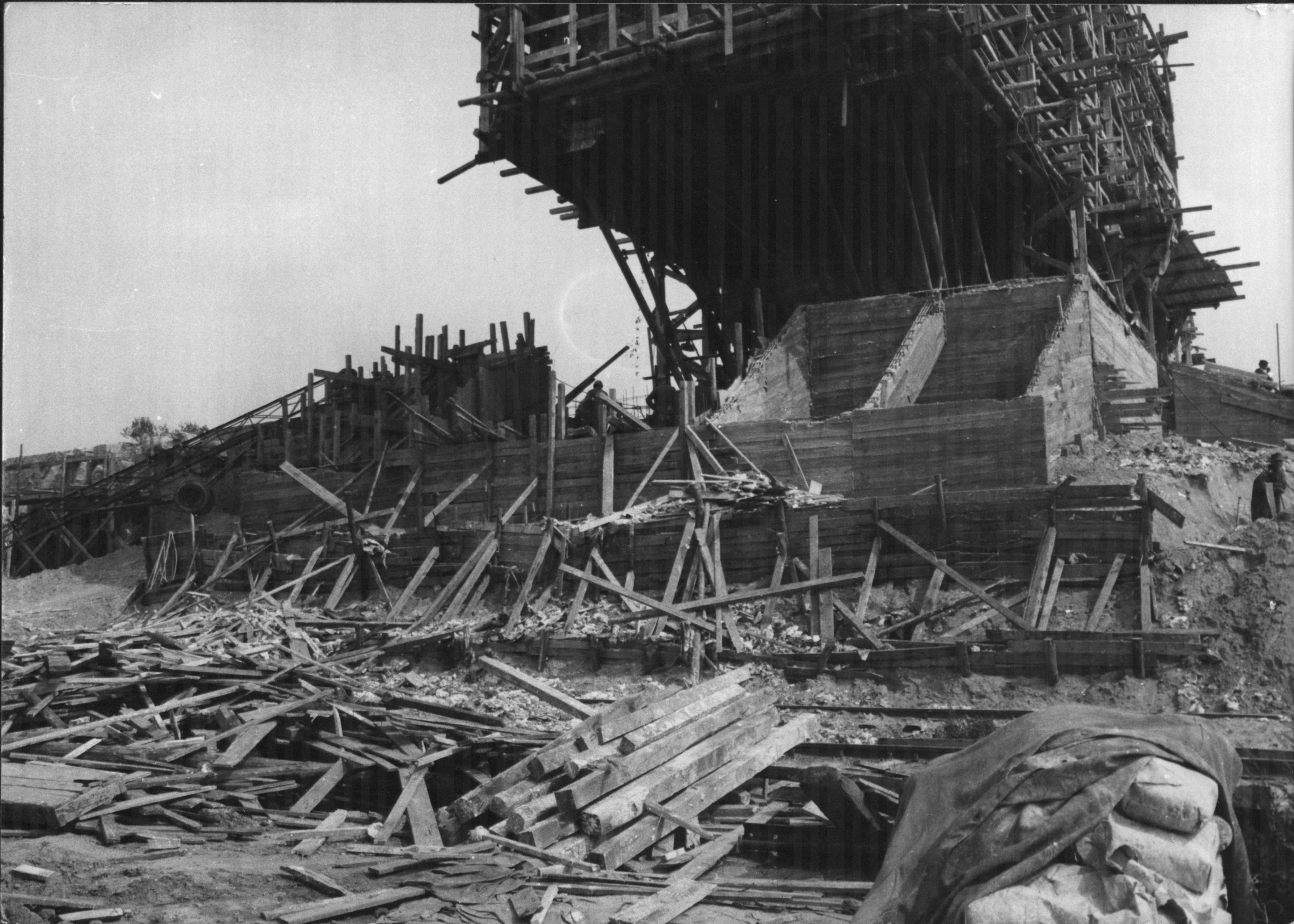
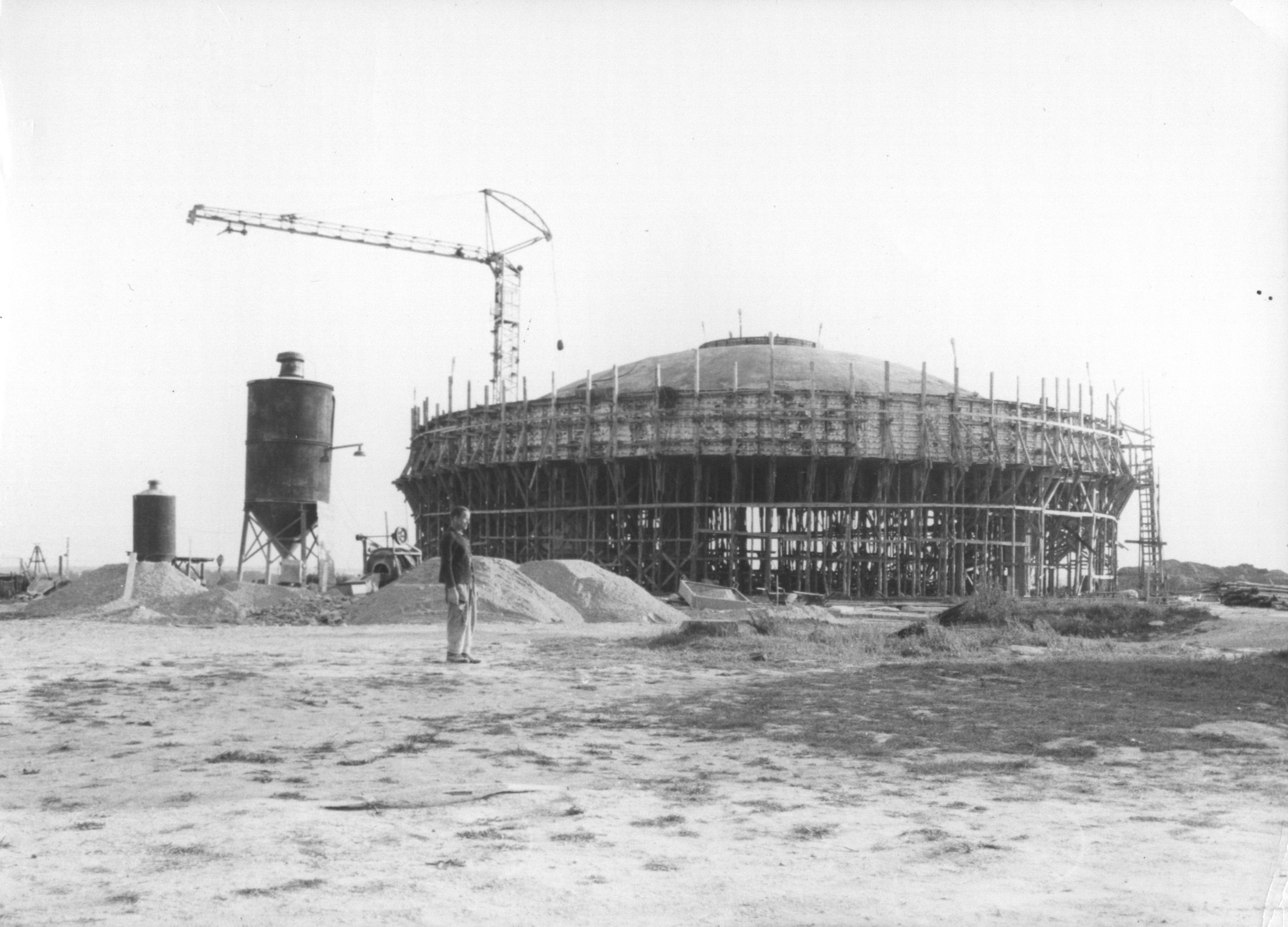
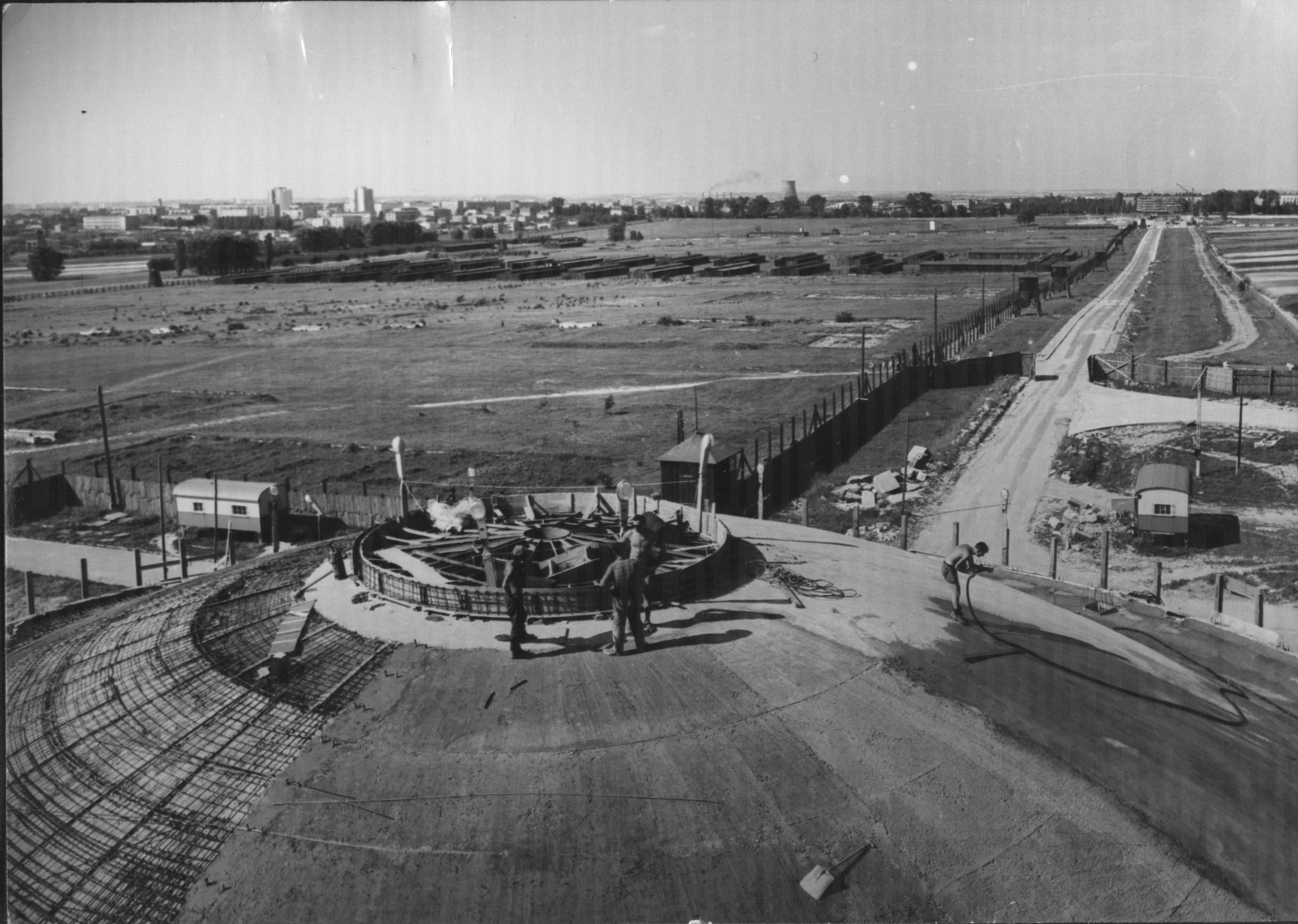
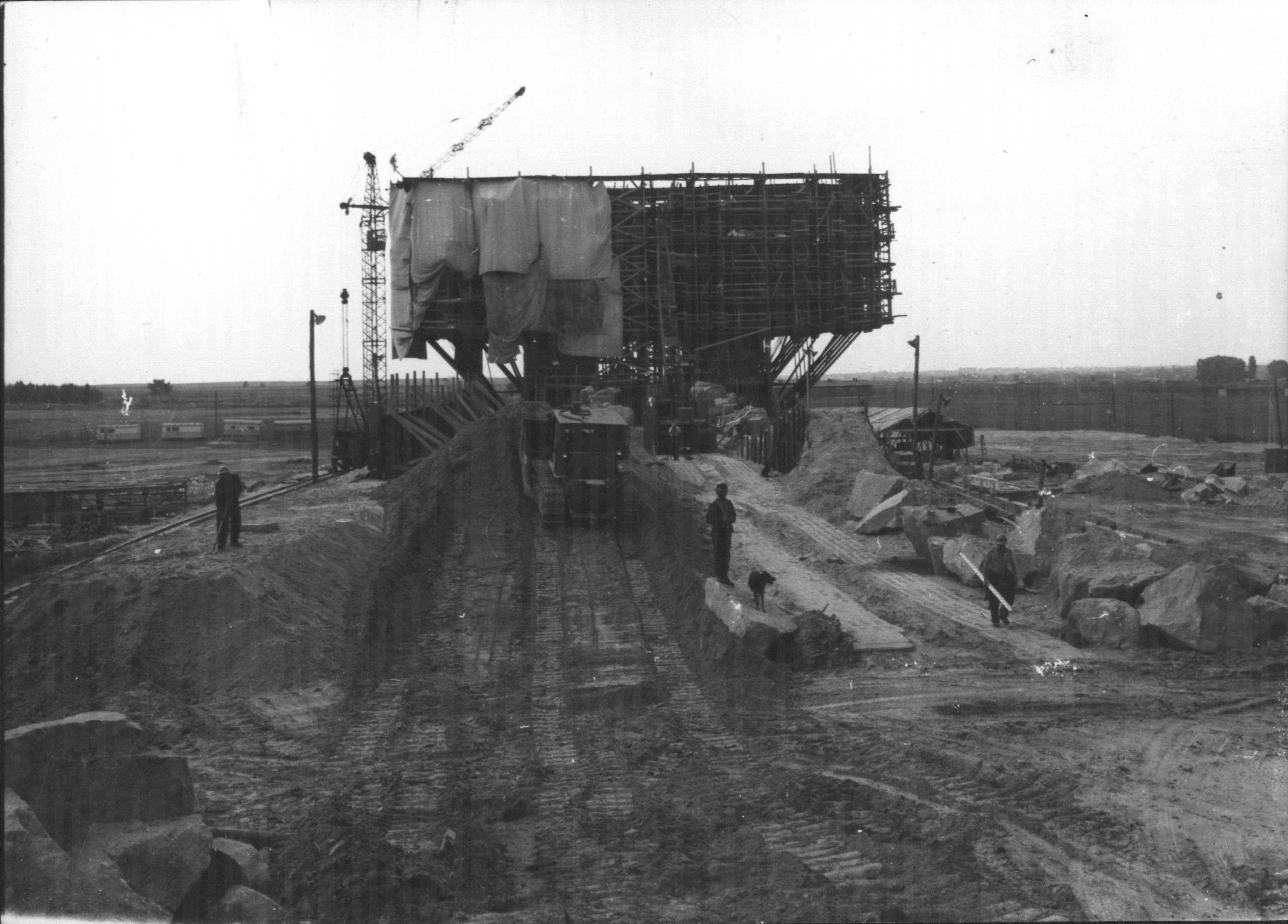
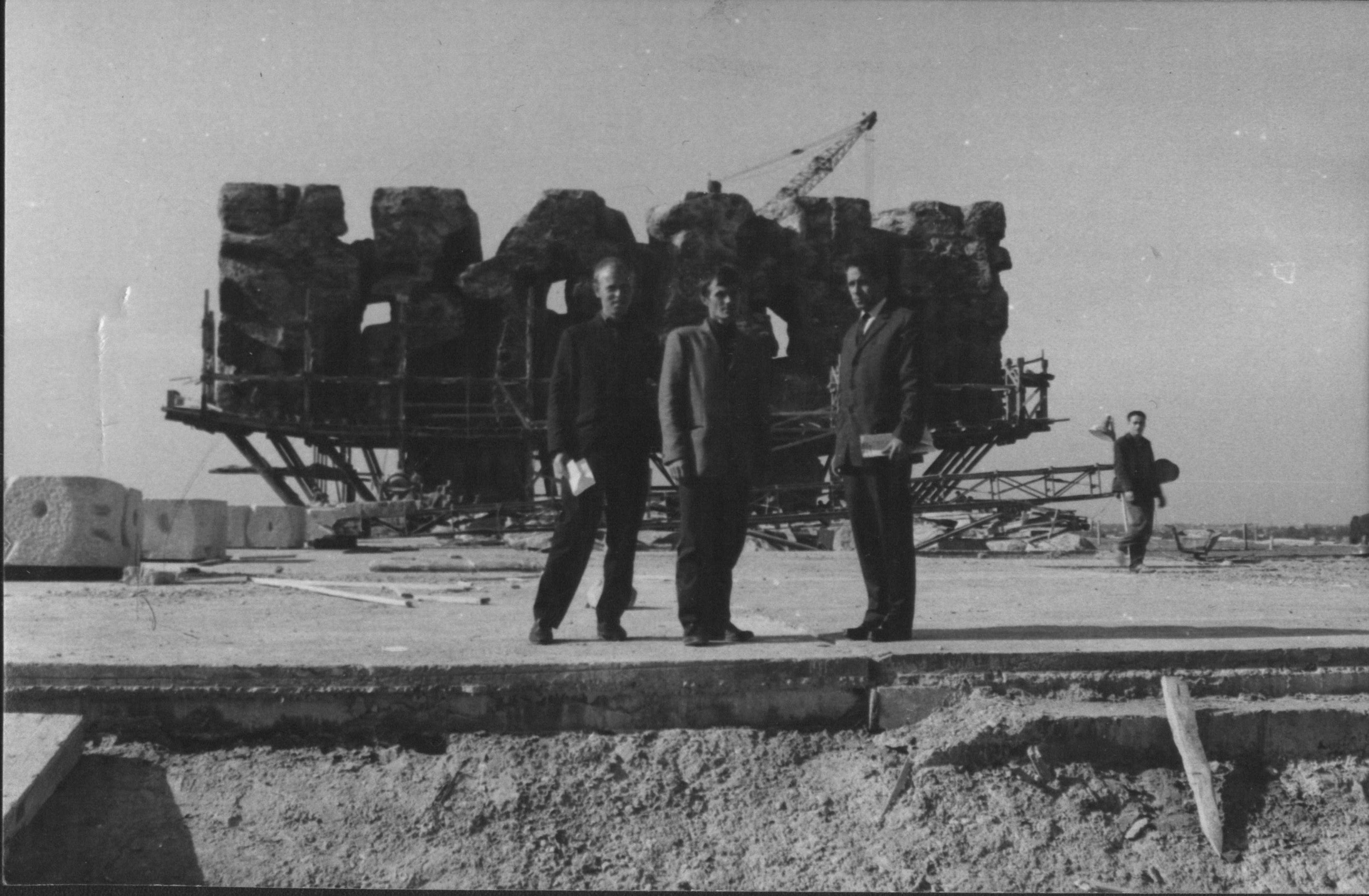
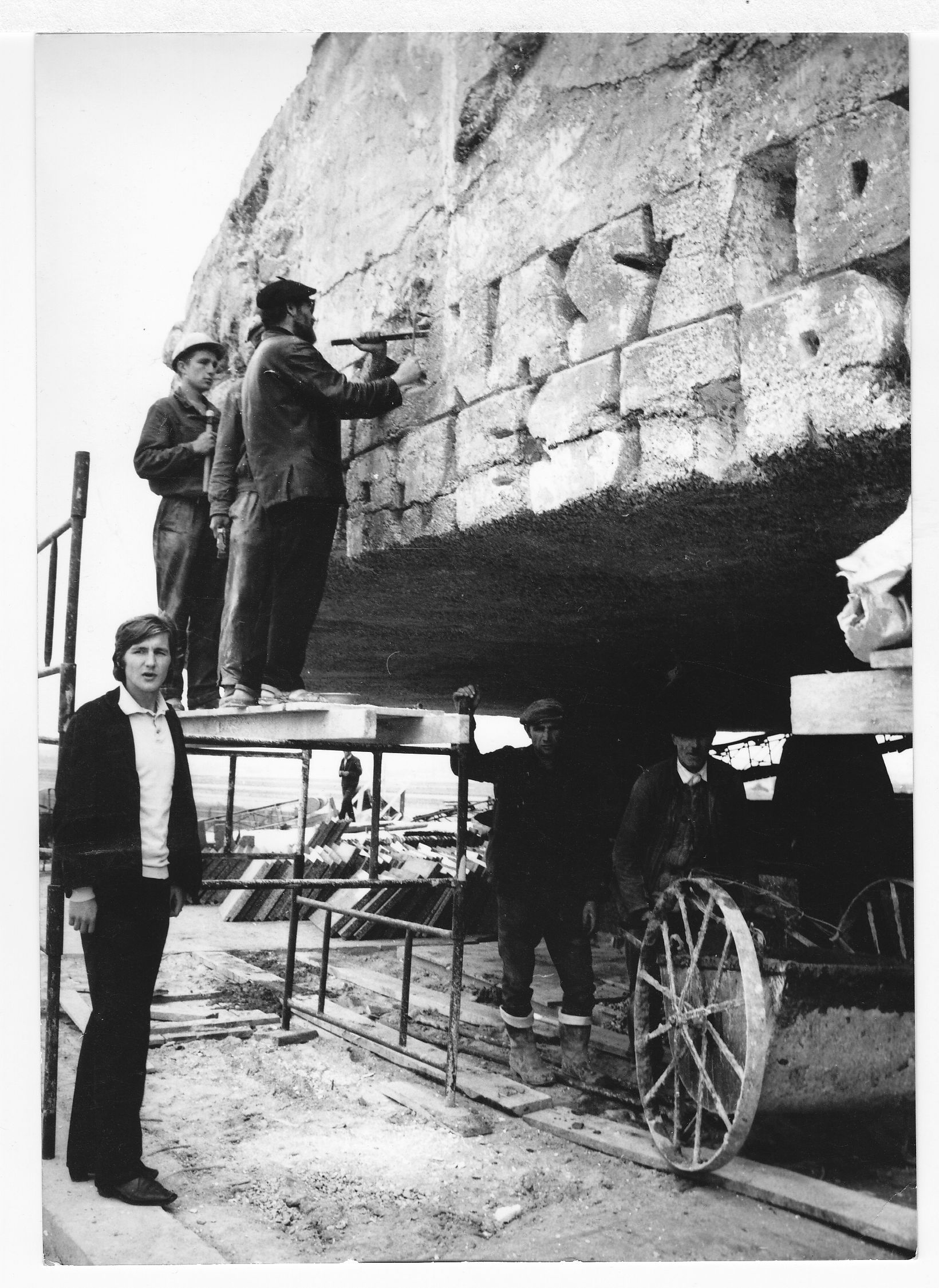
On 1 June 1967, four organisations: Council for the Protections of Struggle and Martyrdom Sites, Society for the Protection of Majdanek, Union of Polish Visual Artists, and Association of Polish Architects; announced “an open contest for the monument commemorating the victims of Majdanek”. From among the submitted projects, the one created by Wiktor Tołkin and Janusz Dembek was chosen for implementation, even though they won the third prize. The construction took two years, and the unveiling ceremony took place on 21 September 1969.

Black and white photograph, two middle-aged men dressed in black, the first man on the left with a dark beard.

Three Monument Elements

The monument complex comprises three main elements: the Gate-Monument, the Road of Homage and Remembrance, and the Mausoleum. Tołkin skilfully coined various aesthetic trends: selecting traditional forms of architecture like the gate or the mausoleum on the one hand, and giving them highly affecting, enormous, abstract, and irregular stone forms on the other. The artist reached a very successful fusion of those two components, and the monument gained a universal appearance.

Gate-Monument

Tołkin deliberately distorted the shape of the Gate by drastically altering the natural proportions that were usually applied in such architectural forms. Its lintel constitutes the most massive form of the Gate, which greatly surpass its supporting pillars. That reinforces the illusion of an enormous and overwhelming weight of the upper part. That is why the lintel is the most aesthetically striking part of the monument. Raw form applied on a grand scale with its rectangular shape, consists of many large blocks, which overlap and create hollows and open spaces. Uneven, rough surfaces devours light, and the hollows generate additional dark voids, which expressively evoke the aura of terror. The monumental character of the gate is even more emphasised through its placing on a rise with cascading steps leading towards it. The stone frieze on its western side aesthetically alludes to the piled up rocks of the lintel. There are also six stone torches in front of the gate, each engraved with a year between 1939 and 1944 marking the years of the German occupation of the Lublin region. The entrance of the monument area is marked with metal fence with expressively bent edges.

Monument-Gate seen from below, concrete, monumental abstract form.

The Road of Homage and Remembrance

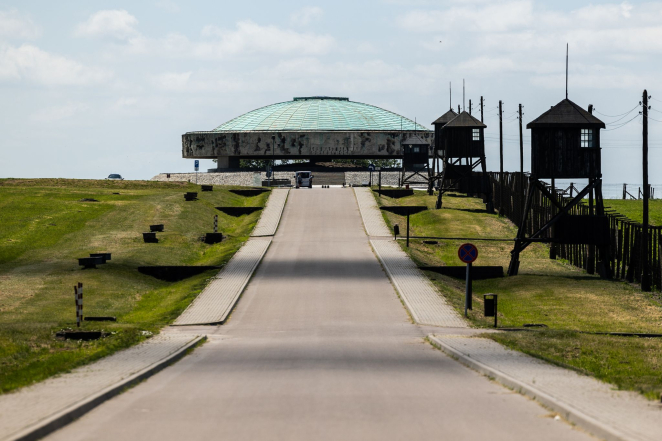
The road originating in front of the gate is the next part of the monument. It unfolds in a ravine enclosed with huge sandstone blocks. Their goal is also to overwhelm the visitor. The road, or rather a wide path stretching along the former prisoner fields and sentry towers, leads to the Mausoleum. This majestic part is covered with a flattened dome supported by four pillars and encircled with a frieze that visually corresponds with the Gate’s lintel. Through placing the Mausoleum onto elevated ground and at the same time at the end of the visual axis of the former camp grounds, the entire spatial design gained a dominating point. It therefore constitutes an easily identifiable code alluding to the historical form of the architecture, while simultaneously being a symbolic tomb for all the victims of Majdanek.

Monument-Mausoleum viewed from the Road of Tribute and Remembrance, with three watchtowers on the right.

Inscriptions

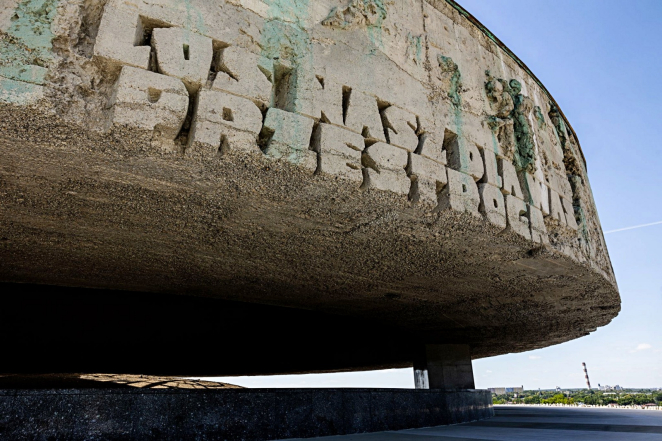
Tołkin placed inscriptions on various parts of the monument, which explain what the form itself cannot. The Mausoleum frieze bears the words “May our fate be your warning” originating from a poem Requiem by Franciszek Fenikowski. The right pillar of the gate bears the signature of Tołkin, who – as an Auschwitz survivor – felt deep connection with sculpture created in the former camps. The left pillar, in turn, has a plaque with the words:

“To the heroes of Majdanek, who died a martyr’s death here while fighting against the Hitlerite genocide for the freedom of all nations and all mankind, defending the ideals of humanity and dignity. The Council of State of the Polish People’s Republic, as an act of remembrance and homage of their fight against fascism, hereby grants the 1st Class Order of the Cross of Grunwald. Warsaw 1969 20 September.”

Frieze of the Monument-Mausoleum, inscription: Our fate is a warning to you.